



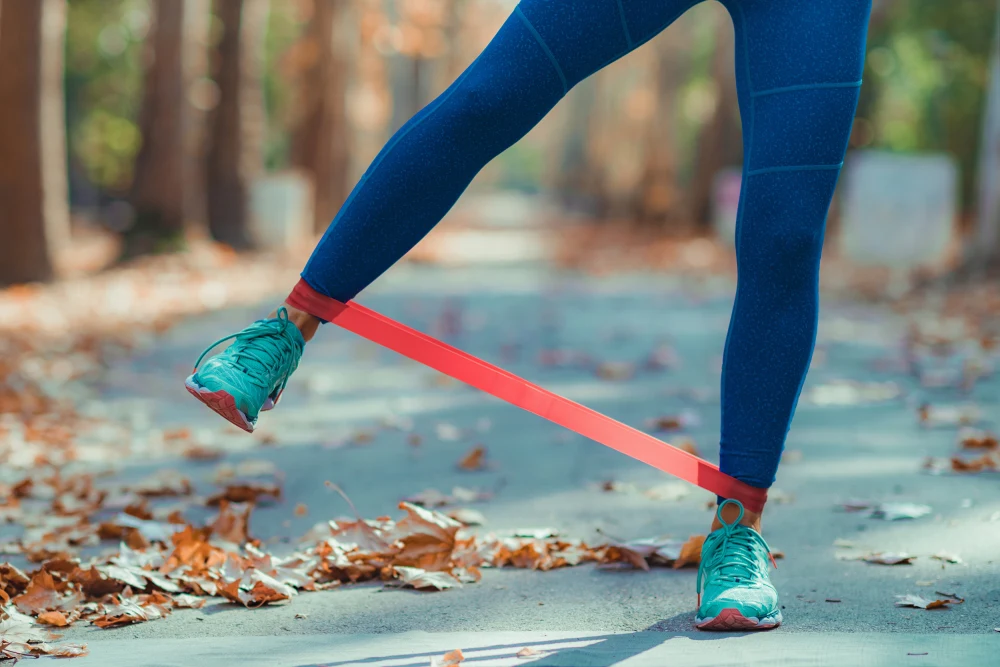
Resistance bands may look like simple rubber loops, but they are powerful tools for improving fitness. Experts say they can enhance strength, flexibility, mobility, and stability without heavy weights. Resistance bands help improve your range of motion by assisting stretches, making them great for warming up, cooling down, or preventing injuries. For example, looping a band around your foot during a hamstring stretch can help you reach farther while protecting your muscles.
Unlike dumbbells or barbells, bands provide resistance throughout an entire movement. This works your muscles during both the lifting and lowering phases. Exercises like banded squats, glute bridges, and lunges increase muscle activation and strength, especially in the lower body. Bands are also low-impact and ideal for injury recovery. They allow you to strengthen muscles without straining joints. Beginners or those returning from injury can start with light bands and gradually increase resistance.
Many band exercises require core engagement to maintain proper form. This strengthens stabilizing muscles and improves posture. Adding a band to push-ups, squats, or bridges increases the challenge for your core, helping you progress to harder movements. Resistance bands are lightweight and portable, making them perfect for travel or home workouts. You can easily pack them for a quick workout anywhere, from a hotel room to a gym.
For beginners, simple exercises like band squats, banded glute bridges, standing lateral band walks, hamstring stretches with a band, band-assisted pull-ups, banded frog pumps, and banded push-ups are highly effective. These moves target glutes, thighs, core, arms, and back while helping improve strength, stability, and flexibility. Bands can match the effectiveness of free weights for many exercises and are great for building muscle and mobility when used correctly. They are durable, easy to store, and a convenient tool for anyone looking to upgrade their workouts at home or on the go.