


Millions of Americans relying on the Supplemental Nutrition Assistance Program, or SNAP, face growing uncertainty after Senate Republicans blocked a Democratic effort to restore full funding during the government shutdown. The decision affects more than 42 million people who depend on the program to buy food each month.
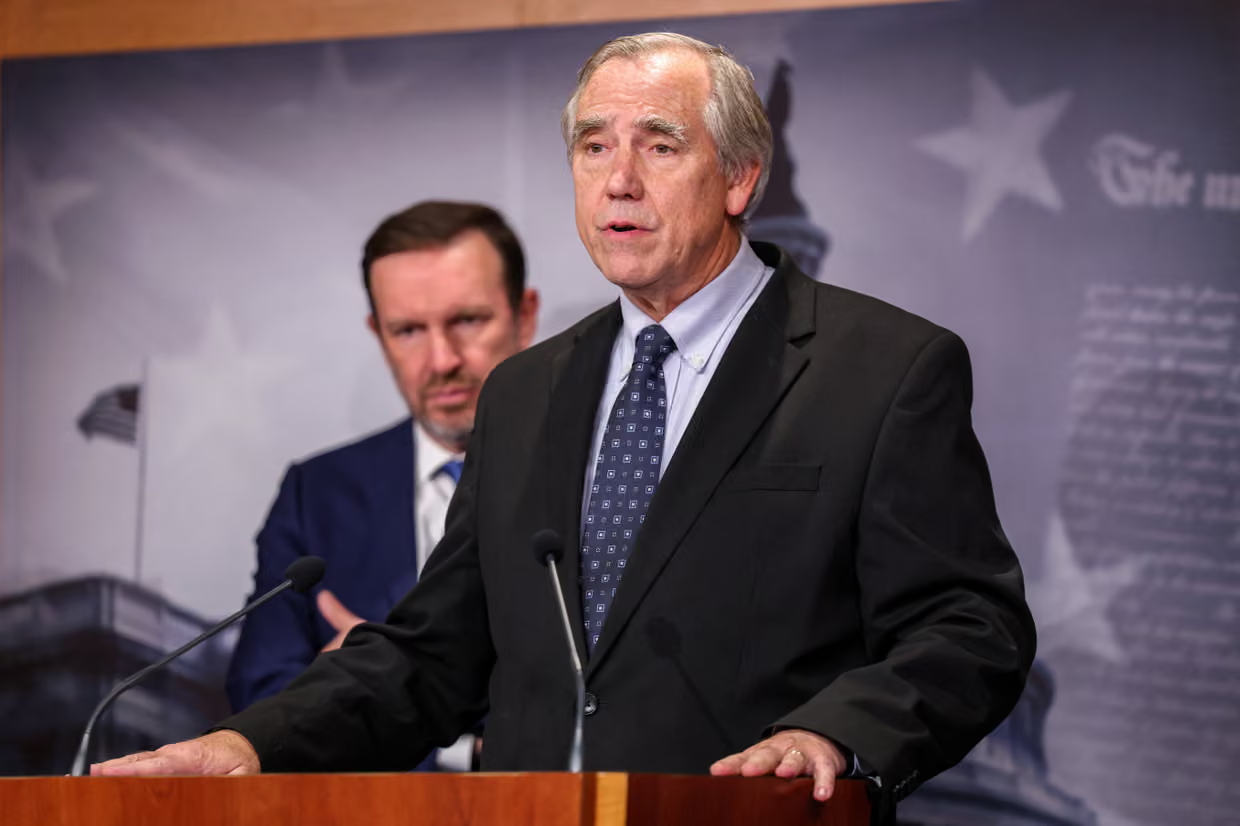
On Monday, Democratic senators introduced a motion that would have allowed the Department of Agriculture to release all necessary funds for November’s benefits. Senator Jeff Merkley and Senate Democratic leader Chuck Schumer pushed the resolution, hoping for quick approval through unanimous consent. Their goal was to prevent disruptions for families already struggling with reduced income as the shutdown continues.
However, the effort was halted when Republican senators objected. Senate majority whip John Barrasso argued that the only lasting way to ensure food assistance is to end the shutdown completely. “This proposal is not a real solution,” Barrasso said, accusing Democrats of political theater instead of serious negotiation.
Republicans maintain that reopening the government should be the first step before restoring full federal spending. Democrats counter that the delay puts vulnerable families at risk, especially as the holidays approach.
The administration recently said it would use a contingency fund from the Department of Agriculture to provide limited support. That fund holds about $4.65 billion, which covers only half of the $8 billion in monthly SNAP benefits typically distributed nationwide. Officials confirmed that this stopgap measure would provide partial payments until Congress approves new funding.
Senator Merkley condemned the decision as “unbelievably cruel,” saying it punishes low-income households for political reasons. “Food should never be used as a weapon,” he said in a public statement. He called on the president to release the full funds immediately, emphasizing that children, seniors, and working families are not bargaining chips in political disputes.
As the standoff continues, food banks across the country report a sharp rise in demand. Many have seen new visitors—federal workers who are missing paychecks during the shutdown. Volunteers are working extra hours, but supplies are limited. Charities warn that if the situation persists, they will struggle to meet the needs of local communities.
The Senate has now attempted 13 separate votes to reopen the government, but none have succeeded. Lawmakers remain divided over the scope of spending and proposed policy measures tied to the budget. The ongoing deadlock has left millions without clarity on when federal services, including SNAP, will return to normal.
If the shutdown extends past Tuesday, it will become the longest in U.S. history, surpassing the 2019 shutdown that lasted 35 days. That earlier shutdown also occurred under the same administration, driven by disputes over border wall funding.
Economists warn that this prolonged closure could harm consumer spending and strain social programs that serve as safety nets. SNAP is one of the largest anti-hunger initiatives in the country, helping families buy groceries at local stores. For many, it represents the difference between having meals on the table and going hungry.
Community organizations and local governments have urged Congress to act quickly. Some are setting up emergency food drives and coordinating with regional suppliers to fill the gap left by federal cuts. Yet even these efforts cannot fully replace the federal program’s scale.
For families relying on SNAP, each week without full funding deepens anxiety. Parents worry about feeding their children. Seniors fear running out of groceries before the next month’s benefits arrive. While lawmakers continue to debate, ordinary Americans are left waiting for relief.
Until Congress reaches an agreement, the future of the program remains uncertain. The Senate’s rejection of the funding proposal highlights the growing divide over how to manage essential public aid during political standoffs. For millions, that divide now means a struggle to put food on the table.