


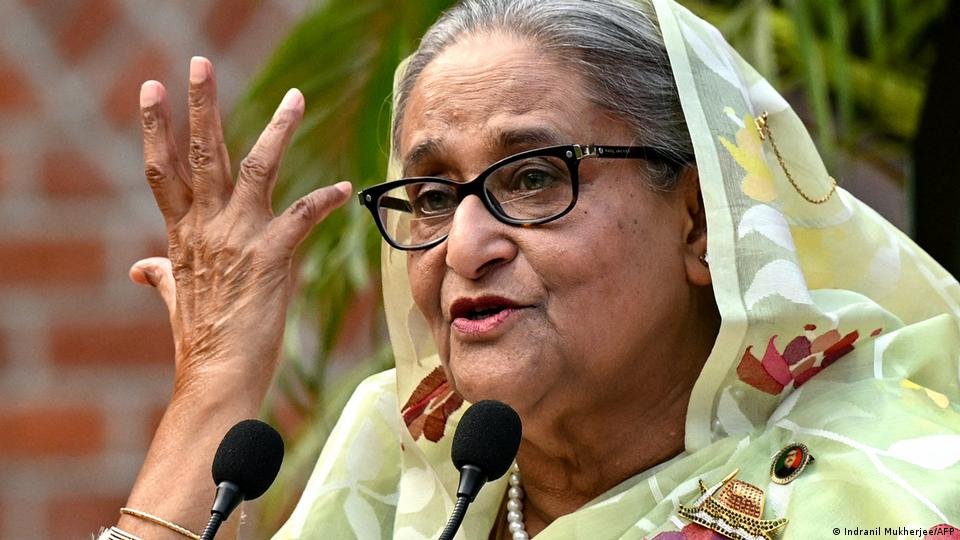
Bangladesh’s former Prime Minister Sheikh Hasina has been sentenced to death by the country’s special war crimes tribunal for her role in the deadly crackdown on a 2024 student-led uprising.
The International Crimes Tribunal (ICT) convicted Hasina on three counts, including incitement, ordering killings, and failing to prevent atrocities. The ruling was made in absentia, as Hasina fled to India in August 2024 and refused to return for her trial.
Hasina, along with former Interior Minister Asaduzzaman Khan Kamal, has consistently rejected the court’s authority, calling the tribunal “biased and politically motivated.” In a statement from India, Hasina challenged Bangladesh’s interim government to bring the case before the International Criminal Court (ICC) in The Hague for a fair trial.
Bangladesh’s Foreign Ministry has renewed its demand that India extradite Hasina and Kamal, citing an existing extradition treaty. Both individuals remain in India, and New Delhi has not officially responded to the request. India previously granted Hasina asylum in the 1970s after her family was killed in a military coup, adding historical context to its current stance.
Kamal, also sentenced to death, dismissed the tribunal as unconstitutional and said India would likely resist Bangladesh’s pressure to hand them over.
The verdict comes amid heightened tensions in Bangladesh. Hasina’s party, the Awami League, now banned under the anti-terrorism law, called for a nationwide shutdown. The interim government has deployed thousands of police and paramilitary forces across Dhaka, with armored vehicles and checkpoints securing key areas. Reports of crude bomb explosions have emerged in the capital, targeting government-linked buildings and public spaces.
Observers note that Hasina’s 15-year rule from 2009 to 2024 was marked by consolidation of power, suppression of dissent, political arrests, and restrictions on freedom of speech. Her last election in January 2024, boycotted by opposition parties, effectively cemented a one-party state under her leadership.
The tribunal’s ruling is the first verdict on the 2024 crackdown, in which UN investigators estimate up to 1,400 protesters were killed, and Bangladesh’s health authorities report around 800 deaths and 14,000 injuries.
The outcome may strain India-Bangladesh relations, as New Delhi navigates the complex historical ties with Hasina and her family. Analysts say the situation highlights ongoing challenges in balancing justice, political stability, and international diplomacy in South Asia.