


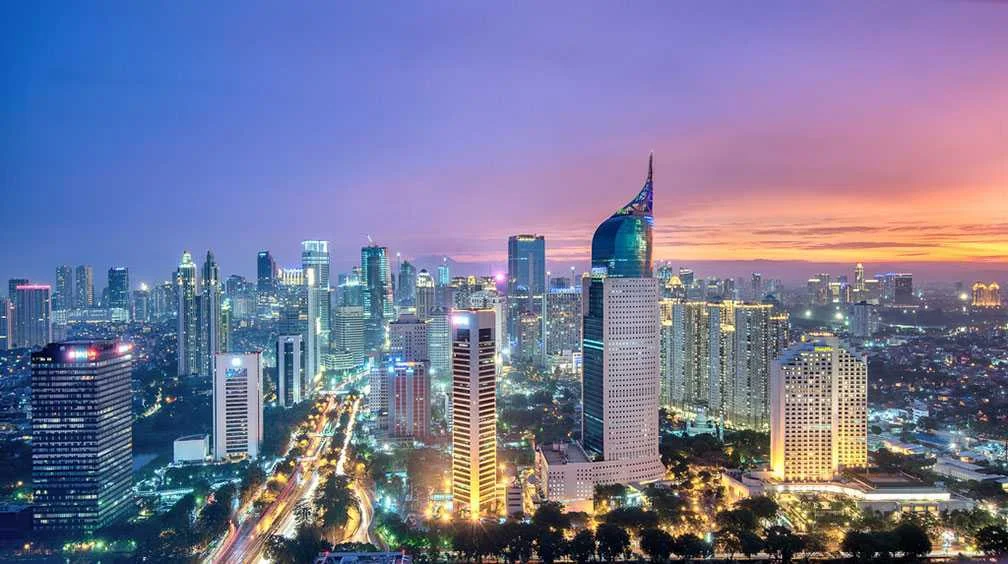
Jakarta has officially become the world’s most populous city, overtaking Tokyo with nearly 42 million residents. The Indonesian capital now has roughly the same population as all of Canada, highlighting the rapid growth of megacities in Asia.
According to the United Nations, more than half of the world’s largest cities are in Asia. Following Jakarta, Dhaka in Bangladesh has 37 million people, while Tokyo now ranks third with 33 million. Projections indicate that Dhaka could surpass Jakarta by 2050 if current growth trends continue.
Jakarta’s population boom has created significant challenges. The city is slowly sinking due to rising sea levels, excessive groundwater extraction, and rapid urban development. To address these issues, the Indonesian government is constructing a new capital city on the island of Borneo.
Environmental concerns are not limited to Jakarta. Megacities across South Asia and the developing world are struggling to provide adequate infrastructure and resources for rapidly expanding populations. Iran, for example, is considering relocating its capital, which houses around 10 million people, due to a worsening water crisis.
Globally, urbanisation is accelerating at an unprecedented pace. The UN reports that 45% of the world’s 8.2 billion people currently live in cities, more than double the share in 1950. By 2050, two-thirds of population growth is expected to occur in urban areas, placing immense pressure on housing, transportation, and public services.
In Canada, similar trends are creating challenges for urban living. Cities like Toronto and Montreal are experiencing rising housing costs, longer commute times, and congestion. Urban planners warn that Canada’s communities, big and small, must rethink city planning to manage population growth effectively.
Jakarta’s new status as the largest city highlights both opportunities and risks for urban areas worldwide. While dense populations can drive economic growth and cultural vibrancy, they also increase vulnerability to natural disasters, environmental degradation, and infrastructure strain.
Experts emphasise that timely and reliable data are crucial for city planning. Understanding population trends helps governments anticipate challenges and invest in critical infrastructure, such as flood prevention, transportation networks, and housing projects.
Rapid urbanisation also affects the quality of life. In Jakarta, residents face traffic congestion, overcrowded public transport, and rising living costs. These challenges are shared by other megacities in Asia, including Dhaka, Mumbai, and Manila, where city growth is outpacing available resources.
The rise of Jakarta as the world’s largest city is a reminder of the ongoing global urban shift. Governments, planners, and communities must work together to create sustainable, resilient, and livable cities for the billions who will call them home in the coming decades.