


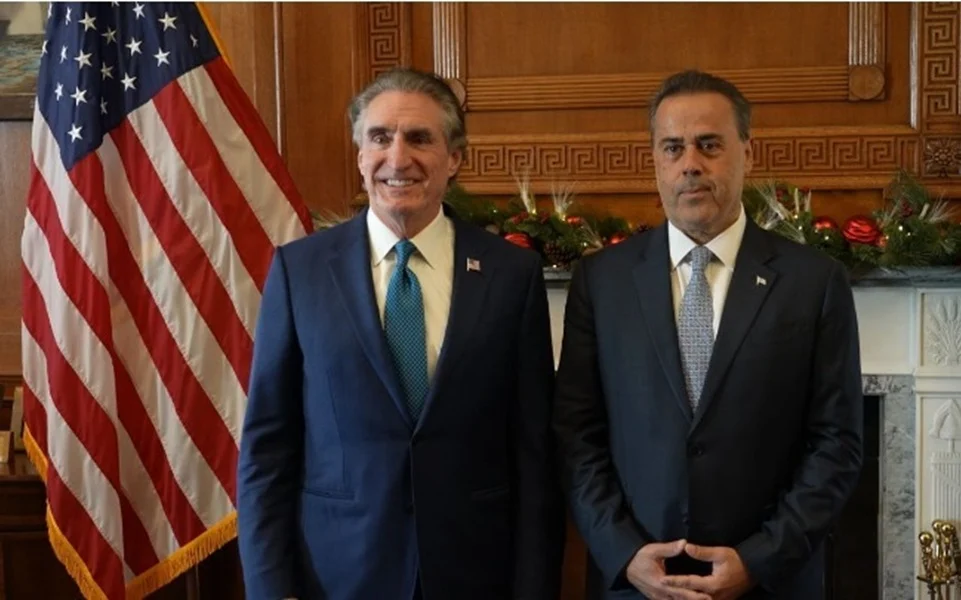
Greek Energy Minister Stavros Papastavrou met with US Secretary of the Interior Doug Burgum in Washington on Wednesday to discuss strengthening energy cooperation between Greece and the United States. Burgum also serves as the head of the National Energy Dominance Council.
The meeting comes after the PTEC conference in Athens, where several agreements and announcements generated momentum for energy collaboration. Papastavrou emphasised that the talks aim to accelerate projects already agreed upon during last month’s Zappeion Hall summit.
“We have close cooperation with Mr. Burgum that allows us to move faster and implement the energy agreements we signed,” Papastavrou said. He highlighted key initiatives, including exploratory drilling by ExxonMobil, HelleniQ Energy, and Energean in Greece, the development of a vertical energy corridor reaching a region of 100 million people, and the supply of American natural gas through Greek companies.
Papastavrou added that these agreements will create new high-quality jobs in Greece, enhance energy security, and strengthen the country’s geostrategic position in the region. “We are proceeding with a clear plan, decisiveness, and self-confidence. Greece is an energy hub and a reliable destination for American investment,” he said.
The Greek minister’s visit to Washington continues on Thursday with a series of high-profile meetings. Papastavrou will meet representatives from AIPAC, Senators Jerry Moran, Ted Cruz, Bill Hagerty, and Ruben Gallego, as well as officials from the International Development Finance Corporation, the American Jewish Committee, and Venture Global.
Energy experts say that increased cooperation between Greece and the United States can help both countries achieve strategic energy goals. Greece’s role as a regional energy hub allows it to facilitate energy distribution across Southeastern Europe and beyond, while US companies gain access to investment opportunities and new markets.
The partnership aligns with broader international energy security efforts, particularly amid rising global demand for natural gas and renewable energy development. Papastavrou and Burgum’s discussions are expected to support long-term projects that combine US investment with Greek infrastructure and resources.
Officials from both countries described the meeting as productive, signaling a shared commitment to accelerating joint energy initiatives. Analysts note that these agreements could position Greece as a key player in regional energy markets, attracting further investment and strengthening ties with the United States.
As the energy sector faces growing challenges and competition, Washington and Athens appear committed to collaboration, focusing on innovation, supply security, and economic growth. Papastavrou’s series of meetings underscores Greece’s intention to expand its energy partnerships and promote stability in the region.