



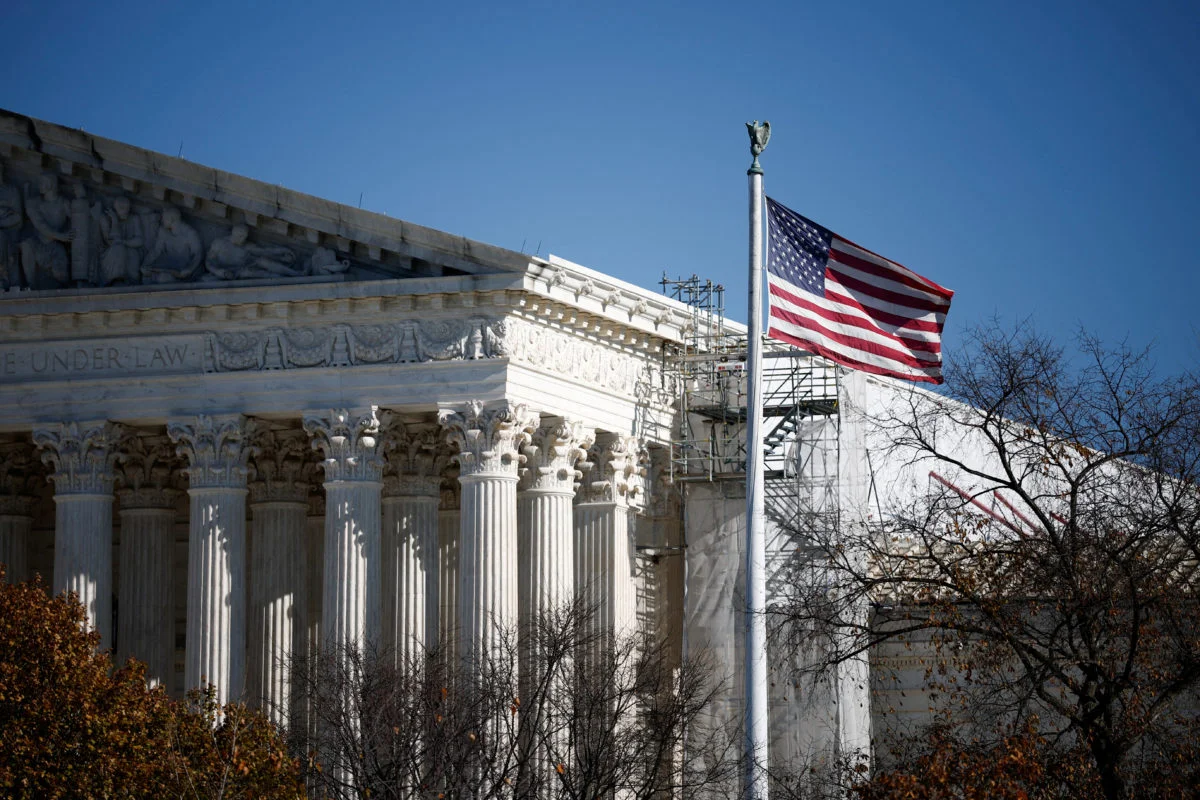
The Supreme Court will soon decide whether President Trump’s order restricting birthright citizenship is constitutional. The order, issued on January 20, declared that children born in the U.S. to parents who are in the country illegally or temporarily are not automatically American citizens.
Lower courts have ruled that the order violates the 14th Amendment, which guarantees citizenship to anyone born on U.S. soil. The Trump administration argues that the amendment was intended to protect the children of newly freed slaves, not children of undocumented immigrants.
The case is expected to be taken up in the spring, with a ruling likely by summertime. Legal experts say the decision could have far-reaching implications for immigration policy and citizenship rights in the United States.
The debate over birthright citizenship comes amid broader discussions of national security and immigration under the Trump administration. A newly released national security memo emphasized the U.S. role in the Western Hemisphere, focusing on boosting military presence, controlling migration, and reducing drug trafficking. President Trump’s administration has linked these policies to his “America First” strategy, prioritizing American commerce and limiting foreign influence in the region.
Some of the president’s supporters argue that these foreign-focused policies stray from the original America First vision, which they interpret as prioritizing domestic issues over international involvement. Critics also suggest that the administration’s approach toward Europe, NATO, and Russia could encourage geopolitical tensions abroad.
Back in Washington, the Supreme Court is also reviewing newly drawn congressional maps in Texas. The court has allowed the maps to remain in place while a larger review continues. House Speaker Mike Johnson called the decision “good news” for states implementing similar maps, although some analysts warn that the redistricting efforts could face challenges if legal battles continue.
Legal and political observers note that the birthright citizenship case will be closely watched nationwide. A Supreme Court ruling in favor of restricting citizenship could redefine the rights of children born to undocumented immigrants, while a ruling against the order would reinforce the constitutional guarantee under the 14th Amendment.
The coming months are likely to bring intense debate over the issue, with both lawmakers and advocacy groups preparing to respond to the court’s decision. For now, the nation awaits a ruling that could have lasting effects on immigration policy and constitutional law.