

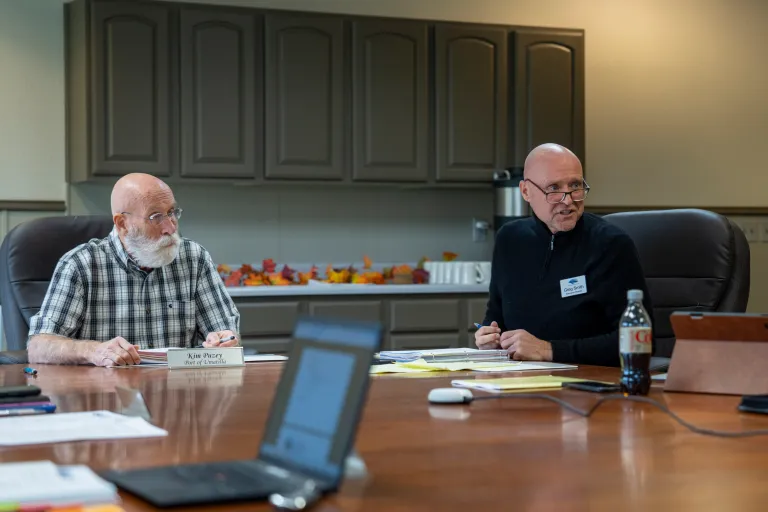
The Oregon Government Ethics Commission has voted unanimously to extend its investigation into Greg Smith’s salary increases at the Columbia Development Authority (CDA) by up to 30 days. The decision was made during a special open session on Tuesday, December 9, allowing investigator Casey Fenstermaker additional time to collect final materials and interviews for the board.
The investigation, which opened in June, initially reached its 180-day deadline. Fenstermaker provided a summary of her draft report to commissioners, focusing on a 2024 federal grant. She had conducted interviews with Smith and CDA board member JD Tovey on December 8, but was unable to include them in the report for the December 9 meeting. Smith’s attorney, while not present at the meeting, submitted a statement confirming that Smith did not oppose extending the investigation.
Fenstermaker noted that the draft report, as it stoo,d did not contain sufficient evidence to establish a prohibited use of office under state law. She recommended the extension to allow inclusion of the final interviews and follow-up on remaining questions. Commission Chair David Fiskum highlighted the case’s complexity, citing the involvement of multiple agencies across local, county, and federal levels of government.
During the meeting, commissioners discussed the timeline for completing the investigation. With the 30-day extension, the final report would be due around January 8, 2026, just one day before the commission’s regular January meeting. Vice Chair Shenoa Payne, who will become chair in 2026, expressed concern over her availability for a Jan. 8 session and suggested that the report might be ready by December 12, when the commission holds its regular monthly meeting.
Fenstermaker and the commission’s executive director, Susan Myers, explained that staffing limitations could make a two-day turnaround challenging. They emphasized that sufficient time is needed to thoroughly review all remaining questions and evidence. Commissioner Cheri Helt stressed the importance of a complete and accurate report over rushing the process. “The utmost importance is that the report is complete and accurate and we have time to do that,” Helt said. “That, I think, is in the best interest of everyone.”
Ultimately, Commissioner Richard Burke motioned to extend the investigation for up to 30 days. He emphasized the importance of transparency and completing a thorough investigation. “We are being transparent and doing a complete job, willing to inconvenience ourselves for the good of the mission we are trying to advance,” Burke said. The motion was approved unanimously, with all eight commissioners in agreement.
The commission did not provide details on whether an updated report would be added to the December 12 meeting agenda. Fenstermaker will use the extension to finalize interviews and follow up on unresolved issues. The extension ensures that commissioners can review a comprehensive report before determining whether violations occurred or if the case should be dismissed.
Smith faces a separate, ongoing ethics investigation related to the timing of his work for the CDA. Both investigations highlight the commission’s efforts to monitor compliance with state ethics rules and ensure accountability for public officials.
The case has drawn attention for its complexity, involving multiple government levels and financial oversight of federal grants. Commissioners and staff have emphasized that the goal is a careful and transparent review rather than a rushed conclusion. The 30-day extension provides the commission the time necessary to complete its work accurately while maintaining public confidence in the process.
As the investigation continues, the Ethics Commission will remain focused on gathering all relevant evidence, completing interviews, and ensuring a full review of Smith’s actions related to salary increases at the Columbia Development Authority. The extension reflects the commission’s commitment to thorough oversight and ethical governance in state agencies.