


China has replaced top military commanders in key regions, signaling a major reshuffle under President Xi Jinping. The leadership changes affect the Eastern and Central Theater Commands, which oversee Taiwan operations and Beijing’s defense.
Gen. Yang Zhibin has been named commander of the Eastern Theater Command, responsible for operations around Taiwan, according to official reports. Gen. Han Shengyan will lead the Central Theater Command, which manages defense forces in Beijing, Tianjin, and five nearby provinces.
The appointments were announced during a general promotion ceremony on Monday, Xi’s first this year. They follow the removal of several top generals amid disciplinary and corruption concerns. Former Taiwan command leader Lin Xiangyang was dismissed in October for violating party rules. Meanwhile, Wang Qiang, ex-commander of the Central Theater Command, missed a September military parade in Beijing without explanation. Reports did not indicate Wang’s next role.
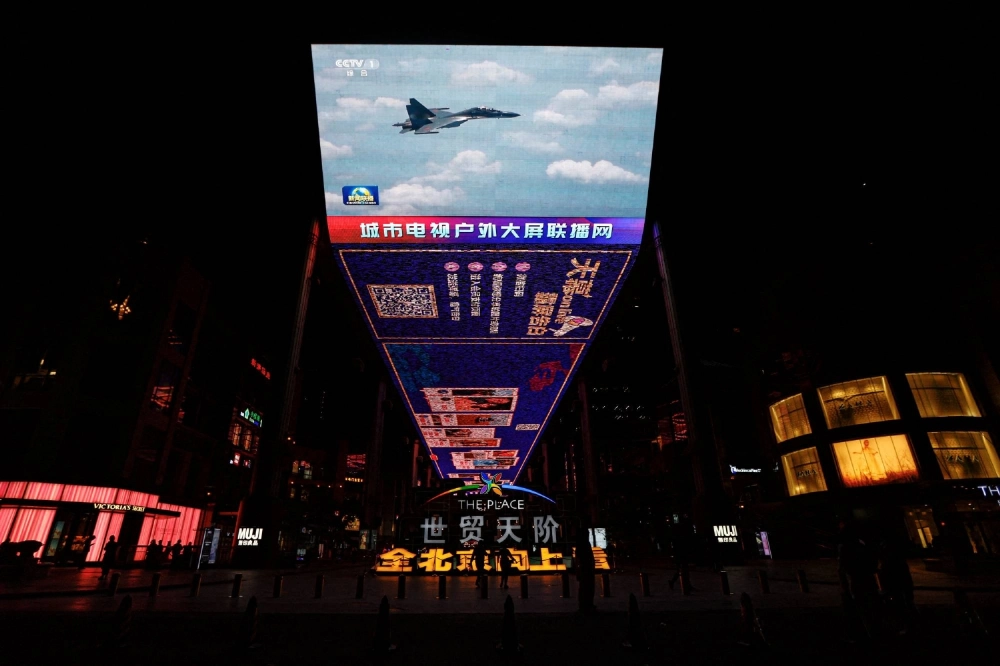
In the September parade, China highlighted new combat drones and nuclear weapons, showcasing efforts to modernize its military. The display comes despite ongoing anti-corruption campaigns in the armed forces, which U.S. intelligence officials say aim to address graft that has weakened units such as the Rocket Force. This force controls missiles and nuclear weapons, key elements in any potential conflict over Taiwan, a self-ruled democracy Beijing considers its territory.
Xi’s anti-corruption purge has extended across the military, removing two former defense ministers and top generals from several commands. Analysts say this purge is the largest in China’s military since Mao Zedong’s rule ended in 1976. The crackdown aims to restore loyalty, efficiency, and modern capability in China’s armed forces, which have been under scrutiny for years due to mismanagement and corruption.
Gen. Han previously led the Central Theater Command’s Air Force, a branch that has faced fewer public purges than other military divisions. He represented the Central Command at the September parade, filling in for Wang Qiang.
Gen. Yang, also an air force veteran, was the vice commander of the Eastern Theater Command before his promotion. He recently attended a memorial for the Nanjing Massacre earlier this month. Analysts note that both commanders have strong air force backgrounds, highlighting the importance of aerial and missile capabilities in China’s current military strategy.
The leadership shifts reflect Xi’s broader goal of strengthening command in regions critical to China’s security. The Eastern Theater Command is central to any operations near Taiwan, where tensions with the United States and its allies remain high. The Central Theater Command oversees the security of the capital and surrounding areas, emphasizing the regime’s focus on internal stability.
Observers say the changes also serve as a warning to other military officials. Xi’s campaign demonstrates that high-ranking officers are not immune to removal, especially amid corruption investigations. These efforts aim to tighten control, prevent leaks of sensitive information, and ensure readiness in key commands.
China’s military modernization continues alongside these purges. New technologies, including drones and advanced missiles, are part of a broader push to project power in the region. The recent leadership reshuffle signals that Xi intends to accelerate these plans while enforcing strict discipline in the armed forces.
With tensions over Taiwan and regional security growing, the appointments of Yang Zhibin and Han Shengyan mark a significant step in Xi’s effort to consolidate military power. Analysts suggest that their air force experience could influence operational priorities, especially in aerial surveillance and missile deployment.
The purge and promotion cycle under Xi is likely to continue, as Beijing seeks to balance modernization with loyalty. Both new commanders will play key roles in shaping China’s military posture amid rising international scrutiny.