


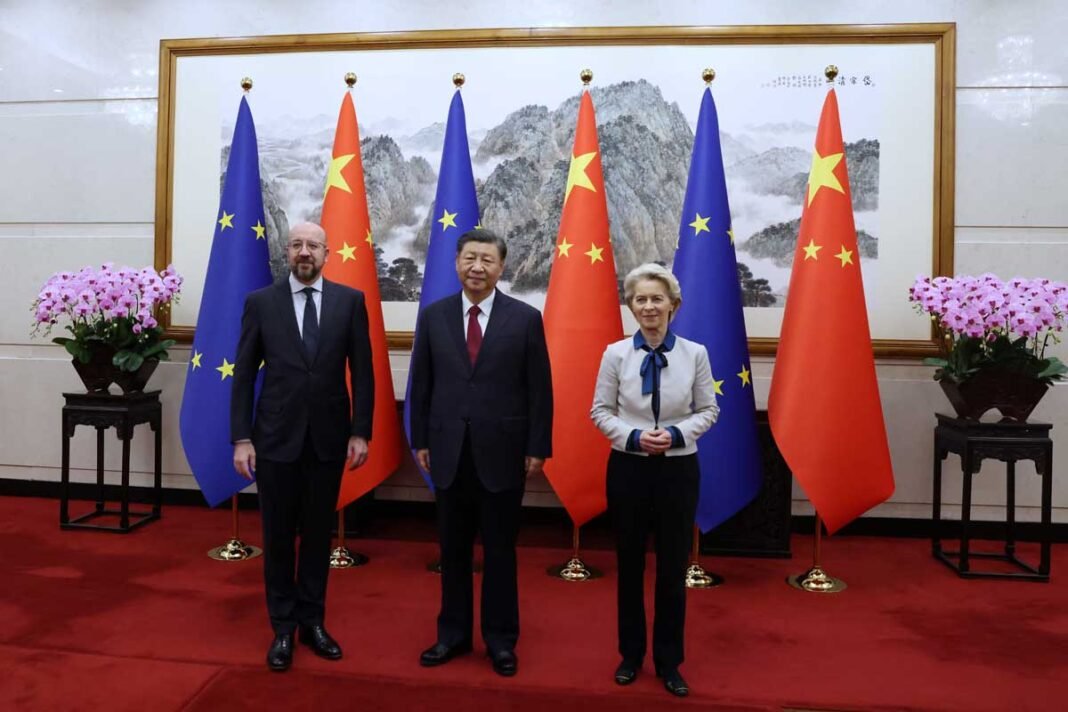
China will impose provisional tariffs of up to 42.7% on European Union dairy products starting Tuesday, escalating a growing trade dispute. The move comes after the EU imposed anti-subsidy duties on Chinese electric vehicles in October 2024.
The tariffs target unsweetened milk, cream, and key French cheeses, including Roquefort and Camembert, imported from roughly 60 EU companies. Most companies are expected to face rates below 30%, though some could reach the top rate of 42.7%.
Beijing claims these EU imports are heavily subsidized and harm domestic producers. The European Commission has strongly rejected the claims, calling the measures “unjustified and unwarranted” and based on “questionable allegations and insufficient evidence.” The EU filed a World Trade Organization (WTO) complaint over a year ago in response.
This latest retaliation follows China’s previous tariffs on EU brandy and pork. Trade experts say the dairy tariffs demonstrate that tensions are now spreading beyond electric vehicles into key agricultural sectors.
China imported $589 million worth of the affected EU dairy products in 2024, making the tariffs a significant disruption for European exporters. French producers are expected to suffer the most, while competitors such as New Zealand could benefit from a shift in supply chains.
The EU-China trade conflict illustrates how agriculture is becoming a political tool in broader disputes. Analysts note that China’s domestic pressures, including declining birth rates and milk oversupply, are driving protectionist measures that are framed as anti-subsidy enforcement.
European dairy exporters now face higher costs that may permanently alter trade routes. Many companies are considering moving their sales to markets less affected by Chinese tariffs, particularly New Zealand, which has seen rising demand in Europe as a result.
Experts warn that the EU-China trade war threatens billions of dollars in commerce across multiple sectors. Both sides have largely ignored multilateral solutions through the WTO, relying instead on tit-for-tat measures that widen the economic impact.
Industry representatives in France expressed concern that the tariffs could damage long-term competitiveness. “These tariffs hit iconic products and risk permanent market losses,” said one trade official. The European Commission continues to pursue WTO dispute resolution, though progress has been slow.
China’s dairy tariff escalation is also a signal to other trading partners. Economists suggest that Beijing is willing to apply similar measures selectively to reinforce its negotiating power on sensitive trade issues.
The widening conflict underscores the fragility of global trade relations. As tensions spread from technology into agriculture, exporters and governments must navigate a landscape increasingly shaped by retaliatory tariffs rather than predictable trade rules.
Analysts expect the EU and China to continue negotiating, but immediate relief for European dairy producers appears unlikely. With billions in trade at stake, both sides may persist with tariffs until broader concessions are reached, potentially affecting global markets for years to come.