

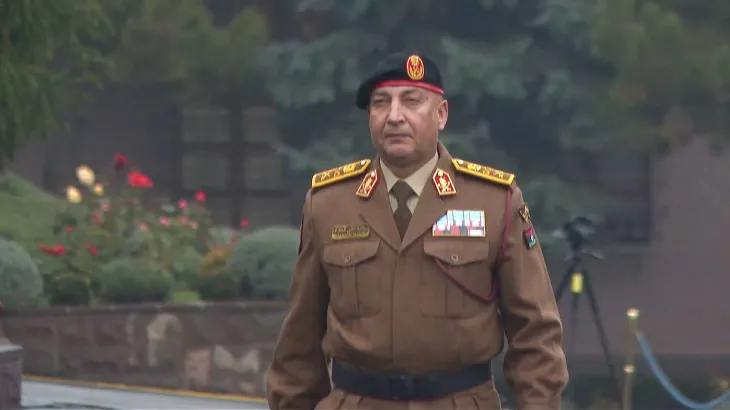
A plane crash near Ankara, Turkey, has claimed the lives of Libya’s top military chief, Mohammad Ali Ahmed Al Haddad, and four other senior Libyan officials. Rescue teams are working through the night amid scattered wreckage.
The aircraft, a Falcon 50 jet, took off from Ankara’s SN Boga Airport at 8:10 PM local time on Tuesday, bound for Tripoli. By 8:52 PM, all radio contact with the plane was lost, according to flight radar data.
Turkish authorities have suggested that the crash may have been caused by an electrical fault. Borhan Tinduran, head of communications for the Turkish president, confirmed that the plane had requested an emergency landing before losing contact. An official investigation into the incident is currently underway.
Libyan Prime Minister Abdul Hamid Dbeibah expressed deep sorrow over the loss. In a statement, he called the deaths a “major loss for the country, the military, and the people.” He praised the officials for their dedication, discipline, and commitment to national service, describing them as “shining examples of responsibility and patriotism.”
General Al Haddad had played a key role in Libya’s anti-Gaddafi opposition and remained a prominent figure in the country’s military leadership. This week, he was in Ankara to meet with Turkey’s military chief and other senior commanders.
The crash has sent shockwaves through Libya, with leaders and citizens mourning the sudden loss of experienced officials. Authorities in both Libya and Turkey are coordinating rescue operations and beginning a detailed investigation into the circumstances of the accident.
The Falcon 50 aircraft, widely used for executive travel and military missions, has undergone routine maintenance checks. Investigators are examining whether technical failure, human error, or other factors contributed to the crash.
This tragedy highlights the risks faced by high-ranking officials during international travel, especially in politically sensitive regions. Libya’s government emphasized that the dedication of these officials to national security and governance was extraordinary and that their loss will be deeply felt across all sectors.
As rescue and investigation efforts continue, both Turkey and Libya are coordinating to recover the wreckage and ensure that all safety protocols are reviewed to prevent similar incidents in the future. The crash has underscored the importance of aviation safety for government officials traveling abroad.
Libya now faces the challenge of filling leadership gaps in its military hierarchy while honoring the legacy of those who died in service. The plane crash near Ankara marks a somber moment for the country, emphasizing the fragility of life even for its most senior leaders.