



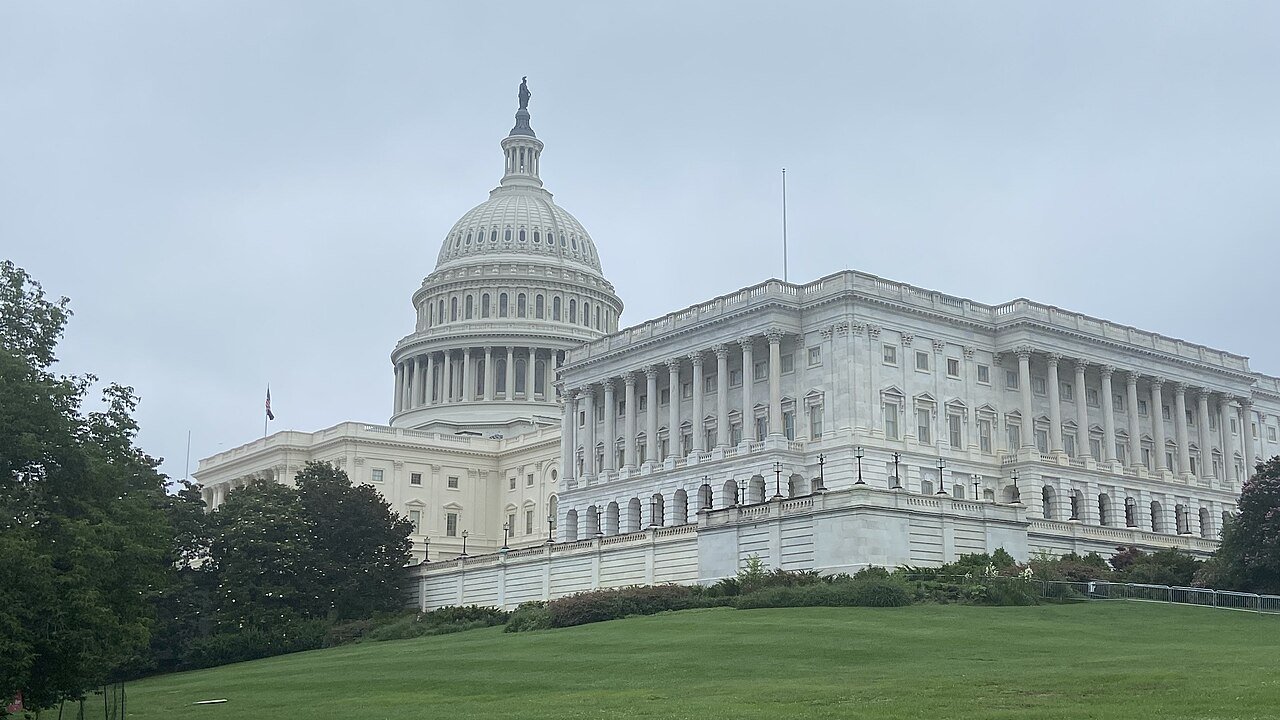
The US House of Representatives experienced an unusually dramatic year in 2025, marked by historic votes, lengthy debates, and a surge in censure attempts. Lawmakers attempted at least 17 formal censures or disapproval resolutions targeting colleagues for misconduct, making it one of the most disciplined-heavy years in recent memory.
A censure in the House requires a majority vote, forcing the accused lawmaker to stand at the dais while the Speaker announces their formal punishment. While it carries no removal from office or voting restrictions, the measure can tarnish a member’s reputation.
Despite the high volume of proposals, only one censure successfully passed. Republican Dan Newhouse’s resolution against Democrat Al Green was approved after Green interrupted a congressional address by former President Donald Trump. Green had waved a cane and shouted, “he has no mandate,” prompting his removal from the chamber. Democrats surrounded Green and sang “We Shall Overcome” as the censure was read.
The year’s censure attempts covered a wide spectrum of alleged misdeeds. Early in the year, Republican Nancy Mace proposed censuring Democrat Robert Garcia for comments deemed critical of Elon Musk. Garcia reportedly called Musk a “dick” during a committee hearing and suggested Democrats should “bring actual weapons to this bar fight.” The resolution never reached a floor vote.
Other incidents included Republican Randy Weber seeking to censure Democrat Jasmine Crockett for mocking Texas Governor Greg Abbott’s wheelchair use and proposals targeting lawmakers like Democrat LaMonica McIver, involved in a confrontation outside an ICE detention facility. Both failed to gain traction.
Several resolutions focused on racial or derogatory language. Republican Andy Ogles faced two censure resolutions for discriminatory remarks about Democratic lawmakers of color, including calls to deport a New York City mayoral candidate and offensive comments about House Minority Leader Hakeem Jeffries. Neither resolution went to a vote. Similarly, Republican Lauren Boebert was proposed for censure over racially charged statements against Al Green.
High-profile disputes also involved Democrat Ilhan Omar. Republican Mace sought to censure Omar after she criticized Charlie Kirk, a conservative activist, following his death. A coalition of Democrats and some Republicans blocked the resolution, arguing that offensive speech should be countered with dialogue rather than silencing.
The wave of censures extended to election disputes. In November, Democrat Marie Gluesenkamp Perez accused fellow Democrat Chuy Garcia of manipulating his retirement to favor his chief of staff. Her disapproval resolution passed, with bipartisan support, though it was not technically a censure.
Epstein-related controversies also surfaced. Democrat Stacey Plaskett, a non-voting delegate from the US Virgin Islands, had exchanged texts with Jeffrey Epstein during a 2019 congressional hearing. Republican Ralph Norman proposed censuring Plaskett as her party pushed for the release of Epstein-related files. The resolution failed due to Democratic unity and three Republican votes against it.
Florida Republican Cory Mills faced three separate censure proposals over alleged personal and professional misconduct. Some Democrats and Republicans blocked competing measures, sparking accusations of backroom deals to protect certain lawmakers while targeting others. Florida Republican Kat Cammack criticized the actions as “swampy” and inappropriate.
By year’s end, the House considered revising its rules to make censure approvals more difficult. Republican Don Bacon described the measure as a way to stop the “circular firing squad” that had consumed lawmakers’ attention.
The flurry of censure attempts underscores both the deep partisan tensions and personal disputes in the 2025 House of Representatives. While the formal consequences of censure remain limited, the political impact and public attention they generate continue to shape perceptions of Congress and its members.