


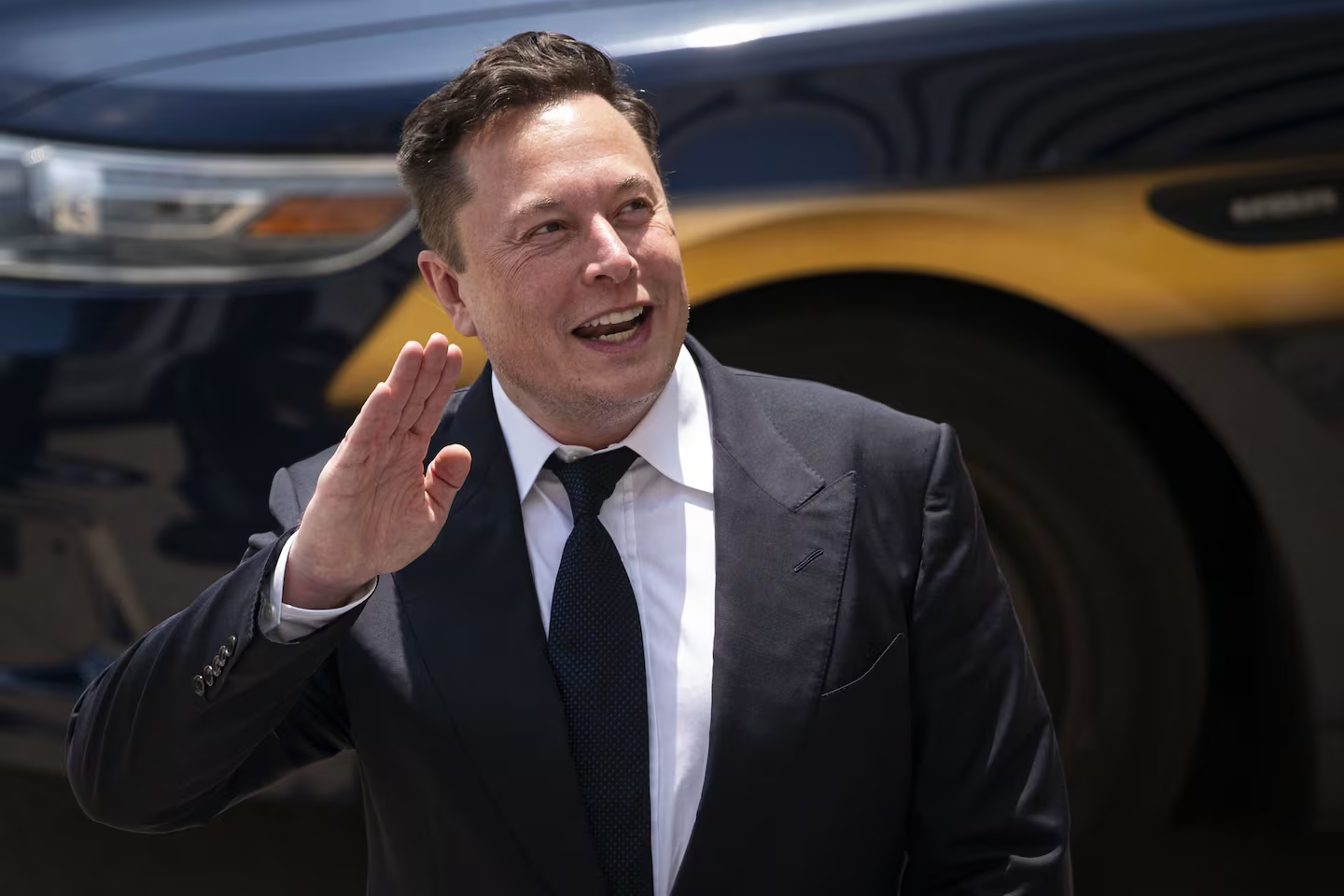
Elon Musk, the world-renowned technology entrepreneur and billionaire, is reportedly shifting his focus from atheism to exploring religion and spirituality. Known for his groundbreaking work in space, robotics, and artificial intelligence, Musk has long identified as a science-based rationalist. However, recent statements suggest a notable change in his worldview.
In a recent podcast, Musk expressed belief that the universe was created for a reason and that a divine entity is behind its existence. He stated, “I believe the universe has come into being through something, and that God is the creator.” According to experts, Musk’s statement reflects not just personal sentiment but a reasoned, philosophical conclusion drawn from his understanding of science and the universe.
Musk has emphasized that nothing comes from absolute nothingness, suggesting that the origin of the universe points to a higher power. This perspective has sparked discussion in both scientific and religious circles, as it bridges the gap between scientific reasoning and spiritual belief.
Beyond the existence of God, Musk also highlighted the societal and psychological role of religion. He noted that religion addresses essential human needs, filling a void in society and providing moral and cultural structure. On social media, he referred to religion as a framework that complements human development, suggesting that without faith, societies may face a cultural and ethical vacuum.
Previously, Musk identified as agnostic, reflecting uncertainty regarding spiritual matters. Now, he describes himself as a cultural Christian, indicating an appreciation for religious values and traditions rather than strict doctrinal adherence. Experts say this shift represents a fascinating intersection of modern science and spirituality, demonstrating that scientific leaders can engage meaningfully with questions of faith.
Musk’s evolving beliefs may influence broader conversations about science and religion, particularly debates on the compatibility of technological progress with spiritual understanding. Analysts suggest that his high-profile acknowledgment of faith could inspire renewed dialogue on how science, philosophy, and religion intersect in contemporary society.
Observers also note that Musk’s change reflects a growing trend among some scientists and tech leaders to reconsider the philosophical implications of the universe, existence, and morality. By acknowledging both rational reasoning and spiritual perspectives, Musk is fostering a nuanced discussion about human understanding, ethics, and the meaning of life.
This development has attracted attention not only for Musk’s personal views but also for its potential impact on cultural and societal discourse. As a prominent figure in technology and innovation, his shift toward religious interest could encourage discussions on how faith and science coexist in shaping the future of human society.
Musk’s comments illustrate that even the most science-driven minds can reconsider the role of religion, exploring the intersection of empirical knowledge, philosophy, and belief. Experts believe this could influence both public perception and academic debates regarding the reconciliation of science with spirituality.