


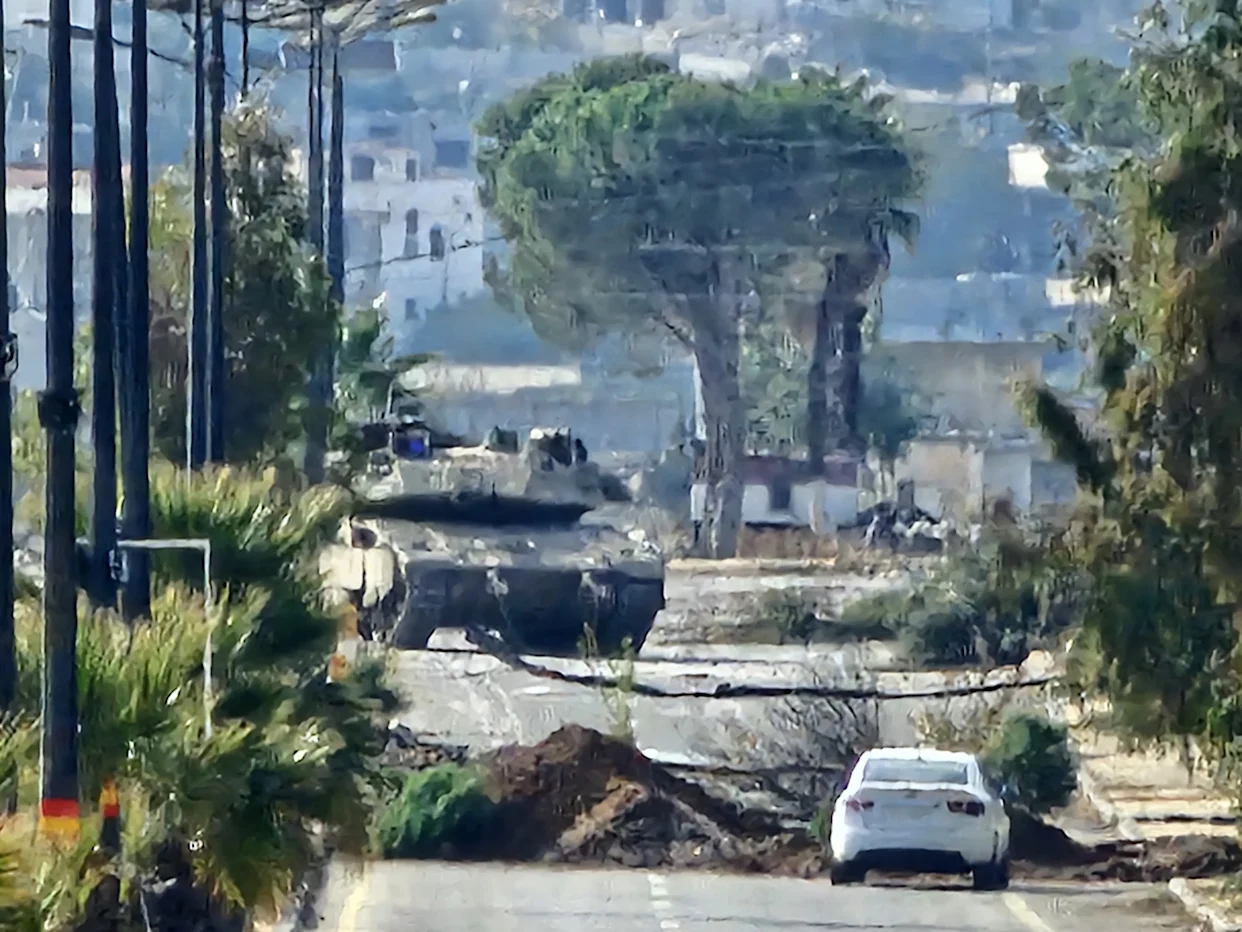
Israeli military vehicles entered a village in the countryside of Quneitra in southern Syria on Tuesday, according to local observers on the ground. The move has raised fresh concerns about violations of Syrian sovereignty at a time when indirect talks between Syria and Israel are taking place abroad.
Twelve Israeli army vehicles were seen entering the Saida al-Golan village in the Quneitra countryside. Residents reported military movement inside the village area, adding to ongoing tension across southern Syria.
The latest incursion comes as a Syrian delegation is holding a new round of negotiations with Israeli representatives in the French capital, under coordination supported by the United States. Officials said the talks were expected to continue into a second and final day on Tuesday.
A Syrian government source said the return to negotiations reflects Syria’s firm position on restoring its national rights. The source stressed that these rights are not open to compromise and remain central to Syria’s stance in any discussions.
Despite the ongoing talks, Israeli military actions on the ground have continued. Since the fall of Syria’s longtime leader, Bashar al-Assad, Israel has expanded its presence beyond the occupied Golan Heights. Israeli forces have carried out repeated ground incursions, air raids, and surveillance missions across southern Syria.
For several months, Israeli troops have conducted near-daily operations in Quneitra and nearby areas. These actions include setting up temporary checkpoints, arresting local residents, and clearing land with heavy equipment. Such activities have increased public anger and sparked unrest among local communities.
Although large-scale clashes have declined, air raids have continued. These strikes have caused civilian casualties and damage to military facilities. Local officials say many attacks have hit infrastructure sites and former army positions.
Conflict monitoring groups report that over the past year, Israel has carried out hundreds of air, drone, and artillery attacks across Syria. The frequency of these strikes averages almost two incidents per day, making Syria one of the most targeted areas in the region.
Following the collapse of the former Syrian government, Israel declared the 1974 disengagement agreement no longer valid. That agreement had created a buffer zone between Israeli and Syrian forces under international supervision after the 1973 war.
Since then, Israeli forces have moved deeper into Syrian territory that was previously restricted under the accord. Military patrols, surveillance flights, and new positions have been reported in areas that were once demilitarized.
Israeli officials argue that the agreement became invalid after the Syrian leadership fled the country. Based on that claim, Israel has continued military operations without regard for previous arrangements.
Syria has not responded with military action. Officials say Damascus remains focused on diplomatic efforts and internal stability rather than escalation.
In late December, Israeli leaders said they want a calm and stable border with Syria. U.S. officials have also expressed confidence that Israel can maintain workable relations with Syria’s current leadership, which came to power after a rapid offensive in late 2024.
Negotiations aimed at reaching a security understanding between the two sides have taken place intermittently for months. However, no agreement or clear progress has been announced so far.
Syria does not officially recognize Israel and has shown no interest in joining regional normalization agreements promoted by Washington. Syrian officials say such deals do not address core issues, including occupied land.
Israel’s annexation of the Golan Heights is recognized by the United States but rejected by most countries worldwide. The international community continues to view the territory as occupied Syrian land.
As Israeli military activity continues on the ground, residents in southern Syria remain uncertain about what lies ahead. Many fear that ongoing incursions could undermine fragile stability, even as talks continue away from the battlefield.
The situation highlights a sharp contrast between diplomatic efforts and military actions. While negotiations aim to reduce tension, developments on the ground suggest that deeper challenges remain unresolved.