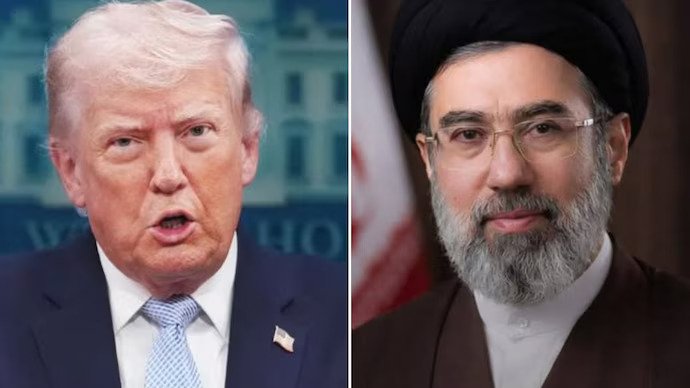


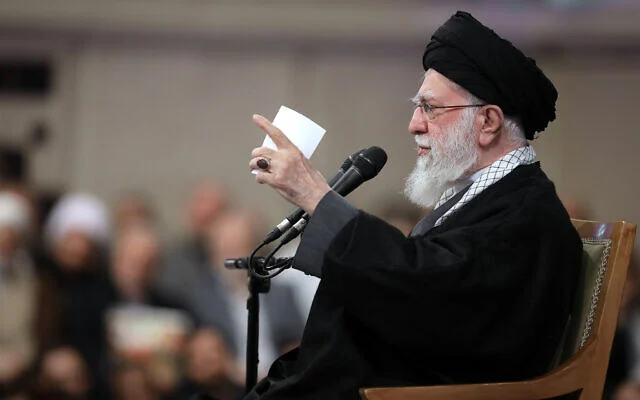
Iran is witnessing widespread anti-government protests as Supreme Leader Ayatollah Ali Khamenei warned that U.S. President Donald Trump will face a downfall comparable to tyrants like Nimrod and Pharaoh. The leader’s remarks came during a nationally televised speech, emphasizing that Iran will not yield to external pressure or conspiracies.
The unrest has spread across all 31 provinces, with millions taking to the streets. Demonstrators are demanding the fall of Khamenei’s administration and the restoration of a monarchy. Reports indicate that 45 people have died in the first 12 days of the protests, which have included widespread fires, vandalism, and clashes with security forces.
Protests have transformed major cities into conflict zones. Tehran, Mashhad, and Isfahan have seen some of the largest demonstrations, while the unrest has extended to smaller towns and rural areas. Despite deployment of special forces and paramilitary units, the government has struggled to contain the movement. Human rights organizations report that demonstrations now cover the entire country.
Many state and public buildings, mosques, shops, and vehicles have been targeted during the protests. In the Fars, Kerman, and Qazvin provinces, statues of General Qasem Soleimani have been destroyed, signaling the intensity of public anger. Internet access remains partially restricted, complicating communication for protesters and observers alike.
Ayatollah Khamenei accused the United States of fueling the unrest and used the speech to issue a stern warning. He compared Trump’s future to infamous historical figures, noting that tyrants like Pharaoh, Nimrod, and Reza Shah fell due to their arrogance. “The fate of Trump will be similar,” he said, asserting that the Islamic Republic will not bow to sabotage or external threats.
Exiled Iranian Crown Prince Reza Pahlavi expressed support for the demonstrators, urging them to remain steadfast. “People are protesting openly, driven by love for their country. They want change,” he said. He warned that the United States would respond strongly if protesters were harmed, and encouraged participants to continue despite challenges.
The unrest originally began in late December 2025, triggered by rising inflation and soaring prices. Public frustration over economic hardship has combined with longstanding political grievances, fueling demonstrations across the nation. The movement shows no signs of slowing, with protesters calling for major political reforms.
The protests are now among the most significant anti-government movements in Iran in decades. Citizens continue to risk arrests and violent crackdowns while demanding accountability and change. Observers say the country faces a critical moment as public dissent grows in intensity and scope.
With the unrest showing no immediate resolution, analysts expect the situation to remain tense. Khamenei’s warning to Trump underscores the Iranian leadership’s defiant stance against foreign influence, while the protesters’ determination highlights the domestic pressure facing the Islamic Republic.