


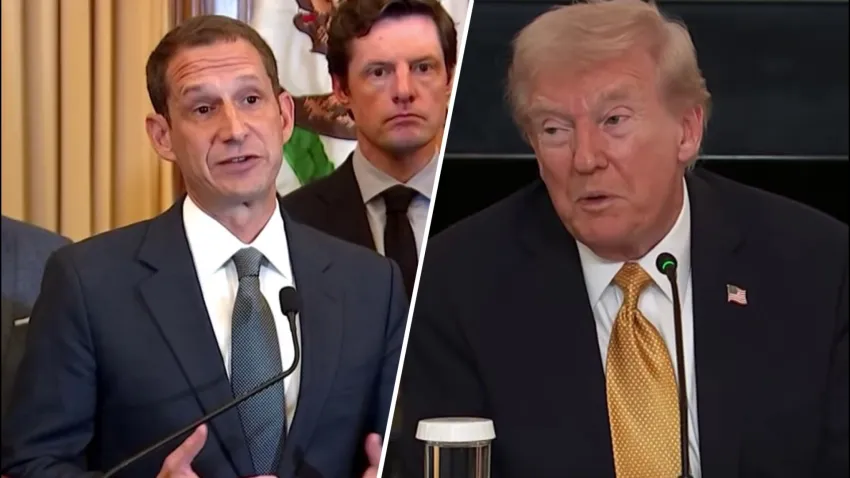
San Francisco Mayor Daniel Lurie said Friday he personally convinced President Donald Trump not to deploy federal agents to the city, citing improvements in crime and local governance.
In a live interview with CBS Evening News, Lurie, a moderate Democrat, described taking the call while sitting in a car. “His first question to me was, ‘How’s it going there?’” Lurie recalled.
Reports in October indicated that the Trump administration had considered sending a surge of Border Patrol agents to San Francisco as part of a broader immigration enforcement campaign. Similar deployments had already occurred in Los Angeles, Chicago, New Orleans, and Minneapolis. The potential move drew strong pushback from California officials, including Lurie and Governor Gavin Newsom.
Shortly after those reports, Trump announced he had canceled the planned surge following his conversation with Lurie. On Truth Social, the president wrote that he called off the deployment after Lurie asked to “see if he can turn it around,” noting that local friends had also urged him not to proceed.
During the interview, Lurie said he told Trump, “San Francisco is a city on the rise, crime is at historic lows, all economic indicators are in the right direction, and our local law enforcement is doing an incredible job.” He emphasized the city’s progress while acknowledging ongoing challenges.
“I’m clear-eyed about our challenges still,” Lurie said. “In the daytime, we have really ended our drug markets. At night, we still struggle on some of those blocks that you see.”
Lurie, who defeated incumbent London Breed in the November 2024 mayoral race, has been under scrutiny for San Francisco’s struggles with crime and homelessness—issues frequently cited by Republican critics. Despite those challenges, Lurie credited local law enforcement and policy efforts with improving public safety and maintaining economic growth.
Lurie also declined to comment on whether he supports a proposed California ballot initiative that would impose a one-time 5% tax on the state’s billionaires. “I stay laser-focused on what I can control, and that’s what’s happening here in San Francisco,” he said. “I don’t get involved in what may or may not happen up in Sacramento, or frankly, for that matter, D.C.”
The revelation that a personal conversation between the mayor and president helped halt a federal law enforcement surge underscores the delicate balance between local leadership and federal policy. San Francisco continues to navigate public safety, housing, and homelessness challenges while maintaining a focus on local governance and community improvements.
Lurie’s account provides a rare glimpse into behind-the-scenes communication between city leadership and the White House, highlighting the role of direct dialogue in shaping national enforcement decisions.