
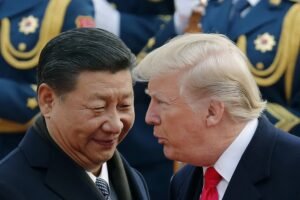



Canada and China have announced a major tariff relief agreement following a high-level meeting between Canadian Prime Minister Mark Carney and Chinese President Xi Jinping in Beijing. The deal marks a reset in bilateral trade relations after years of tension and reciprocal levies.
Under the agreement, China will reduce tariffs on Canadian canola oil from 85% to 15% by March 1. Canada, in turn, will tax Chinese electric vehicles at the most-favoured-nation rate of 6.1%, allowing only 49,000 EVs into the market at that rate. The cap responds to concerns from Canadian automakers about a surge of affordable imports. Reduced tariffs will also apply to Canadian lobsters, crabs, and peas, benefiting agricultural and seafood producers.
The agreement follows years of strained trade, which began in 2018 after Canada arrested Huawei executive Meng Wanzhou at the request of the United States. China retaliated by detaining Canadian citizens Michael Kovrig and Michael Spavor and imposing tariffs on Canadian goods. Meng and the two Canadians were released in 2021, but tensions persisted, affecting trade flows. In 2025, Chinese imports of Canadian goods dropped by 10% due to tariffs.
Carney, the first Canadian leader to visit China in nearly a decade, highlighted the importance of diversifying trade beyond the United States. He said discussions with Beijing were “realistic and respectful” while emphasizing that Canada maintains clear “red lines” on human rights, election interference, and other concerns. He stressed that engagement with China must be direct and disciplined, focusing on specific areas of cooperation.
Xi Jinping described the deal as a “turnaround” in bilateral relations, emphasizing that stable and healthy ties between China and Canada support global peace, development, and prosperity. Observers noted the visit reflects broader efforts by China to present itself as a stable global partner and build pragmatic ties, following recent visits from leaders of South Korea, Ireland, the United Kingdom, and Germany.
During the three-day visit, Carney met senior executives from Chinese businesses, including energy companies and electric vehicle battery manufacturers. The two nations also signed agreements on energy and trade cooperation. Analysts described the reset as cautious but realistic, aiming to balance economic benefits with long-standing differences in political and legal systems.
Carney noted that while Canada and China have differing values, both sides can cooperate on targeted areas. Discussions included Taiwan, Hong Kong, and jailed pro-democracy figures, but Carney emphasized a narrower focus for effective engagement. He said Canada’s approach combines direct diplomacy with careful management of leverage, acknowledging the complex history of relations between the two nations.
The Canada China Tariff Deal signals a significant step toward easing trade tensions and creating opportunities for Canadian businesses. With lower tariffs on key agricultural and automotive products, both countries aim to stabilize trade and open pathways for further economic collaboration while managing longstanding political differences.