

Iran is often described as one of the most powerful countries in the Middle East. Many global powers have tried to weaken or isolate it, yet Iran continues to stand firm. Analysts say there are several deep-rooted reasons why defeating Iran is nearly impossible.
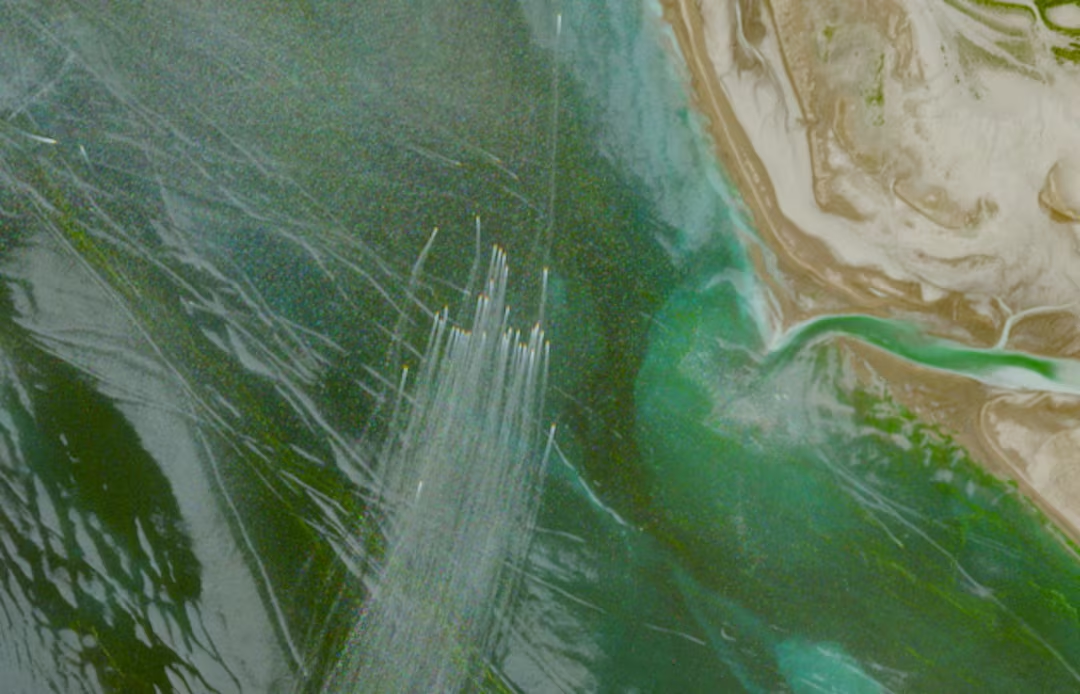
One of Iran’s greatest strengths is its control over the Strait of Hormuz. This narrow waterway lies along Iran’s southern border and is one of the most strategic sea routes in the world. Though only about 33 kilometers wide, nearly 20 percent of the world’s oil passes through it every day. Experts often call it the world’s energy lifeline. Iran controls several key islands around the strait, giving it strong leverage over global oil supply. Even the threat of closing this route causes fear in Western countries and shakes global markets.
Iran’s geographic position adds another layer of strength. The country sits at the crossroads of Europe, Asia, and Africa. It also borders three major bodies of water. To the north lies the Caspian Sea, while the Persian Gulf and the Gulf of Oman stretch along its south. This unique location has helped Iran survive as one of the world’s oldest continuous states. For more than 500 years, Iran has maintained largely the same borders. Many empires have tried to conquer it, but none succeeded.
Military capability is another major factor. Iran has the longest-range ballistic missiles in the Muslim world. Some of these missiles can travel up to 2,000 kilometers. This range puts not only Israel but also parts of Europe within reach. Even senior U.S. military officials have acknowledged that Iran possesses the largest and most advanced missile stockpile in the Middle East. Alongside missiles, Iran has built a strong drone program. Its low-cost but effective drones have proven successful in modern warfare and have changed battle strategies in recent conflicts.
Iran’s natural landscape makes invasion extremely difficult. The country is surrounded by powerful natural defenses. The Zagros Mountains stretch along Iran’s western and southern borders. These mountains are steep, rugged, and hard to cross. Any large-scale military movement through this region would face serious obstacles. In the north, the Alborz Mountains provide another defensive barrier. Even if forces managed to pass through these mountains, they would still face the Lut Desert. This desert is one of the hottest places on Earth, making the movement of troops and supplies nearly impossible.
Energy resources also give Iran long-term strength. The country holds between 10 and 15 percent of the world’s known oil and natural gas reserves. These resources provide Iran with economic power and strategic influence. Control over energy routes allows Tehran to affect global prices and supply chains. This makes Iran a key player in global energy security, despite years of sanctions.
Iran’s international partnerships further protect it. Despite pressure from the United States, Iran has grown closer to Russia and China. These relationships provide diplomatic cover and strategic support. In times of tension, Tehran has often received backing from Moscow and Beijing. This support limits how far Western pressure can go and raises the cost of any direct confrontation.
Another major strength lies in Iran’s regional network of allied groups. This network, often called the Axis of Resistance, operates across several Middle Eastern countries. Through these allies, Iran can apply pressure without engaging in direct warfare. This strategy allows Tehran to influence regional events while avoiding full-scale conflict.
Together, these factors explain why Iran remains so resilient. Its geography, military power, energy wealth, and alliances form a powerful shield. While global pressure continues, experts agree that defeating Iran through force or isolation remains highly unlikely.