



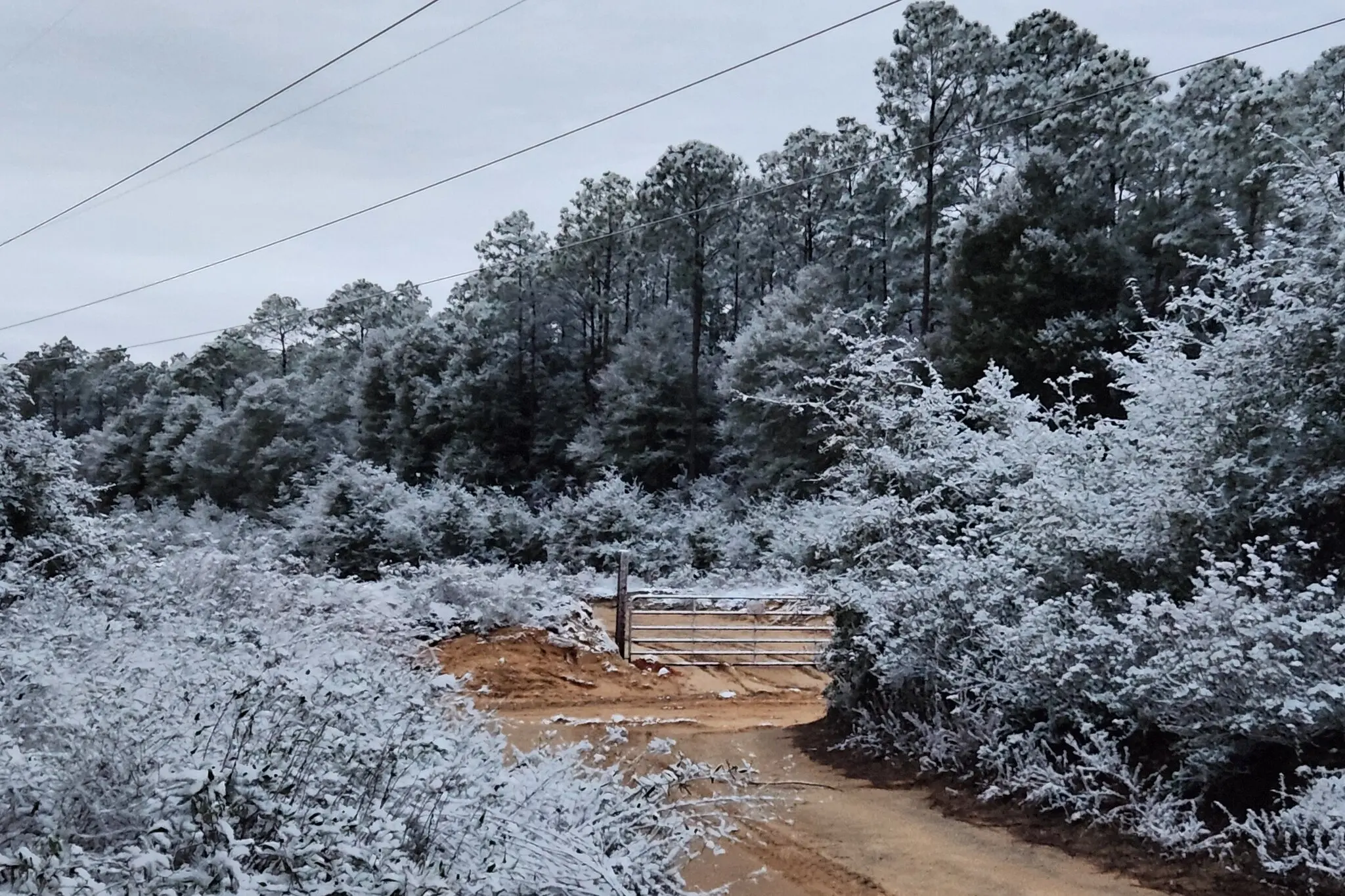
A rare winter storm brought snow to parts of the southern United States on Sunday, creating short-lived excitement before warmer air and sunshine caused it to melt away. Snowflakes fell as far south as Florida and Georgia, areas where snowfall is uncommon and often fleeting.
In the Florida Panhandle, snow fell early Sunday, including near Pensacola. Vehicles, grass, and rooftops briefly turned white. By the afternoon, most of the snow had melted. Weather officials lifted winter storm warnings as road conditions improved and temperatures rose.
Georgia also saw unusual snowfall. Parts of north and central Georgia recorded light to moderate accumulation. Some areas received up to three inches, which is significant for the region. Towns outside major cities saw snow cover roads, trees, and open fields for several hours.
Despite the excitement, the snow did not last long. Sunshine and slightly warmer air helped melt it quickly. Local officials said roads were drying by late afternoon, though some slick spots remained into the evening.
While the South enjoyed a brief taste of winter, the same storm system moved north and strengthened. Snow spread across the Northeast and New England, where colder temperatures allowed it to last longer. Weather alerts remained in place across several states as conditions worsened overnight.
Cities from Philadelphia to Boston and farther north prepared for slippery roads and reduced visibility. In parts of eastern Massachusetts and nearby areas, snowfall totals reached several inches, with heavier bands expected during the evening and overnight hours.
New York City saw lighter snow, with small accumulations across the metro area. Even modest snowfall caused delays as crews worked to clear roads and sidewalks. Officials warned drivers to remain cautious as snow continued into the night.
Meteorologists said a second wave of snow followed the first, adding to totals in the Northeast. While not expected to be extreme, the snowfall was enough to disrupt travel and daily routines. Snow tapered off late Sunday in some areas and into early Monday farther north.
The storm caused travel problems across the country. More than a thousand flights were canceled on Sunday. Several major airports in the Northeast reported delays and cancellations as crews worked through icy conditions. It was not immediately clear how many cancellations were directly linked to the weather, but snow often plays a major role.
The storm formed over the Gulf region and pulled moisture north as cold air from Canada moved south. This clash of warm and cold air helped produce snow across a wide area. As the system tracked along the Atlantic coast, it continued to feed snowfall into the Northeast.
By Monday, the storm was expected to move into eastern Canada. Snow would then affect parts of Atlantic Canada before gradually weakening. Forecasters said the system followed a classic winter pattern for the East Coast.
In the South, residents made the most of the rare weather. Children played outdoors, families took photos, and local businesses adjusted hours. Snow days are uncommon in the region, and even light snowfall can change daily life.
Emergency officials urged caution as snow melted. Wet roads combined with dropping temperatures can lead to black ice. Drivers were advised to limit travel during the evening and early morning hours.
Weather experts noted that the Southeast can go many winters without measurable snow. While the region has seen snow in recent years, it remains a rare event. Even when it happens, it often melts within hours.
As the storm moved on, normal winter conditions returned to the South. Grass and pavement reappeared, and daily routines resumed. In contrast, northern states continued to deal with snow removal and travel impacts.
The storm served as a reminder of how quickly winter weather can shift across regions. From rare snowfall in the South to steady accumulation in the Northeast, the system touched millions of people in a single day.
For many in the South, the snow was a brief but memorable break from routine. For the Northeast, it was another winter challenge to manage before the workweek began.