


NASA astronaut Suni Williams, a native of Massachusetts, announced her retirement Tuesday after a remarkable 27-year career. Williams became world-famous after spending nine months trapped on the International Space Station (ISS) during a mission gone awry.
Over her career, Williams spent a total of 608 days in space, but her longest mission lasted 286 days, drawing global attention. She and fellow astronaut Butch Wilmore launched on Boeing’s Starliner crew capsule on June 5, 2024, expecting a short flight. Instead, technical challenges extended their stay.
By the time their mission ended, the crew had circled Earth 4,576 times and traveled over 121 million miles (195 million kilometers). The extended mission provided unique opportunities for science experiments and space station maintenance.
Williams first reached space aboard the Space Shuttle Discovery in 2006. She returned to orbit two more times, completing nine spacewalks totaling 62 hours and six minutes, the most by a woman and fourth-most in history. She also became the first person to run a marathon in space, setting records that will inspire future astronauts.
In a statement, Williams said, “Space is my favorite place to be. Serving in the Astronaut Office and flying three times has been an incredible honor. The International Space Station, the people, and the science are awe-inspiring. I hope our work has made the next steps to the Moon and Mars a little easier. I look forward to seeing NASA continue to make history.”
Williams’ final mission highlighted not only her resilience but also the progress of commercial space travel. The Boeing Starliner program, despite setbacks, demonstrated the potential for long-duration human spaceflight beyond government-run missions.
NASA Administrator Jared Isaacman praised Williams, saying, “Suni has been a trailblazer in human spaceflight, shaping the future of exploration through her leadership aboard the space station. Her work advancing science and technology has laid the foundation for missions to the Moon and Mars. Her achievements will continue to inspire generations.”
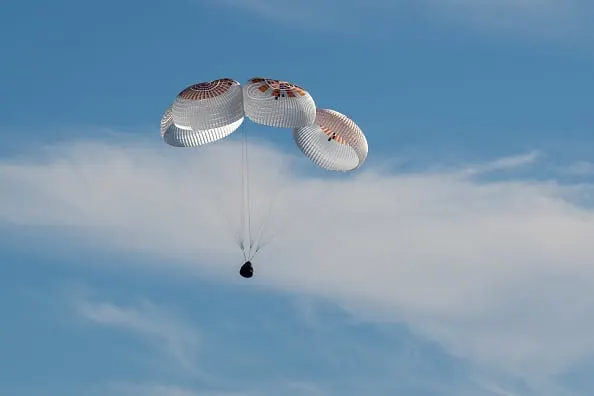
The astronaut returned safely on March 18, 2025, aboard a SpaceX Dragon capsule alongside Wilmore, NASA astronaut Nick Hague, and Roscosmos cosmonaut Aleksandr Gorbunov. Recovery teams assisted the crew as they landed in the waters off Tallahassee, Florida. Celebrations followed worldwide, including in Mumbai, where local students displayed a painting honoring Williams and Wilmore.
NASA Johnson Space Center Director Vanessa Wyche also commended Williams, noting her “pioneering leadership” and dedication. Her contributions have been essential for preparing the ISS for commercial missions and ongoing scientific experiments.
Throughout her career, Williams has been a strong advocate for women in STEM and space exploration. She inspired countless young people to pursue careers in science, technology, engineering, and mathematics. Her retirement marks the end of a legendary era but also sets the stage for the next generation of explorers.
Williams leaves a legacy of courage, innovation, and dedication. From her first shuttle mission to running a marathon in microgravity, she has pushed the limits of human endurance and achievement. Her story shows the power of human resilience in space, proving that even the most unexpected challenges can be overcome with skill, teamwork, and determination.
As NASA continues preparations for Artemis missions to the Moon and plans for Mars exploration, Williams’ work will remain a cornerstone. Her record-breaking career demonstrates that human spaceflight is both possible and transformative, opening the door for more ambitious journeys in the future.
Williams’ retirement reminds the world of the extraordinary contributions astronauts make to science, exploration, and human understanding. Her journey, especially the nine months spent far from Earth, will remain a symbol of courage, dedication, and the pursuit of knowledge beyond our planet.