

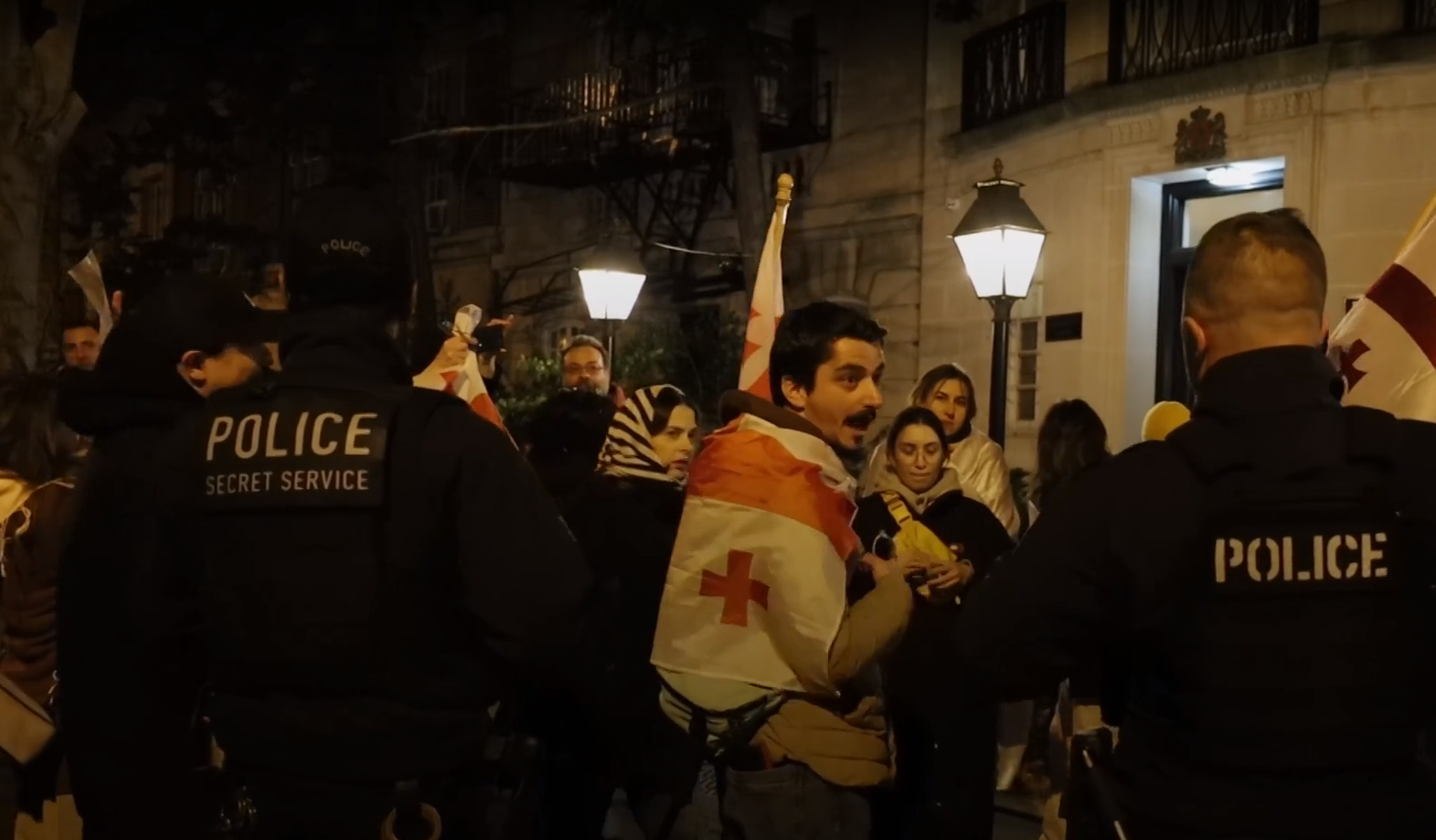
Human Rights Watch (HRW) has reported that Georgian authorities are increasingly detaining and harassing peaceful demonstrators, raising serious concerns about freedom of assembly in the country. The findings highlight how new restrictions on public gatherings are being used to limit dissenting voices.
In December 2025, Georgia amended its Law on Assemblies and Manifestations. The revisions give police broad authority to regulate demonstrations not only on roadways but also on sidewalks and pedestrian areas. Organizers must now notify the Internal Affairs Ministry at least five days in advance. Police are allowed to issue binding instructions on location and timing, including on-site during an event.
Failure to meet notification requirements or follow police orders is treated as an administrative offence, punishable by up to 15 days’ detention for participants and up to 20 days for organizers. Repeat violations can even result in criminal charges.
Since the law took effect, authorities have pursued dozens of cases against protesters for minor infractions. In one instance, a Tbilisi City Court sentenced a 35-year-old participant to four days in detention for allegedly obstructing pedestrian movement, despite no clear evidence that he blocked anyone. Several others have received similar short detentions under comparable circumstances. More cases are expected.
Lawyers representing demonstrators report that in many proceedings, authorities fail to specify whom a protester allegedly obstructed or what exact area must be vacated. Many cases rely on vague police instructions and limited evidence. In some situations, judges have referred administrative cases for further investigation, exposing participants to possible criminal liability on unclear grounds.
Police have denied detaining individuals for peaceful assembly alone, asserting that those punished intentionally blocked pedestrian movement. Human rights groups, however, say evidence to support these claims is thin or missing entirely.
Georgia is bound by international human rights obligations, including the European Convention on Human Rights. These laws protect freedom of expression and the right to peacefully assemble. Any limits on these rights must be lawful, necessary, and proportionate, with due process protections in place, even for administrative offences.
HRW has called on Georgia’s Parliament to repeal or amend provisions that unduly restrict peaceful assembly. The rights group also urged law enforcement and courts to ensure enforcement practices meet international standards. Without reforms, peaceful protesters in Georgia may continue to face arbitrary detention, undermining civil liberties and democratic freedoms in the country.
The report underscores growing concerns about restrictive legislation in Georgia. Observers warn that ongoing enforcement practices could have long-term effects on civic engagement, public trust, and the ability of citizens to exercise their fundamental rights safely.