

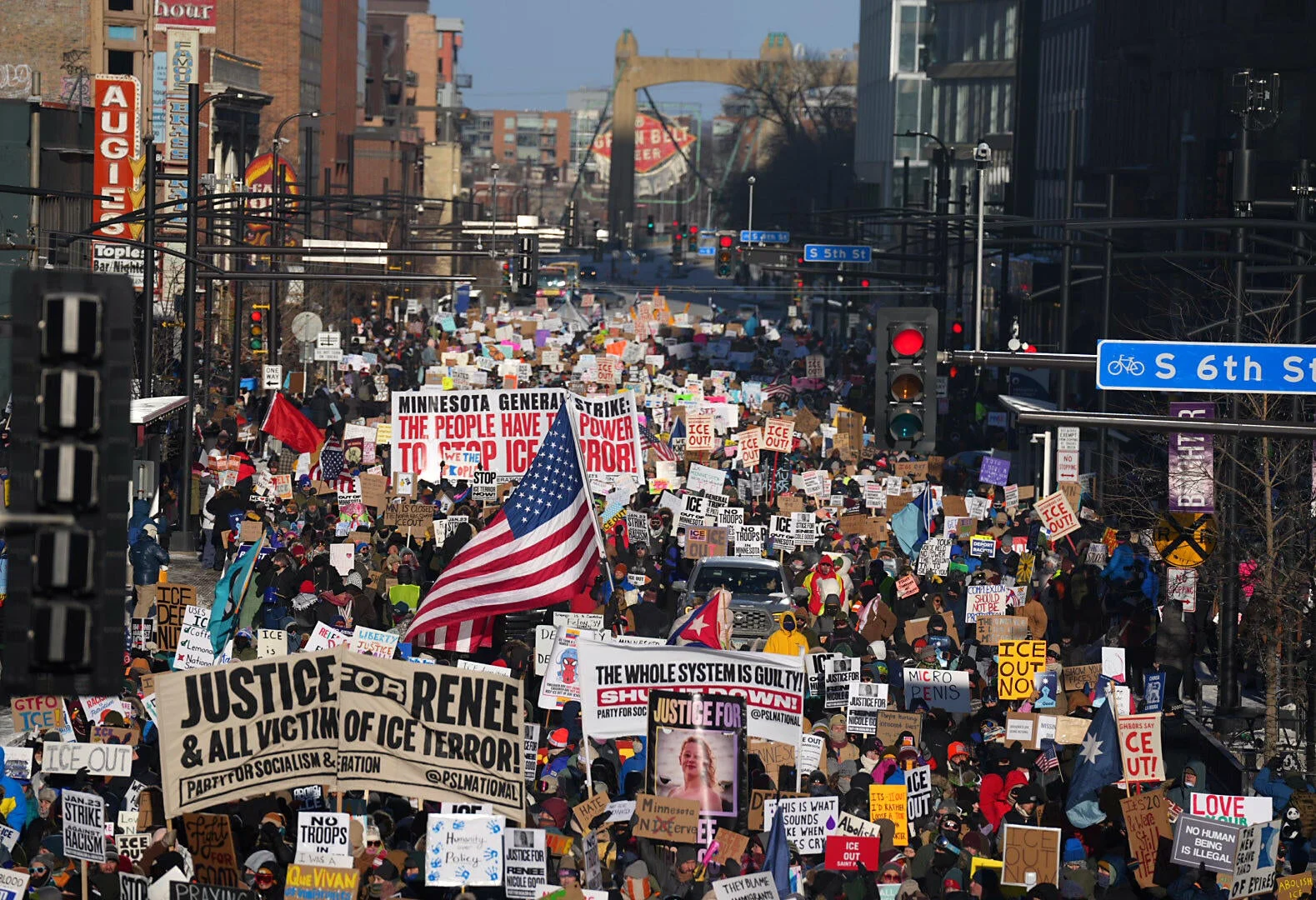
Minneapolis has become the focal point of President Trump’s aggressive immigration enforcement strategy, following a surge in federal agents and two fatal shootings in under three weeks. The deaths of Alex Pretti and Renee Good, both Minneapolis residents, have intensified local tensions and drawn national scrutiny.
The federal crackdown, dubbed “Operation Metro Surge,” began in early December 2025, targeting individuals with deportation orders and alleged fraud in state welfare programs. ICE initially focused on the Somali-American community, which represents the largest such population in the United States, after President Trump criticized state officials over fraud cases linked to Somali immigrants.
A viral video alleging day care fraud in Minnesota amplified federal attention, prompting ICE agents to conduct site inspections across the Minneapolis area. Authorities later reported that most facilities were operating normally, though one center closed shortly after.
By January 5, an additional 2,000 federal agents were deployed to Minneapolis, including Border Patrol units led by commander Gregory Bovino, known for previous controversial operations in major U.S. cities. The influx brought the federal enforcement presence to roughly 3,000 agents, dwarfing the city’s 600-officer police department. Federal officials reported approximately 3,400 arrests, though criminal histories were largely unspecified.
Tensions escalated further on January 7 when ICE officer Jonathan Ross fatally shot Renee Good. Videos suggest Good attempted to navigate her vehicle around officers, contradicting federal claims that she tried to attack an agent. The incident triggered protests and drew sharp criticism from Minneapolis Mayor Jacob Frey. Following this, multiple Justice Department prosecutors and an FBI supervisor resigned amid pressure to classify the shooting as an assault on a federal officer rather than a civil rights matter.
The following week, another ICE officer shot a Venezuelan migrant during an alleged confrontation involving a snow shovel. President Trump subsequently threatened to invoke the Insurrection Act if local authorities did not cooperate with ICE, prompting the military to place troops on standby for potential deployment.
A federal judge temporarily blocked ICE agents from using pepper spray and nonlethal munitions on peaceful protesters, though the order was later paused on appeal. The Justice Department also launched investigations into Minnesota officials, including Governor Tim Walz and Mayor Frey, over alleged obstruction of federal enforcement.
Incidents involving U.S. citizens further fueled outrage. On January 18, ICE detained ChongLy “Scott” Thao, a Hmong American, at gunpoint in his home without a warrant. Two days later, a five-year-old boy, Liam Conejo Ramos, was taken into custody alongside his father, drawing national attention.
The situation escalated again on January 24, when Alex Pretti, a 37-year-old ICU nurse and lawful gun owner, was fatally shot by Border Patrol agents. Video footage contradicts federal claims that Pretti posed a lethal threat, with witnesses showing no weapon in his hands before the shooting. Minneapolis Police Chief Brian O’Hara described the federal surge as “unsustainable,” highlighting the strain on the city’s police and the fear it has caused in the community.
In response to criticism, Border Patrol commander Bovino and some agents are expected to leave Minneapolis, while White House border czar Tom Homan is set to take a leadership role in the city. The controversy over the federal crackdown, the use of lethal force, and the targeting of residents without criminal records has made Minneapolis a national flashpoint in the debate over immigration enforcement.
The Trump administration defends its actions as necessary to uphold the law, but Minneapolis residents and local officials warn that the heavy-handed approach has caused chaos, fear, and growing distrust between communities and federal authorities.