


If your mind races while your body is exhausted, bedtime yoga could be the solution. Gentle yoga in the evening helps release tension and signals your nervous system to switch from “fight or flight” to “rest and digest,” making it easier to fall asleep. By combining slow movement with focused breathing, yoga calms mental chatter, eases stress, and prepares your body for deep, restorative sleep.
Not all yoga poses are ideal for bedtime. Poses like downward dog or sun salutations can energize you, so focus on gentle stretches, reclined twists, and passive hip openers to promote relaxation. Props like yoga blocks, straps, or a blanket can make poses safer and more comfortable, allowing you to support your body as it unwinds. Before starting, warm up with a few neck and shoulder rolls, cat-cow stretches, and a few minutes in child’s pose.
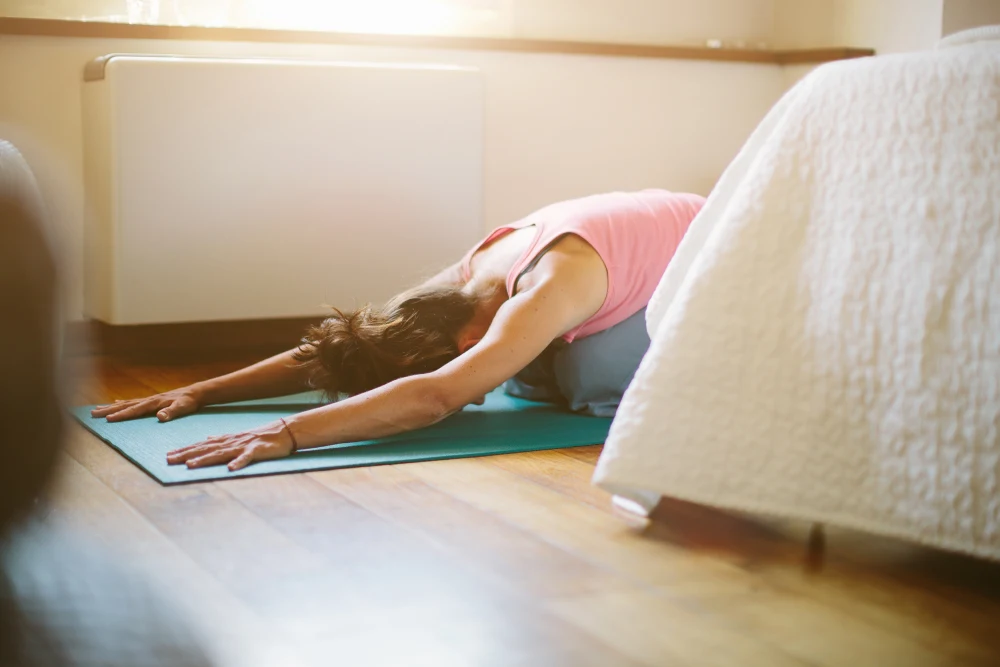
Child’s pose, or Balasana, is a calming way to begin or end your practice. Start on hands and knees with your wrists under your shoulders and knees under your hips. Slowly sit back on your heels, stretching your arms forward or keeping them by your sides, with your forehead resting on the floor. Focus on deep, steady breathing and let your body melt into the floor. A yoga block under your forehead can provide extra comfort.
The reclining bound angle pose, Supta Baddha Konasana, is another excellent hip opener. Sit on your mat with your knees bent and feet flat on the floor, or lie on your back for a deeper stretch. Bring the soles of your feet together and let your knees fall open like butterfly wings. Rest your arms comfortably at your sides or on your knees. If your hips feel tight, placing yoga blocks under your knees can provide support. Hold the pose for a few minutes, gradually working up to five, while focusing on slow, deep breaths.
Reclined pigeon pose, or Supta Kapotasana, targets hips, lower back, and hamstrings. Lie on your back with knees bent and feet flat. Cross your right ankle over your left thigh, gently pressing into the top knee to open the hip. For a deeper stretch, thread your hands around the back of the grounded leg. Keep your head and shoulders relaxed on the floor and breathe slowly, letting tension release from your body.
Legs up the wall pose, or Viparita Karani, is a restorative inversion that improves circulation and relieves stress from the lower back and hips. Sit sideways next to a wall and swing your legs up so your heels rest against it. Lie flat on your back, allowing your arms to fall naturally at your sides or rest on your stomach. Stay in this position for one to five minutes, adjusting time as you feel comfortable. For extra support, bend your knees slightly or place a yoga block under your lower back.
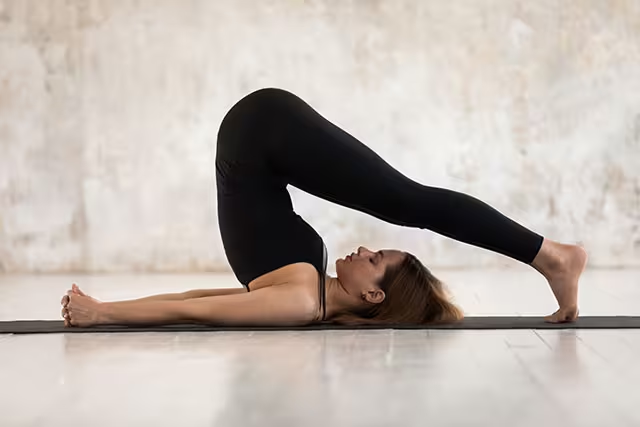
For a slightly more advanced option, try modified plow pose, Halasana. Lie flat on your back with arms by your sides, bend your knees, and lift your hips, guiding your legs over your head. Rest your feet on a chair or the floor behind you if possible. Keep your arms planted for stability and hold for five breaths before slowly lowering your spine and legs to the floor. Using a chair or blanket can help protect your back while you stretch.
Even a short yoga session of 10–15 minutes before bed can make a difference in how quickly you fall asleep. Yoga complements, but doesn’t replace, sleep aids or supplements like melatonin, and it works best when paired with a consistent bedtime routine. Gentle bedtime yoga is especially useful for those struggling with insomnia or anxiety-related sleep issues, providing a natural way to relax and quiet a racing mind. By incorporating these five calming poses into your nightly routine, you can create a peaceful transition from the chaos of the day to restful sleep.