


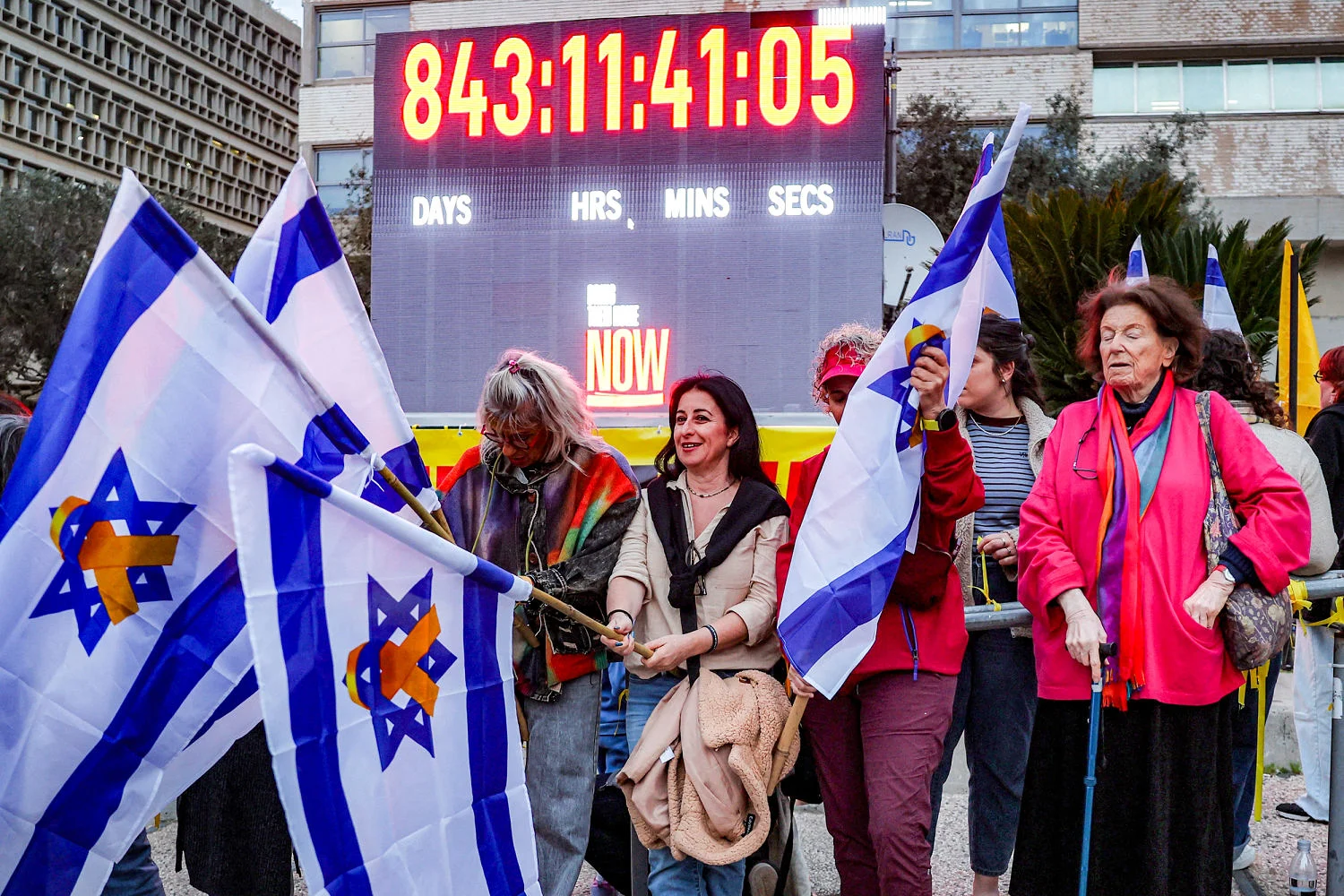
Israelis marked the end of a long hostage crisis Tuesday night as the clock in Tel Aviv’s “Hostages Square” was officially stopped, 843 days after Hamas kidnapped 251 citizens on October 7, 2023. Hundreds attended a solemn ceremony to commemorate the return of the last captive from Gaza.
The final remains, those of young police officer Ran Gvili, were recovered by Israeli soldiers, closing the chapter on the hostage crisis and signaling a fragile continuation of a ceasefire between Israel and Hamas that has lasted nearly four months.
“We are here on a day we prayed for since Oct. 7 for 844 days. The clock kept running, counting every day, every minute, every second,” said Malki Shem-Tov, father of former captive Omer Shem-Tov. “Since our worlds stopped on Oct. 7, we never imagined that clock would reach three digits. Thank God we can finally stop counting.”
Israeli President Isaac Herzog emphasized the national relief following the return of all hostages. “An entire nation is breathing an enormous sigh of relief tonight. True healing for our nation can begin now,” he said during an event in Jerusalem with U.S. Ambassador Mike Huckabee.
“Hostages Square” has been a powerful focal point for families of the captives and activists, providing a public stage to demand that the government secure the release of hostages. The square, located under the Kirya building, home of Israel’s defense establishment, hosted frequent media coverage and became a symbol of public advocacy and hope.
“This all started about advocating for what people thought was right and justice for these hostages,” said Hannah Bartel, a youth programs coordinator at Young Judea. “Holding on to that hope that we’ll find some way to all live together, I think that’s what Israelis need to do right now.”
The future of the square remains undecided. Some families have proposed renaming it “Returnees’ Square,” though the Tel Aviv municipality has yet to reach a decision. “We will soon form a committee to review all initiatives and ideas regarding the square. No decision has been made yet,” said municipal spokesperson Itay Waldman.
The return of Gvili’s remains moves the Gaza ceasefire into its second phase, with plans by the Trump administration to focus on postwar governance, reconstruction, and potential disarmament of Hamas. Unlike the first phase, the second phase is still under negotiation, and Hamas has not agreed to disarm.
Despite the ceasefire, conditions in Gaza remain dire. Israeli attacks since early October have killed nearly 500 people, according to Palestinian health officials, and many residents live in tents or partially destroyed buildings vulnerable to winter weather.
Some attendees at Tuesday’s event expressed uncertainty about the ceasefire’s long-term success. “The war, I don’t think it’s over… I don’t think it’s ever over,” said Hadar Minard, 21, a volunteer. “We will always have a war to fight, but at least we know that this one has now ended.”
The stopping of the hostage clock symbolizes closure for Israel and the families of those taken, yet the ongoing humanitarian and political challenges in Gaza remain, underscoring that peace in the region is still fragile.