


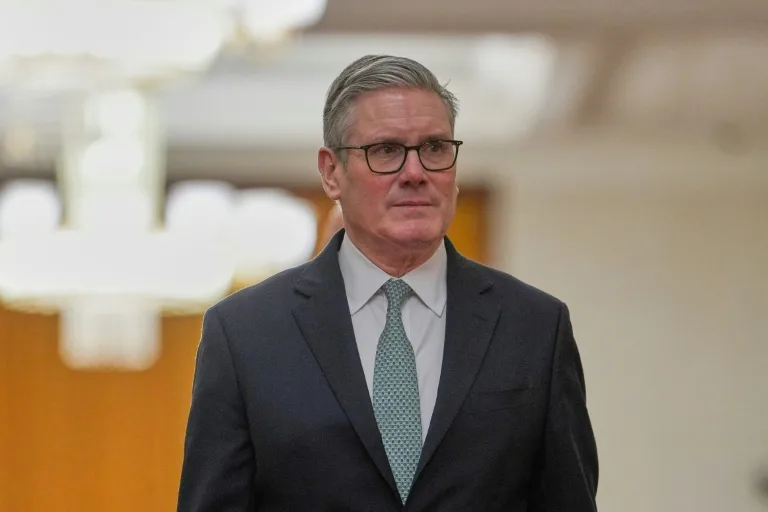
Britain’s Prime Minister Keir Starmer met Chinese President Xi Jinping in Beijing on Thursday in a high‑profile effort to strengthen trade ties and address security concerns, marking the first visit by a UK prime minister to China in eight years.
In talks at Beijing’s Great Hall of the People, Starmer and Xi discussed ways to boost economic cooperation while managing complex issues such as national security, human rights, and global stability. The meeting comes as Western leaders increasingly engage with Beijing in response to an unpredictable global landscape and shifting relations with the United States.
Starmer described the visit as historic and said it offers a chance to find “positive ways to work together” on shared challenges. He is leading a large delegation of business leaders from key sectors, including finance, pharmaceuticals, and manufacturing, reflecting the UK’s desire to expand economic opportunities with China’s massive market.
The British prime minister also met Zhao Leji, China’s third-highest-ranking official, and is scheduled to hold talks with Premier Li Qiang. Starmer plans to travel to Shanghai later in his visit before stopping briefly in Japan to meet Japanese Prime Minister Sanae Takaichi.
Trade remains at the core of the visit. China is the UK’s third‑largest trading partner, and both sides are seeking to reverse recent declines in business flows and investment. British officials say they want to strengthen supply chains and support job creation at home by expanding exports and encouraging Chinese investment in the UK.
However, the relationship has been strained by several contentious issues, including Beijing’s national security law in Hong Kong, alleged cyber espionage, and China’s support for Russia during the Ukraine war. Starmer said he would raise human rights concerns, including the case of jailed Hong Kong media tycoon Jimmy Lai, at the highest diplomatic levels.
Downing Street has stressed that trade and security can be pursued in tandem. Starmer told reporters before the trip that the UK would remain “clear‑eyed and realistic” about security risks while engaging with China’s leaders on commercial opportunities. This approach, officials say, aims to balance economic interests with safeguards for national security.
One of the outcomes expected from the talks is cooperation on irregular migration and people smuggling. The two governments are reportedly preparing agreements to share intelligence and disrupt smuggling networks, particularly those using Chinese‑made boat engines.
The discussions also reflect broader diplomatic shifts. As the United States under President Donald Trump faces strained relations with some traditional allies, Western nations such as Britain are recalibrating how they engage with China on trade and strategic matters. Starmer has said the UK must protect its national interests without sacrificing key alliances.
Starmer’s visit highlights competing pressures at home and abroad. While many British business leaders welcome the opportunity to deepen ties with China’s vast market, critics caution that closer engagement may expose the UK to technological and security risks. Lawmakers and security experts have voiced concern over issues like Chinese investment and the expansion of Beijing’s diplomatic footprint in London.
Despite these challenges, both sides have welcomed the talks as a chance to stabilize and improve relations. Xi emphasized China’s openness to constructive dialogue, calling the meeting an opportunity to enhance mutual trust and cooperation. Starmer echoed the sentiment, urging collaboration on global challenges while maintaining clarity on areas where the UK and China disagree.
The visit is likely to shape UK‑China relations in the months ahead, with potential implications for trade, security, and global diplomacy as nations navigate a complex geopolitical landscape.