


Bill Belichick, the legendary New England Patriots coach, has reportedly missed induction into the Pro Football Hall of Fame on his first ballot. The unexpected snub, following a lifetime of NFL achievements, creates a rare opportunity for Patriots owner Robert Kraft to extend an olive branch.
Belichick has a long history with the Hall of Fame in Canton, Ohio. In August 2019, he visited the city to attend the enshrinement of former Patriots cornerback Ty Law. During the weekend, Belichick studied exhibits, archives, and videos, asking questions and sharing insights with staff. He even brought Patriots players and staff for a private tour before heading to a joint practice with the Detroit Lions.
This dedication reflects Belichick’s deep-rooted connection to football history, influenced by his father, Steve Belichick, a former player, coach, and scout. Steve’s brief playing career in 1941 earned him a spot in the Hall’s records, and many believe Bill will one day join those ranks.
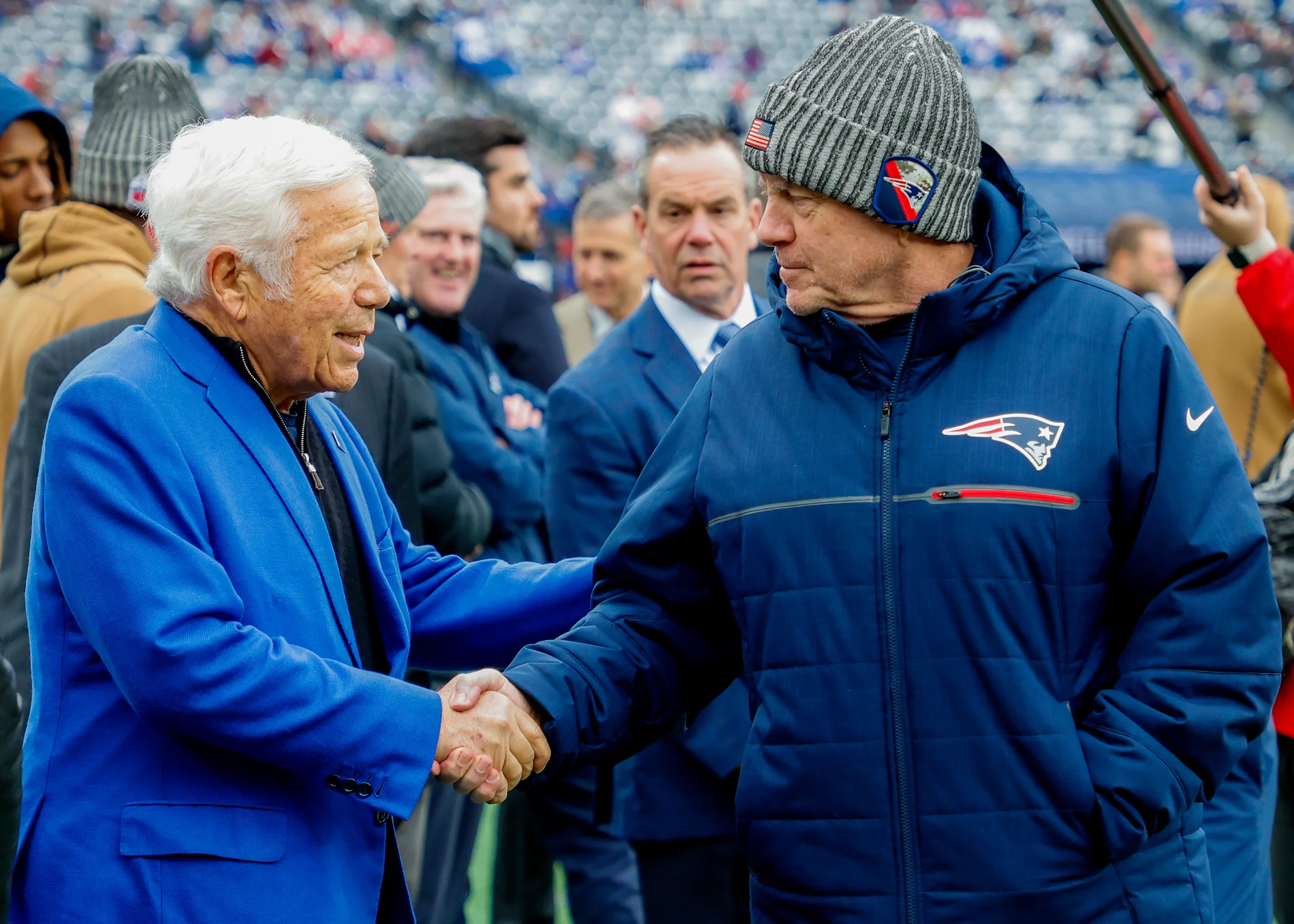
Now, Belichick’s absence from this year’s Hall of Fame class has heightened attention on Kraft. If Kraft is inducted ahead of Belichick, it creates a delicate moment. Both men were central architects of the Patriots dynasty, with Belichick coaching and Kraft overseeing the franchise for more than two decades. Together, they won multiple Super Bowls, reshaping the NFL landscape.
Some see Kraft’s potential induction as an unexpected chance to repair a rift. Analysts suggest he could pause or defer his own Hall of Fame enshrinement to enter alongside Belichick in the future. Such a gesture would be unprecedented in NFL history but could cement their shared legacy in a uniquely symbolic way.
Kraft has publicly defended Belichick’s credentials. Speaking to the Associated Press, he said, “Whatever perceptions may exist about any personal differences between Bill and me, I strongly believe Bill Belichick’s record and body of work speak for themselves.” He emphasized Belichick’s dominance in coaching, his preparation, and his ability to sustain success under the salary cap era.
Tom Brady, who played under Belichick for two decades, also criticized the snub. On Seattle’s “Brock & Salk” show, Brady said, “I was with him every day. If he’s not a first-ballot Hall of Famer, there’s really no coach that ever should be.” He praised Belichick’s influence, adding that players and coaches would celebrate him when he is eventually enshrined.
The Hall of Fame snub leaves Kraft with a rare choice: accept the honor and enter the Hall, or advocate for Belichick to join him, creating a joint celebration. Doing so could extend their shared football legacy while signaling reconciliation after years of reported tension.
Patriots fans and football historians note that seeing Kraft and Belichick enshrined together would memorialize their achievements as a team. Such a gesture would honor not just individual accolades, but the collective effort that led to one of the most successful eras in NFL history.
Even if Kraft is inducted first, he could use the moment to advocate for Belichick in his speech, ensuring his coach receives overdue recognition. In 2028, the stage could expand further to include Tom Brady, completing the trio responsible for decades of Patriots dominance.
While unconventional, this approach could redefine how NFL honors are celebrated, emphasizing legacy, teamwork, and reconciliation over individual timing. It would also highlight Kraft’s generosity and foresight, qualities that extend beyond his business and philanthropic accomplishments.
Ultimately, the Belichick Hall of Fame snub offers more than disappointment. It presents an opportunity for one of football’s greatest coaches and the owner he worked alongside to repair a rift, honor their shared history, and leave a lasting mark on the game.