


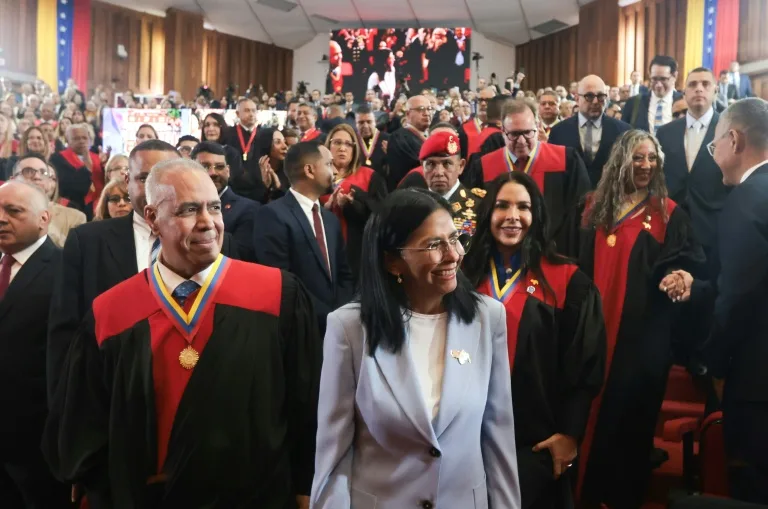
Venezuela’s interim president, Delcy Rodriguez, announced on Friday a sweeping proposal for mass amnesty covering political violence in the country from 1999 to the present. Speaking at the Supreme Court in Caracas before top government officials, Rodriguez said the initiative aims to “heal the wounds left by political confrontation, fueled by violence and extremism” and to restore justice in the nation. She also revealed plans for a “major national consultation for a new judicial system” to accompany the amnesty initiative.
The amnesty comes in the wake of the U.S.-backed removal of Nicolas Maduro from power just weeks ago. Rodriguez, formerly Maduro’s vice president, has moved quickly to implement reforms, including a law opening Venezuela’s vital oil sector to private investment, a key demand from the United States. The U.S. administration under President Donald Trump responded positively, lifting sanctions on Venezuelan oil and preparing to reopen its embassy in Caracas.
Rodriguez also announced the closure of the notorious El Helicoide prison in Caracas, long criticized for the torture of political prisoners under Maduro. The facility, originally built as a shopping mall, will be converted into a “sports, cultural, and commercial center for police families and neighboring communities.” Families of inmates welcomed the announcement, including Betsy Orellana, who expressed joy at the potential release of her son under the amnesty plan.
While the interim government has already freed some political prisoners, opposition figures remain cautious. Nobel Peace Prize laureate Maria Corina Machado suggested the amnesty was largely a response to U.S. pressure rather than a voluntary reform, while opposition lawmaker Tomas Guanipa expressed hope that the move could mark the start of a path to “freedom and democracy.”
The amnesty plan coincided with the release of all Americans held in Venezuela, including Peruvian-American political prisoner Arturo Gallino Rullier. In addition to these steps, the Trump administration has lifted the ban on U.S. flights to Venezuela and named Laura Dogu as the new U.S. charge d’affaires for the country, signaling a restoration of diplomatic engagement after years of strained relations.
The proposed reforms, including the mass amnesty, judicial overhaul, and prison closure, represent the most significant changes in Venezuelan governance since the U.S.-supported removal of Maduro. Analysts say the moves aim to stabilize the nation, attract foreign investment, and address human rights concerns while navigating internal opposition and international scrutiny.