


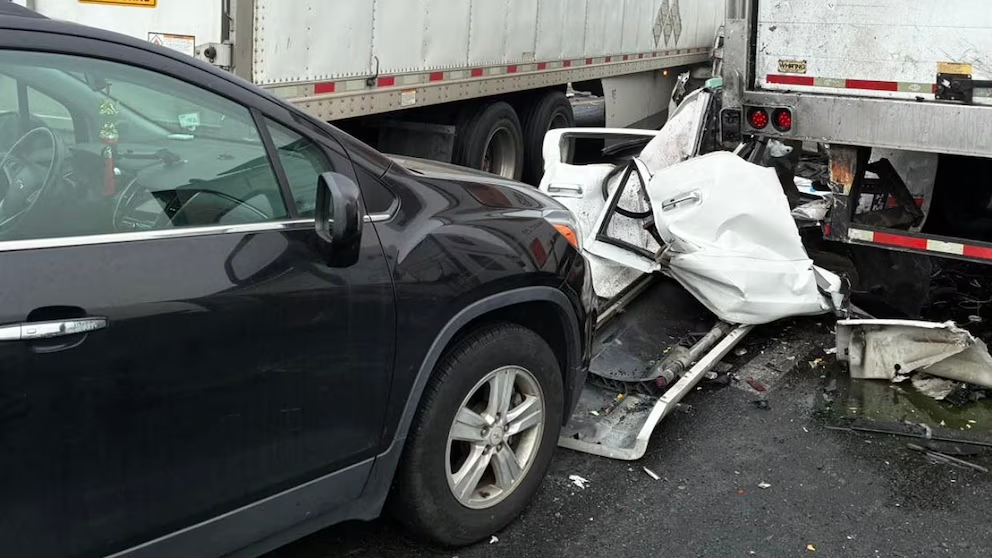
A massive chain-reaction crash involving 59 vehicles brought Highway 99 to a standstill in California’s Central Valley on Saturday morning, after thick fog sharply reduced visibility for drivers.
According to Daljoog News analysis, the incident highlights a recurring safety risk on major agricultural corridors where weather, traffic volume, and speed collide with little warning.
The timing was critical. Weekend morning traffic, combined with winter fog common in the Central Valley, created conditions that quickly overwhelmed one of the state’s most important north-south highways.
What Happened?
The crash unfolded on Highway 99 in Tulare County, roughly 40 miles north of Bakersfield, an area surrounded by farmland and known for heavy commercial and commuter traffic.
California Highway Patrol officers said the situation began with two separate collisions, one on each side of the highway. Those initial crashes set off a rapid sequence of additional impacts as drivers encountered near-zero reaction time in the dense fog.
Within minutes, dozens of vehicles were involved. By the time the chaos ended, CHP confirmed that 59 cars and trucks had been caught up in the pile-up.
Visibility at the time was estimated at just 150 to 200 feet. For drivers traveling at highway speeds, that distance leaves almost no margin to brake or maneuver safely.
Emergency crews responded quickly, but the scale of the crash forced authorities to shut down Highway 99 in both directions. The closure lasted for several hours, with traffic only beginning to move again around 2:30 p.m.
Highway 99 runs the length of California’s Central Valley and serves as a critical artery for agriculture, freight transport, and daily commuting. Its closure rippled far beyond the crash site, causing long delays and detours across the region.
Officials reported multiple injuries ranging from minor to moderate. No fatalities were announced, a fact authorities described as fortunate given the number of vehicles involved.
Why This Matters
This crash was not just a traffic accident. It exposed a familiar but dangerous pattern on California’s rural highways.
The Central Valley frequently experiences dense fog during cooler months, often referred to locally as tule fog. While drivers are aware of its presence, many still underestimate how quickly conditions can deteriorate.
Highway 99 is especially vulnerable. It carries heavy truck traffic, farm equipment, and passenger vehicles, often moving at high speeds. When visibility suddenly collapses, even a single mistake can cascade into a large-scale disaster.
Beyond safety, the economic impact is significant. Delays on Highway 99 disrupt agricultural supply chains, slow deliveries, and increase costs for farmers and transport companies already operating on tight margins.
The closure also strained local emergency services, which must respond to large incidents while maintaining coverage for surrounding communities.
For residents of the Central Valley, events like this are unsettling reminders that routine travel can turn dangerous with little warning.
What Analysts or Officials Are Saying
California Highway Patrol officials emphasized that fog was the dominant factor in the crash, not road conditions or mechanical failures.
CHP urged drivers to reduce speed, increase following distance, and remain alert when visibility drops, especially in congested corridors like Highway 99.
Traffic safety experts often point out that human behavior plays a major role in multi-vehicle pile-ups. Drivers tend to maintain highway speeds even as visibility declines, assuming traffic ahead is flowing normally.
Officials also noted that chain-reaction crashes are difficult to prevent once they begin, particularly when drivers have only seconds to react.
Local authorities praised first responders for managing the scene safely and reopening the highway as quickly as conditions allowed.
Daljoog News Analysis
From an editorial standpoint, this crash underscores a gap between what drivers know and how they actually behave on the road.
Fog in the Central Valley is not rare. It is seasonal, predictable, and well-documented. Yet large pile-ups continue to occur, suggesting that public warnings alone are not enough.
One issue is speed culture. Highway 99 often feels like an open road, encouraging faster driving even when conditions change. When fog rolls in, that mindset becomes dangerous.
There is also a question of infrastructure. While variable message signs and alerts exist, their reach may be limited in sudden fog events. More dynamic warning systems, including automated speed reductions or fog-specific alerts, could reduce risk.
Another concern is enforcement. Reduced visibility zones may require more aggressive patrol presence during peak fog seasons to slow traffic before crashes occur.
Ultimately, this was a preventable disaster. The absence of fatalities should not soften the lesson. The next pile-up may not end as fortunately.
Daljoog News has previously examined similar incidents and safety gaps, including in a [Related Daljoog News Article] focusing on highway risks in rural regions.
What Happens Next
In the short term, investigators will review crash data to confirm timelines, vehicle involvement, and contributing factors.
CHP is expected to continue public safety messaging as foggy conditions persist across the Central Valley in the coming weeks.
Longer-term discussions may focus on whether Highway 99 needs enhanced fog detection systems or stricter temporary speed controls during low-visibility events.
For drivers, the takeaway is immediate and personal. Slowing down, leaving space, and adjusting expectations during fog can mean the difference between a close call and a massive collision.
As Central Valley traffic continues to grow, pressure will mount on state and local officials to ensure that a highway critical to California’s economy does not remain one of its most dangerous under predictable conditions.