
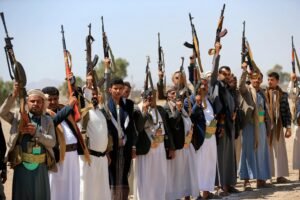


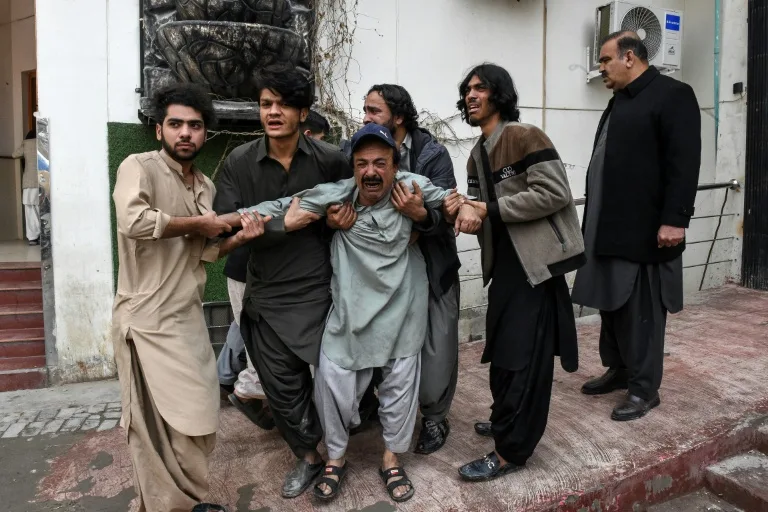
At least 33 people, including 18 civilians and 15 security personnel, were killed in coordinated separatist attacks across Pakistan’s Balochistan province on Saturday. The province has long been a hotspot for insurgent violence.
According to Daljoog News analysis, the scale and coordination of Saturday’s attacks mark a significant escalation, even as Pakistan’s military reported killing 92 militants, including three suicide bombers, during the clashes.
The attacks occurred amid heightened military operations and follow a series of previous assaults in the mineral-rich southwestern province. The violence highlights persistent security challenges in a region critical to Pakistan’s economic and strategic interests.
What Happened?
Saturday’s violence unfolded across multiple districts, including Quetta, the provincial capital, and the port city of Gwadar. Militants launched a combination of gunfire, bombings, and jailbreaks, targeting security installations, administrative offices, and major highways.
In Quetta, local residents reported continuous explosions throughout the day as streets emptied and businesses shuttered. Authorities confirmed that a deputy district commissioner was abducted, while at least 30 inmates were freed from a local jail, with weapons seized by militants. Mobile services were disrupted, and train operations across the province were suspended.
The military’s media wing, ISPR, confirmed 15 security personnel and 18 civilians were killed. It added that 92 militants, including three suicide bombers, were neutralized during counter-operations. Prime Minister Shehbaz Sharif praised security forces for thwarting the attacks and emphasized a commitment to eradicating terrorism, while accusing India of backing the separatist groups.
Why This Matters
Balochistan is Pakistan’s poorest province despite its wealth of untapped natural resources, making it a focal point for separatist grievances. Attacks on security forces, foreign workers, and non-local Pakistanis have intensified in recent years, disrupting economic projects and daily life.
The region’s instability threatens Pakistan’s broader infrastructure initiatives, particularly investments linked to energy and transport corridors. Each attack also demonstrates the challenges the government faces in protecting civilians and ensuring continuity of essential services.
Saturday’s violence, occurring just a day after security forces reportedly killed 41 insurgents in separate operations, underscores how militants can regroup and strike quickly despite ongoing counterterrorism efforts.
What Analysts or Officials Are Saying
Military officials described the attacks as “coordinated but poorly executed,” noting that rapid response and planning failures prevented greater losses. Chief Minister Sarfraz Bugti framed the assaults as evidence of resilience rather than a weakening of Pakistan’s counterterrorism measures, citing more than 700 militants neutralized over the past year.
The Baloch Liberation Army (BLA), the province’s most active separatist group, claimed responsibility, stating that their targets included military and civil administration personnel. Videos released by the BLA show several female militants participating in the assaults, while statements suggest highway blockages were intended to disrupt military operations.
Experts note that such attacks are as much political messages as military actions, designed to assert the separatists’ presence and challenge Pakistan’s authority in resource-rich areas.
Daljoog News Analysis
Saturday’s attacks reveal a pattern of persistent insecurity in Balochistan, even amid aggressive counterterrorism measures. Daljoog News analysis indicates that militants are increasingly using a combination of conventional assaults, jailbreaks, and suicide bombings to strain security forces.
While military operations have degraded militant networks, civilian casualties highlight the continuing vulnerability of non-combatants. The repeated targeting of foreigners and workers from other provinces also reflects separatists’ strategy to disrupt investment and weaken Pakistan’s economic influence in the region.
The timing, scale, and coordination of Saturday’s attacks suggest that insurgent groups remain capable of significant operations despite ongoing security crackdowns.
What Happens Next
Security forces are likely to intensify patrols and maintain checkpoints across affected districts in the coming days. The government may also increase intelligence-driven operations to prevent further attacks and secure critical infrastructure.
The BLA and other separatist groups could attempt additional assaults in response to military pressure, particularly targeting transportation networks or energy projects. Analysts expect Pakistan to maintain a dual approach: aggressive counterterrorism measures coupled with political and administrative efforts to stabilize local governance.
For residents of Balochistan, the cycle of attacks and military retaliation remains a daily reality, with the prospects for long-term security contingent on both state capacity and local cooperation. Saturday’s violence reinforces the urgent need for strategies that protect civilians while curbing militant influence in one of Pakistan’s most strategically important provinces.