


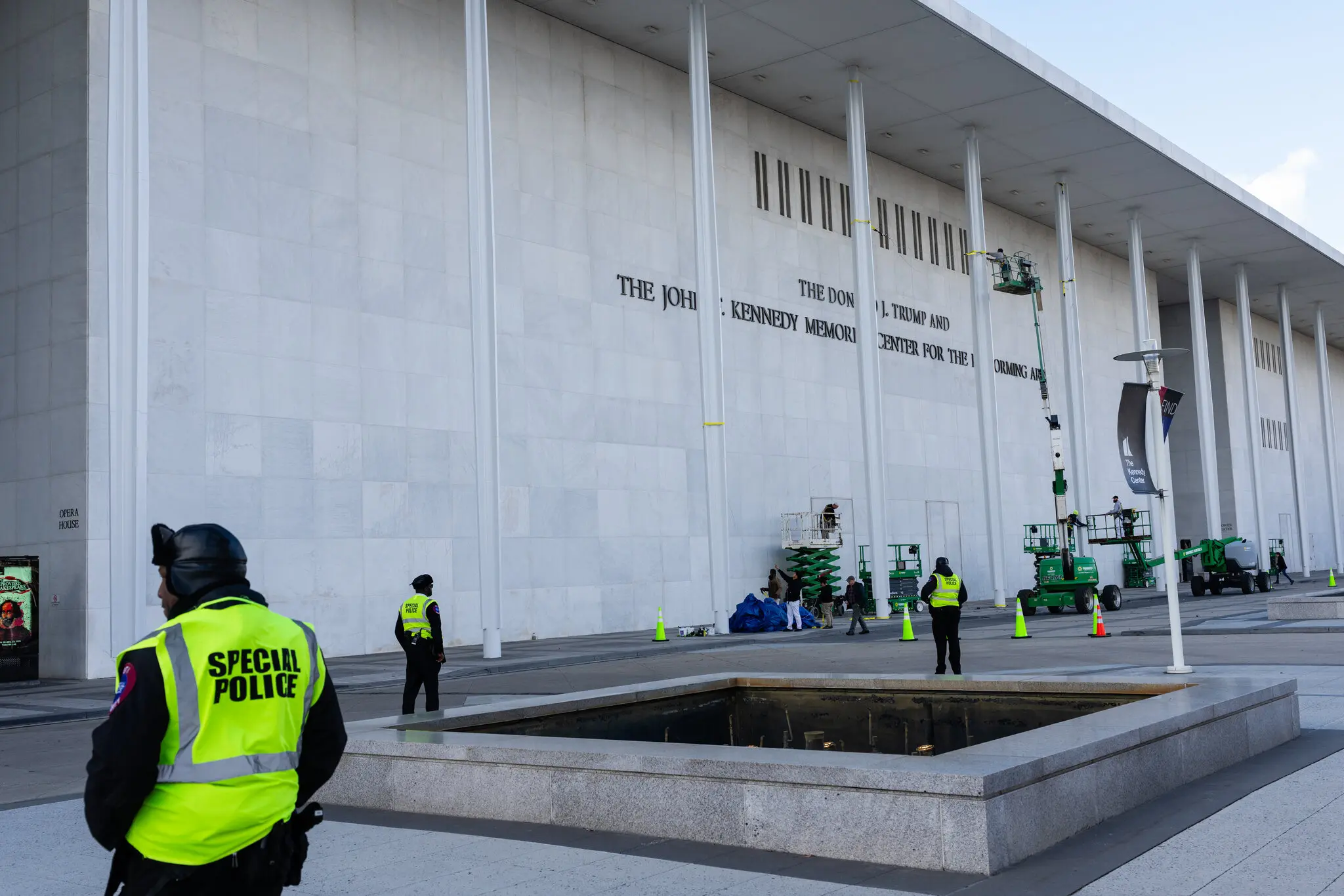
President Donald Trump has ordered the temporary shutdown of the John F. Kennedy Center for the Performing Arts, marking an extraordinary escalation in his clash with the U.S. cultural establishment.
According to Daljoog News analysis, the move follows months of high-profile artist cancellations and signals an effort by the White House to remake one of America’s most symbolic arts institutions in line with Trump’s political vision.
The closure, set to begin on July 4, places the Kennedy Center at the center of a broader cultural and ideological battle unfolding during a pivotal election year.
What Happened?
President Trump announced on his Truth Social platform that the Kennedy Center would halt all entertainment operations starting July 4, citing what he described as “Construction, Revitalization, and Complete Rebuilding.”
The shutdown is expected to last close to two years, according to Trump’s own statement. During that period, performances, residencies, and public programming at the venue will be suspended.
Trump framed the decision as a necessary reset after what he portrayed as institutional failure. The announcement comes nearly a year after he took control of the Kennedy Center’s leadership structure, replacing board members and pushing for sweeping changes.
Multiple artists and production companies have canceled appearances at the venue over the past several months. Some cited scheduling issues, while others publicly referenced concerns about political interference and artistic freedom.
Trump has also floated the idea of renaming the Kennedy Center, including at times suggesting it bear his own name, further fueling backlash from the arts community.
The Kennedy Center, established in 1971, serves as the nation’s premier performing arts venue and a living memorial to President John F. Kennedy.
Why This Matters
The closure of the Kennedy Center is not a routine renovation announcement. It represents a direct federal intervention into the cultural sector at an unprecedented scale.
For decades, the center has operated as a semi-independent institution, balancing public funding with artistic autonomy. A full shutdown ordered by a sitting president cuts against that tradition.
The timing is also significant. The planned closure begins on Independence Day, a symbolic date that underscores the political messaging surrounding the decision.
Artists, unions, and arts organizations warn that the shutdown threatens jobs, disrupts international partnerships, and weakens the United States’ cultural standing abroad.
Beyond logistics, the move raises deeper concerns about whether federal cultural institutions can remain insulated from partisan agendas.
What Analysts or Officials Are Saying
The White House has defended the shutdown as a necessary modernization effort, arguing that the Kennedy Center has lost relevance and public support.
Administration allies say declining attendance and repeated cancellations justify a full overhaul rather than incremental reform.
Critics, however, see a different motive. Cultural policy experts argue that the shutdown is a response to resistance from artists unwilling to align with Trump-era messaging.
Several performers who withdrew from scheduled events said privately that the environment had become hostile to creative independence.
Former Kennedy Center officials have warned that prolonged closure could permanently damage the institution’s reputation and donor base.
Democratic lawmakers have accused Trump of politicizing a national monument and eroding long-standing norms that protect artistic expression.
So far, Kennedy Center leadership has offered limited public comment, deferring to the administration’s authority over the board.
Daljoog News Analysis
This decision looks less like a renovation plan and more like a cultural power play.
Trump has long framed elite cultural institutions as adversarial spaces dominated by political opponents. The Kennedy Center, with its global prestige and symbolic weight, fits squarely into that narrative.
By shutting it down, the administration removes a platform that has become resistant to its influence. The “temporary” nature of the closure masks a deeper transformation effort.
A two-year blackout is not neutral. It allows leadership to reshape staffing, programming priorities, and partnerships without public scrutiny.
Artist cancellations did not occur in a vacuum. They reflected discomfort with perceived political pressure. Instead of easing that tension, the shutdown escalates it.
The risk for Trump is that the move reinforces criticism that his administration governs through confrontation rather than consensus.
For the arts community, the message is chilling. Participation may now depend less on creative merit and more on political alignment.
What Happens Next
Beginning July 4, the Kennedy Center will suspend performances, leaving artists, staff, and ticket holders in limbo.
Unions representing stagehands, musicians, and technical crews are expected to push for clarity on employment protections during the closure.
Legal challenges are also possible, particularly if funding allocations or governance changes violate existing statutes.
International partners and touring companies will likely reroute performances away from Washington, reshaping the city’s cultural calendar.
As the 2026 election cycle intensifies, the Kennedy Center could become a recurring flashpoint in debates over culture, power, and national identity.
Whether the institution reopens as a revitalized landmark or a politicized shell will depend on decisions made behind closed doors over the next two years.