


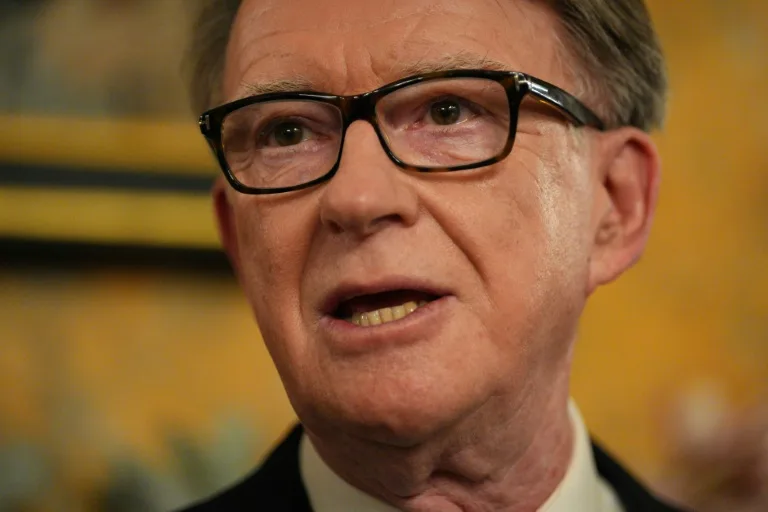
Peter Mandelson, the former British ambassador to Washington, resigned from the Labour Party on Sunday, citing concern over renewed scrutiny of his links to the late sex offender Jeffrey Epstein. His departure comes after recently released US Justice Department documents suggested he received payments from Epstein in the early 2000s.
According to Daljoog News analysis, Mandelson’s exit is a strategic move to shield Labour from further political fallout. The revelations have reignited public debate over how prominent UK figures engaged with Epstein during his lifetime.
The timing is notable. Mandelson stepped down just months after being removed from his ambassadorial post last year, amid ongoing investigations into Epstein’s network. The new documents, released Friday, have triggered a fresh wave of questions about financial ties and social interactions involving high-profile individuals.
What Happened?
Peter Mandelson, 72, announced his resignation from the Labour Party in a letter to party general secretary Hollie Ridley, saying he did not want to cause “further embarrassment” while investigating claims that he received payments from Epstein.
US Justice Department records released last week indicate Epstein transferred a total of $75,000 (around £55,000) in three separate payments to bank accounts linked to Mandelson between 2003 and 2004. Mandelson told the BBC he has no recollection of the transfers and could not verify the documents’ authenticity.
In addition to the financial records, newly released undated photographs appear to show Mandelson in casual attire beside a woman whose face has been redacted by US authorities. Mandelson said he “cannot place the location or the woman and cannot think what the circumstances were.”
Other documents suggest that in 2009, Epstein sent £10,000 to Mandelson’s partner, Reinaldo Avila da Silva, during a period when Mandelson was serving as a government minister. Mandelson had previously apologised in January for maintaining a friendship with Epstein, after initially refusing to do so, emphasizing he was not complicit in any crimes.
The former ambassador’s diplomatic role had ended in September following his appointment by Prime Minister Keir Starmer in late 2024.
Why This Matters
Mandelson’s resignation highlights the ongoing sensitivity surrounding UK public figures’ connections to Epstein. Allegations, even when unproven, have real political consequences. For Labour, already under pressure in a volatile political landscape, the optics of a high-profile member tied to Epstein could be damaging ahead of upcoming elections.
Financial links to Epstein raise broader questions about oversight, ethics, and accountability in government appointments. The case also fuels public concern over how Epstein cultivated relationships with prominent figures across politics, finance, and royalty, extending beyond the US into the UK and Europe.
What Analysts or Officials Are Saying
Political analysts suggest Mandelson’s resignation is both a defensive and symbolic act. By stepping down, he may limit damage to Labour’s reputation while acknowledging the seriousness of the allegations.
Legal experts note that US financial records are not automatically proof of wrongdoing but add weight to the scrutiny, particularly in public perception. One commentator told Daljoog News that “any association with Epstein now carries a reputational risk that can extend to partners and colleagues.”
Officials have also pointed to the timing of the documents’ release, which coincided with continued public investigations into Prince Andrew and other high-profile figures linked to Epstein.
Daljoog News Analysis
Mandelson’s move illustrates a pattern observed in high-profile Epstein cases: figures implicated often attempt to contain fallout rather than engage in prolonged public debate. While he maintains he has no memory of the payments or the photographs, the public and political optics are impossible to ignore.
The story also reflects wider societal shifts in accountability. Connections that may have once been dismissed as social networking are now scrutinized under the lens of ethical and legal responsibility. For Mandelson, the resignation is a pre-emptive measure, signaling that even unproven associations with Epstein can carry enduring consequences.
Daljoog News sees this as a cautionary tale for UK politics: associations with controversial figures, particularly those involved in criminal networks, can abruptly derail careers—even for long-standing political veterans.
What Happens Next
Labour will need to navigate potential backlash carefully, ensuring the party does not appear complicit or tolerant of unethical associations. The resignation may prompt internal reviews and more public statements addressing links to Epstein.
Meanwhile, the release of additional documents may lead to renewed investigations into other prominent figures in the UK. Prince Andrew’s ongoing scrutiny, including allegations of sexual encounters orchestrated by Epstein, suggests the story is far from over.
For Mandelson, legal and political questions may persist. While he has stepped down from Labour, the financial and social ties documented could attract further journalistic and possibly regulatory attention in the UK and the US.