



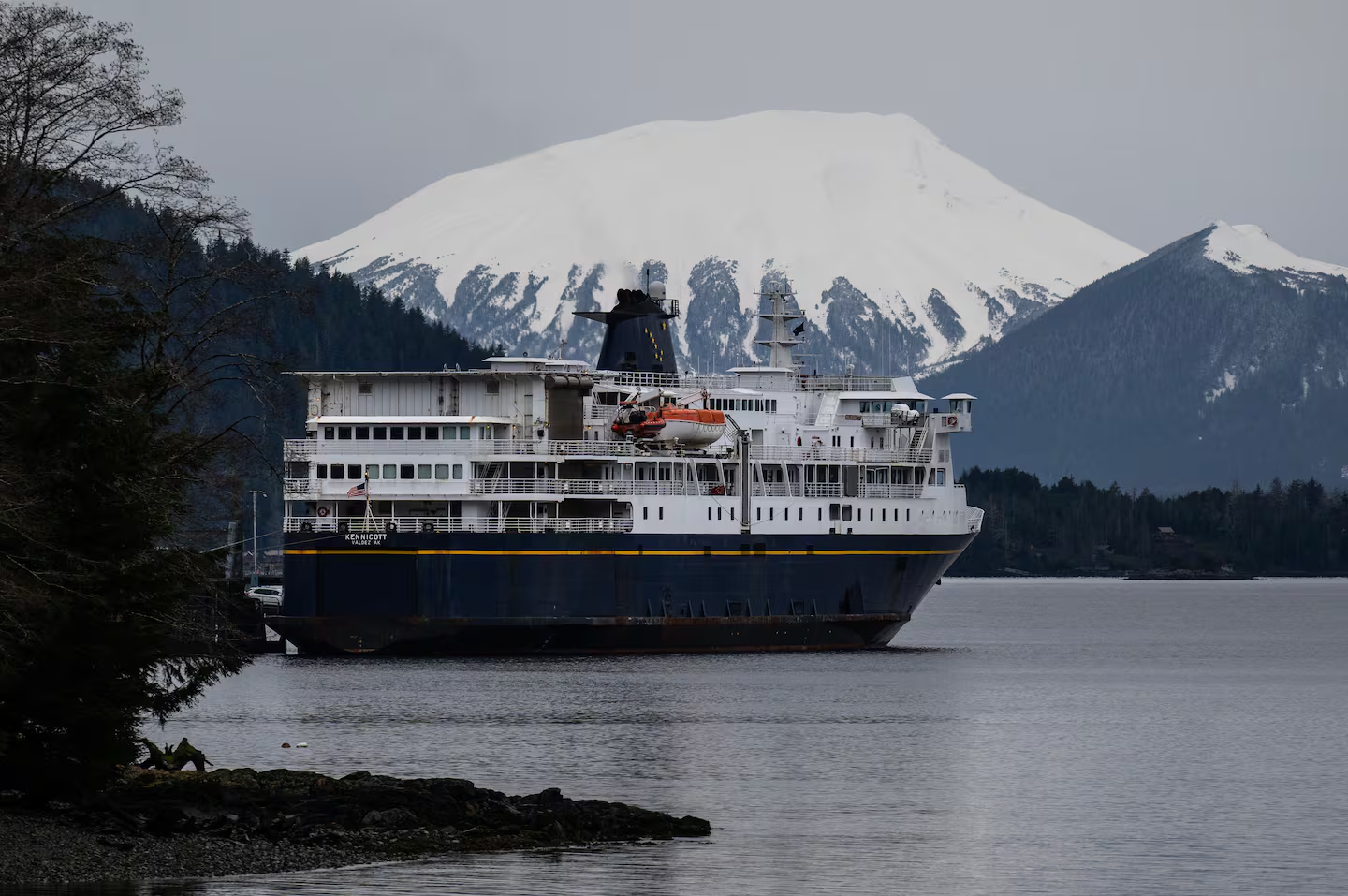
Alaska’s state-run ferry system is heading toward a financial cliff this summer after a key federal grant failed to materialize, leaving a massive hole in its operating budget.
According to Daljoog News analysis, the funding delay is not just a paperwork problem in Washington. It exposes how dependent Alaska’s Marine Highway System has become on uncertain federal timelines, with real consequences for rural communities.
The situation is unfolding at a critical moment. Summer is the busiest season for the ferries, which serve as lifelines for Southeast Alaska, Kodiak, and communities along the Aleutian chain.
What Happened?
The Alaska Marine Highway System (AMHS) is short nearly $78 million for the current calendar year after the Federal Transit Administration (FTA) failed to release a long-anticipated grant.
State lawmakers approved a roughly $170 million operating budget for the ferry system last year. Almost half of that total was supposed to come from a federal grant under the Ferry Service for Rural Communities Program.
That grant was expected in 2025. It never arrived.
Transportation officials now warn that without new funding, the ferry system could begin running out of operating money as early as July. That would put ferry sailings at risk during peak travel months, when passenger demand and revenue are highest.
Legislators on both House and Senate budget committees say the state has few realistic options to replace the missing money. Alaska is already facing a tight revenue outlook, limiting its ability to backfill the gap with state funds.
The grant program was created under the bipartisan infrastructure law passed in 2022. Since then, Alaska has relied on it heavily to keep ferries running.
Why This Matters
For many coastal and island communities, ferries are not a luxury. They are essential infrastructure.
The Alaska Marine Highway System provides access to food supplies, medical care, school travel, and economic activity. In places without road connections, the ferry often functions as the only affordable transportation link to the rest of the state.
A funding disruption could ripple far beyond tourism.
Reduced sailings or temporary shutdowns would hit local businesses, disrupt freight movement, and isolate residents who already face high costs of living. Summer service cuts would be especially damaging, as that season generates the most revenue for the system.
There is also a broader governance issue. The state budget assumed federal money that had not yet been formally awarded. That practice has become routine, but it leaves Alaska exposed when federal timelines slip or political priorities change.
What Analysts or Officials Are Saying
U.S. Senator Lisa Murkowski played a central role in shaping the Ferry Service for Rural Communities Program, with Alaska’s struggling ferry network in mind.
Her office says she has received assurances that the funding window will open sometime this spring. However, there is no confirmed date, no confirmed funding level, and no explanation for why the 2025 funds were never released.
The Federal Transit Administration said in a December statement that it expects to announce a new funding opportunity for ferry programs in 2026. It did not clarify why the grant was delayed or how states are supposed to manage in the meantime.
Murkowski has personally contacted U.S. Transportation Secretary Sean Duffy to push for faster action, according to her spokesperson.
At the state level, Transportation Commissioner Ryan Anderson told lawmakers that his department will travel to Washington, D.C., later this month to advocate for the release of the funds.
Still, officials have offered few concrete answers about how ferry operations would be maintained if the money does not arrive before summer.
Daljoog News Analysis
This budget crisis did not come out of nowhere.
For years, Alaska has reduced direct state investment in its ferry system while leaning more heavily on federal programs to fill the gap. The strategy worked as long as the grants arrived on time.
Now it hasn’t.
The delayed funding highlights a structural weakness in how the ferry system is financed. Building large federal grants into annual budgets before they are formally awarded may look efficient on paper, but it leaves essential services vulnerable to political and administrative delays beyond the state’s control.
The timing also raises uncomfortable questions. The grant window stalled after President Donald Trump returned to office, and while no official explanation has been given, the pause underscores how quickly federal priorities can shift.
At the same time, the state’s lack of a clear contingency plan suggests that lawmakers and administrators underestimated the risk of disruption.
Selling aging vessels or reshuffling budget cycles may buy time, but they do not solve the core problem of long-term underfunding and uncertainty.
What Happens Next
State transportation officials are considering several short-term measures to stabilize the system.
One proposal would move the ferry system from a calendar-year budget to a two-year cycle. Supporters say this could help smooth out mismatches between state appropriations and federal grant schedules.
Another option on the table is selling the Matanuska, a mainline ferry built in 1963. The vessel has not carried regular passengers since 2020 due to major structural issues that are considered too expensive to fix.
Instead, the Matanuska has been used as floating housing for ferry workers in Ketchikan, where a housing shortage has made it difficult to recruit staff. Anderson suggested that other vessels, such as the Kennicott and the Columbia, could temporarily fill that housing role if needed.
How much money a sale would generate remains unclear. A similar vessel, the Malaspina, was sold in 2022 for just over $128,000, a reminder that aging ferries have limited resale value.
Ultimately, the most important decision rests in Washington.
If the federal grant window opens soon and funding is awarded quickly, Alaska may avoid immediate service disruptions. If not, lawmakers could be forced into emergency measures that reduce ferry operations during the height of summer.