


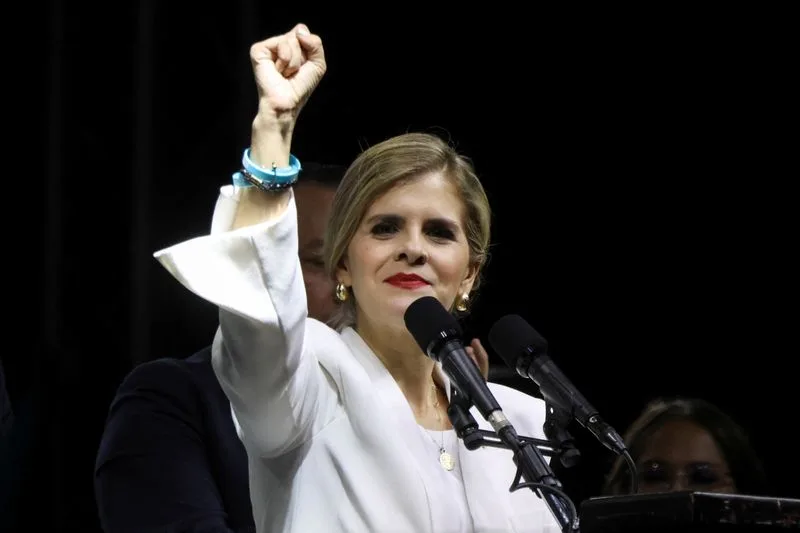
Laura Fernandez has been elected the next president of Costa Rica after securing a first‑round victory in the country’s general election on February 1, ending weeks of intense campaigning and political tension. Fernandez’s win marks a continuation of the right‑leaning and security‑focused agenda set by outgoing President Rodrigo Chaves.
According to Daljoog News analysis, this election result could reshape Costa Rican governance by strengthening executive control and focusing national priorities on crime, constitutional reform, and institutional restructuring. Fernandez portrays her victory as a clear public endorsement of Chaves’ political project.
Costa Rica’s vote came amid growing public concern about crime, gang activity, and drug trafficking that have challenged the nation’s reputation for stability. The outcome also reflects broader shifts in Latin American politics toward conservative and populist leadership.
What Happened?
Costa Ricans went to the polls on February 1 to elect a new president and legislative assembly. Laura Fernandez, 39, a political scientist and close ally of outgoing President Rodrigo Chaves, won with approximately 48.3% of the vote — surpassing the 40% threshold needed to avoid a runoff. Her party, the Sovereign People’s Party (PPSO), also secured a strong showing in the 57‑seat Legislative Assembly.
Fernandez’s campaign centered strongly on public safety, promising tough action against rising crime, gang influence, and drug trafficking. She has openly cited the hard‑line tactics of El Salvador’s President Nayib Bukele as an inspiration, signaling potential shifts in Costa Rica’s traditional approach to civil liberties and criminal justice.
Her election makes her the second female president in Costa Rican history, following Laura Chinchilla, and underscores a generational change in the leadership of the Central American nation. The transition of power is scheduled for May 8, as outlined by the country’s constitutional calendar.
Why This Matters
Fernandez’s victory is significant on multiple fronts. It represents a dramatic consolidation of political power for the PPSO, which has moved from a marginal position to a commanding presence in Costa Rica’s political landscape within a few election cycles. The party’s majority in the legislature gives Fernandez leverage to pursue ambitious reforms.
Her hard‑line stance on crime resonates in a country where homicide and drug‑related violence have increased sharply over recent years, putting pressure on public trust in democratic institutions and sparking debates over civil liberties versus security.
The election also carries regional implications. Costa Rica has long been seen as a bastion of democratic stability in Central America. Fernandez’s victory places the country alongside other nations experiencing conservative or populist political waves, altering perceptions of the region’s future direction.
What Analysts or Officials Are Saying
Political analysts warn that Fernandez’s close ties to Chaves could blur lines between independent leadership and political continuity. Though she insists on her autonomy, many observers note that her campaign repeatedly emphasized Chaves’ backing, suggesting the influence of his political machine remains strong.
International figures such as U.S. Secretary of State Marco Rubio publicly congratulated Fernandez, signaling continuity in diplomatic relations and cooperation on shared priorities including narcotrafficking, cybersecurity, and economic ties.
Opposition leaders, including her closest rival Álvaro Ramos, have pledged constructive engagement from outside the presidency, yet have also cautioned that checks and balances in Costa Rica’s democratic system must be defended.
Domestic critics, such as former President Laura Chinchilla, have voiced sharp disapproval of the political shift, characterizing Fernandez’s approach as populist and warning against a departure from traditional democratic norms.
Daljoog News Analysis
What sets this election apart is not just the shift in leadership, but the broader recalibration of Costa Rica’s political identity. For decades, the country’s political fabric was woven around consensus‑driven, moderate governance that prioritized civil liberties and institutional balance. Fernandez’s ascendancy represents a deliberate pivot toward governance defined by strong executive action and public security imperatives.
This realignment is not happening in isolation. Rising crime and insecurity have eroded confidence in centrist solutions, prompting voters to embrace candidates promising decisive action. Fernandez taps into this sentiment with rhetoric that blends law‑and‑order priorities with symbolic aspirations like founding a “third republic” — signaling not just policy shifts, but a narrative of national transformation.
Yet this comes with risks. Strong majorities in the legislature do not automatically translate into smooth governance. Negotiations with smaller parties and opposition blocs will be pivotal, especially for any constitutional or judicial reforms that require broader consensus. The PPSO’s majority falls short of a supermajority, meaning Fernandez will still need to navigate Costa Rica’s pluralistic political landscape.
What Happens Next
Fernandez’s term officially begins on May 8, and early priorities are likely to focus on security policy and government appointments. Key questions will emerge around how far her administration will push institutional reforms and what constraints domestic opposition and international partners may place on these efforts.
International observers and foreign governments will be watching closely to see whether Costa Rica’s democratic norms — such as judicial independence and civil rights protections — hold firm amid policy overhauls. Balancing security demands with democratic accountability will be among the most critical challenges of the coming years.
In the months ahead, Fernandez’s leadership will likely define whether Costa Rica’s electorate continues to embrace populist governance or whether opposition forces regain momentum as public expectations meet practical governance realities.