

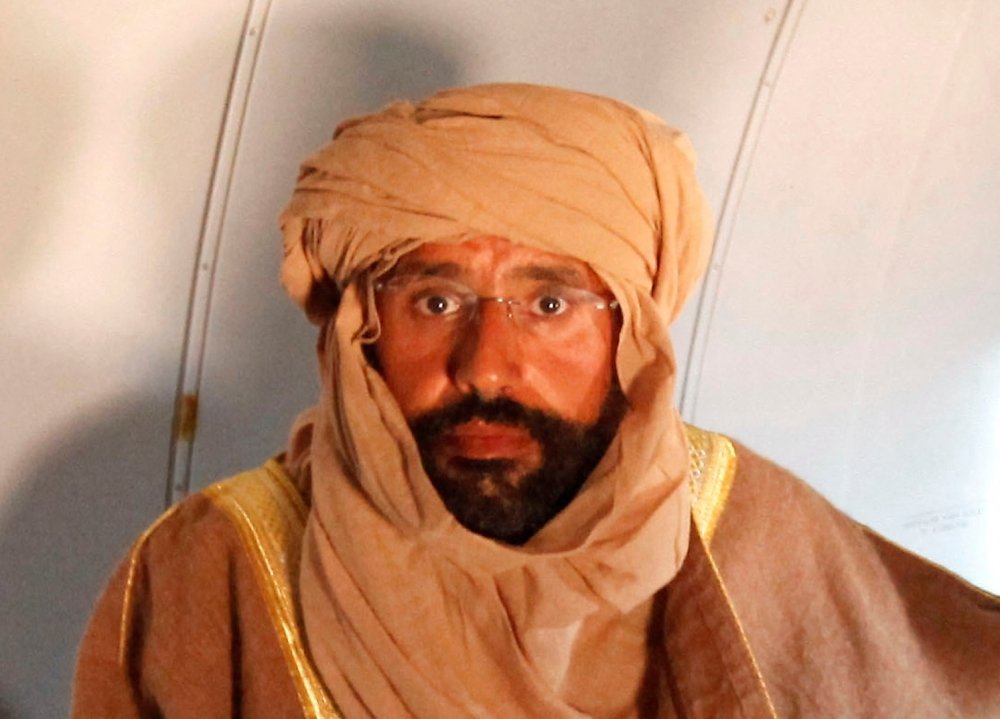
Saif al-Islam Gaddafi, the influential son of Libya’s late ruler Muammar Gaddafi, was killed in an armed attack at his home in Zintan. The 53-year-old was shot by masked assailants who stormed his residence on Tuesday.
According to Daljoog News analysis, his death marks a turning point in Libya’s fragile political landscape, potentially reshaping the power dynamics of the post-Gaddafi era.
The attack occurred in the western city of Zintan, roughly 136 kilometers southwest of the capital Tripoli. Saif had lived there in relative seclusion for years, fearing retaliation despite never holding a formal government position.
What Happened?
Local authorities report that four masked attackers entered Saif al-Islam’s home and engaged in a violent confrontation. Security cameras at the property were reportedly disabled during the attack, according to an official statement.
Saif’s lawyer, Khaled al-Jaydi, and political adviser, Abdullah Osman, confirmed his death, highlighting the targeted nature of the assault. Authorities note that Saif struggled with the assailants before being fatally shot.
Previously, Saif had been a prominent figure in Libyan politics. From 2000 to 2011, he served as his father Muammar Gaddafi’s second-in-command, wielding considerable influence over the regime. After the fall of Tripoli in 2011, he was captured and imprisoned, only to be released in 2017.
Why This Matters
Saif al-Islam’s death could destabilize an already fragile Libyan political scene. Daljoog News reports that his family’s influence had long been a point of contention among rival factions. His passing removes a key figure capable of consolidating loyalist forces.
Analysts warn that the killing may trigger renewed violence in western Libya, where armed groups and rival militias maintain a tenuous hold on power. Zintan, his long-time base, has seen relative stability compared to other regions, making the attack particularly shocking.
The event also raises questions about the future of the Gaddafi family’s political ambitions. Saif had been considered a potential candidate to reassert his family’s influence in national politics.
What Analysts or Officials Are Saying
Political observers suggest the attack was meticulously planned, likely involving rival factions seeking to eliminate a significant figure from the Gaddafi-era elite. Some analysts point to internal power struggles within Zintan and broader western Libya.
Libyan security sources note that Saif’s years in hiding allowed him to avoid previous assassination attempts. His ability to evade capture had made him both a symbolic and strategic player in post-2011 Libya.
The killing underscores the persistent volatility in Libya, where decades-old divisions and armed groups continue to challenge state authority.
Daljoog News Analysis
Daljoog News observes that Saif al-Islam’s death is more than the loss of a single individual—it represents the diminishing influence of the Gaddafi network in Libya. His presence had been a rallying point for loyalists, and his death may further fragment support among these groups.
At the same time, the attack highlights the ongoing lawlessness and insecurity in parts of Libya, demonstrating that even high-profile figures are not immune to violence. This incident could accelerate political maneuvering among rival factions, with implications for upcoming negotiations on governance and national unity.
What Happens Next
In the short term, Libya could face renewed tensions in the west, as local militias and loyalist factions respond to the killing. Security in Zintan and surrounding areas will likely be tightened to prevent further incidents.
Long-term, the political vacuum left by Saif al-Islam may encourage other figures—both local and regional—to assert influence in the fractured Libyan state. International actors monitoring Libya will be watching closely, as stability in the country remains crucial for Mediterranean security and migration routes.
Daljoog News will continue covering the evolving situation and its implications for Libya’s complex political landscape.