



Close Menu
Daljoog News
    What's Hot
    Federal Judge Orders Trump Admin to Release Gateway Tunnel Funds

    Federal Judge Orders Trump Admin to Release Gateway Tunnel Funds

    February 7, 2026
    Ex-Border Patrol Chief Greg Bovino Asked to Leave Las Vegas Bar

    Ex-Border Patrol Chief Greg Bovino Asked to Leave Las Vegas Bar

    February 7, 2026
    Mamdani Invokes Faith to Defend NYC Sanctuary City Status

    Mamdani Invokes Faith to Defend NYC Sanctuary City Status

    February 7, 2026
    Facebook X (Twitter) Instagram
    Saturday, February 7
    Daljoog News
    Facebook X (Twitter) YouTube Instagram
    • Home
    • General
    • World
    • Business
    • Technology
    • Politics
    • Finance
    • Health
    • Lifestyle
    • Sports
    • Travel
    Daljoog News
    Home»International Trade»Can Venezuela Really Replace Russia’s Oil for India?
    International Trade

    Can Venezuela Really Replace Russia’s Oil for India?

    Andrew RogersBy Andrew RogersFebruary 7, 2026No Comments4 Mins Read
    Facebook Twitter Pinterest LinkedIn Tumblr Email
    Follow Us
    Google News
    Can Venezuela Really Replace Russia’s Oil for India?
    Can Venezuela Really Replace Russia’s Oil for India?
    Share
    Facebook Twitter LinkedIn Pinterest Email

    India’s oil import strategy is once again under scrutiny. Following pressure from the United States and the promise of tariff concessions, debate has intensified over whether India can shift away from Russian crude and turn instead to Venezuelan oil.

    According to Daljoog News analysis, this is not merely a question of energy trade. It directly affects India’s strategic positioning, inflation outlook, and domestic consumer costs.

    Since the start of the Ukraine war, Russia has emerged as one of India’s most important crude oil suppliers. Whether that reality can be altered quickly is now the central issue.

    What Happened?

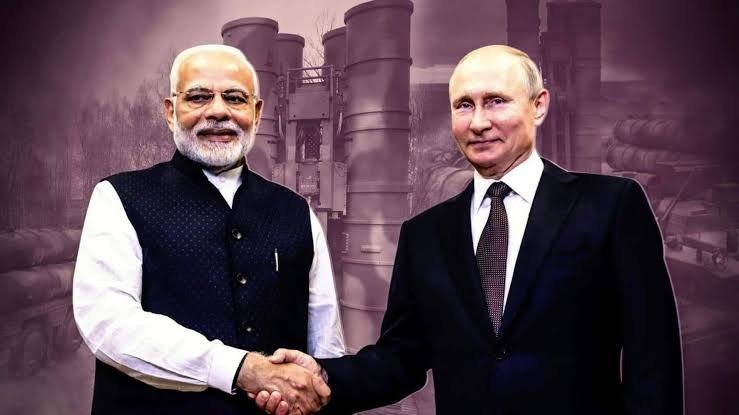
    U.S. President Donald Trump recently claimed that Indian Prime Minister Narendra Modi agreed to reduce oil purchases from Russia. In return, Washington proposed cutting tariffs on Indian goods from 50 percent to 18 percent.

    The condition behind the offer was clear. India would need to stop buying oil that helps finance Russia’s war effort in Ukraine and instead source crude from the United States and Venezuela, now under U.S. influence.

    Before the war, Russian oil accounted for only about 2.5 percent of India’s total imports. After the conflict began, that share rose sharply to nearly 30 percent. India currently imports roughly 1.1 million barrels of Russian crude per day.

    Although imports have declined slightly under U.S. pressure in recent months, major refiners such as Reliance Industries and Indian Oil Corporation continue to earn strong margins from discounted Russian crude.

    Why This Matters

    Russian oil has been more than just an energy source for India. It has been a key tool for controlling inflation. Russian crude is typically available at a discount of 10 to 20 dollars per barrel compared to global market prices, helping keep fuel costs down.

    Turning to Venezuela would likely mean losing much of that price advantage. While Venezuela holds vast oil reserves, real-world supply and usability present serious challenges.

    Any shift would directly affect India’s energy security, industrial costs, and household fuel prices. Higher petrol and diesel prices would ripple through transportation, food, and everyday goods.

    At the diplomatic level, the issue also tests India’s balancing act. Maintaining long-standing ties with Russia while preserving trade relations with the United States is becoming increasingly difficult.

    What Analysts or Officials Are Saying

    Energy analysts point out that although Venezuela’s oil reserves exceed Russia’s on paper, three major obstacles stand in the way.

    First is distance. Shipping oil from Venezuela to India requires nearly twice the travel distance compared to Russian routes, significantly raising transportation costs and delivery time.

    Second is crude quality. Venezuelan oil is extremely heavy and high in sulfur content. Most Indian refineries are not designed to process this type of crude efficiently.

    Third is production capacity. Due to political instability and infrastructure issues, Venezuela currently produces around one million barrels per day. Even if all of that were sent to India, it would still fall short of replacing Russian supply.

    Daljoog News Analysis

    Daljoog News assesses that viewing Venezuela as a full replacement for Russia is unrealistic. At best, it can serve as a partial alternative.

    A major complication is Nayara Energy. This large refinery in Gujarat is nearly 49 percent owned by Russia’s state oil company Rosneft and is heavily dependent on Russian crude.

    Without special exemptions from the United States, operating this refinery would become extremely difficult, posing risks to India’s internal fuel supply.

    Cost is another decisive factor. Analysts estimate that cutting Russian oil entirely could raise India’s annual energy bill by 90 to 100 billion dollars, an amount comparable to the country’s total health budget.

    That financial burden would ultimately fall on consumers. Rising fuel prices would push inflation higher and put pressure on economic growth.

    For now, India’s approach appears to be a gradual reduction rather than a complete halt. State-owned firms such as HPCL and MRPL have already stopped buying Russian crude, while Reliance and IOC may follow.

    What Happens Next

    India has not officially confirmed Trump’s claims. New Delhi is likely to avoid public commitments and instead pursue quiet adjustments behind the scenes.

    In the coming months, India may diversify its oil imports further, sourcing more from the United States, the Middle East, and limited volumes from Venezuela.

    A complete break from Russian oil, however, seems unlikely in the near term. India’s economy and energy security are not positioned to absorb that shock.

    The real question is whether India can maintain balance in this new oil geopolitics. The answer will depend on time, refinery adaptability, and future policy decisions.
    Share. Facebook Twitter Pinterest LinkedIn Tumblr Email
    Andrew Rogers
    Andrew Rogers
    • Website
    • Facebook

    Andrew Rogers is a seasoned journalist and news analyst specializing in global affairs, politics, and finance. With a passion for investigative reporting, he delivers accurate, insightful stories that inform and engage readers worldwide.

    Related Posts

    CK Hutchison Launches Arbitration After Panama Canal Ruling

    CK Hutchison Launches Arbitration After Panama Canal Ruling

    February 4, 2026

    Comments are closed.

    Our Picks
    Fog Triggers 59-Vehicle Crash, Shuts Highway 99 in Central Valley

    Fog Triggers 59-Vehicle Crash, Shuts Highway 99 in Central Valley

    February 1, 2026
    North Carolina Economy Booms but Income Lags

    North Carolina Economy Booms but Income Lags

    January 29, 2026
    Indiana Marriage Education Bill Passes First Hurdle

    Indiana Marriage Education Bill Passes First Hurdle

    January 25, 2026
    Guatemala Declares State of Siege Over Gang Violence

    Guatemala Declares State of Siege Over Gang Violence

    January 20, 2026
    Stay In Touch
    • Facebook
    • Twitter
    • Instagram
    • YouTube
    Don't Miss
    Zohran Mamdani Leads Mayoral Primary in New York City

    Zohran Mamdani Leads Mayoral Primary in New York City

    Politics June 25, 2025

    Zohran Mamdani, a 33-year-old state lawmaker and democratic socialist, has taken the lead in New…

    Trump Attacks Somali Voters in Minnesota

    Trump Attacks Somali Voters in Minnesota

    December 3, 2025
    DOJ Investigates Walz and Frey Over Immigration

    DOJ Investigates Walz and Frey Over Immigration

    January 17, 2026
    UEFA Champions League Trophy Makes Exciting Stop in Kenya with Bastian Schweinsteiger

    UEFA Champions League Trophy Makes Exciting Stop in Kenya with Bastian Schweinsteiger

    May 3, 2025
    About Us

    Daljoog News is a trusted news platform that brings you the latest global and local updates with accuracy and fairness. We are committed to clear and unbiased reporting, covering topics like politics, business, technology, science, and culture and more. Using the latest technology and expert journalism, we provide reliable coverage of important stories. Stay informed, inspired, and empowered with Daljoog News—your source for breaking news, the latest updates, and videos that matter.

    Email Us: info@daljoognews.com

    Our Picks
    Why can't the US dollar's depreciation be stopped?

    Why can’t the US dollar’s depreciation be stopped?

    February 1, 2026
    UN Warns of Potential Bankruptcy Amid Delayed Member Payments

    UN Warns of Potential Bankruptcy Amid Delayed Member Payments

    February 1, 2026
    Fed Set to Hold Rates Amid Global Market Tensions

    Fed Set to Hold Rates Amid Global Market Tensions

    January 25, 2026
    Latest News
    Federal Judge Orders Trump Admin to Release Gateway Tunnel Funds

    Federal Judge Orders Trump Admin to Release Gateway Tunnel Funds

    February 7, 2026
    Ex-Border Patrol Chief Greg Bovino Asked to Leave Las Vegas Bar

    Ex-Border Patrol Chief Greg Bovino Asked to Leave Las Vegas Bar

    February 7, 2026
    Mamdani Invokes Faith to Defend NYC Sanctuary City Status

    Mamdani Invokes Faith to Defend NYC Sanctuary City Status

    February 7, 2026
    Facebook X (Twitter) RSS YouTube Instagram
    • Home
    • About Us
    • Contact Us
    • Our Authors
    • Privacy Policy
    • Terms & Conditions
    • Sitemap
    © 2026 DaljoogNews.com

    Type above and press Enter to search. Press Esc to cancel.