

The Rafah border crossing between Gaza and Egypt reopened this week, offering a rare opportunity for Palestinians to travel after two years of conflict.
According to Daljoog News analysis, hopes for swift passage have been dampened by disagreements over who can cross, long delays, and reports of harsh treatment by Israeli security forces.
Fewer people than expected have passed through, highlighting the ongoing challenges for Palestinians seeking medical care and family reunification amid the fragile ceasefire.
What Happened?
The Rafah crossing, Gaza’s only exit not controlled by Israel, reopened after being heavily restricted and effectively seized by Israel in May 2024. Palestinian officials initially called the reopening a “window of hope,” but operational difficulties quickly emerged.
Under the negotiated restrictions, only 50 people were allowed to return to Gaza daily, and 50 medical patients—with two companions each—were permitted to leave. In the first four days, just 36 patients and 62 companions crossed, according to U.N. data. Nearly 20,000 Palestinians reportedly need medical care outside Gaza.
Delays and confusion led to temporary closures on Friday and Saturday. Many travelers faced hours of questioning by Israeli authorities, including handcuffing and blindfolding, according to reports from those who returned.
Hours of Questioning
Rana al-Louh, returning to Gaza with her injured sister, spent over six hours being interrogated. She said officials questioned her repeatedly about why she wanted to go back to Gaza, told her Gaza “belongs to Israel,” and warned that “the war would return.”
Israel’s military denied any misconduct, stating that no incidents of mistreatment or property confiscation are known. The Shin Bet intelligence agency and COGAT, responsible for coordinating Palestinian civilian affairs, declined to comment on these allegations.
U.N. human rights officials later highlighted a “consistent pattern of ill-treatment, abuse and humiliation” by Israeli forces during crossings. Ajith Sunghay, the U.N. human rights chief for the occupied Palestinian territories, emphasized that safe and dignified return is the bare minimum for displaced residents.
Numbers Below Targets
The reopening was intended as a pilot program, with potential for more crossings if successful. Operational challenges quickly emerged:
- On the first day, 71 patients and companions were approved to leave Gaza, but only 12 actually departed due to transport and procedural delays.
- Israel allowed no Palestinians to enter Gaza until departures were complete, limiting the number of returnees to match departures.
- On the second day, 40 people left Gaza and 40 returned, but delays continued due to luggage restrictions and banned items, including cigarettes, water, and liquids like perfume.
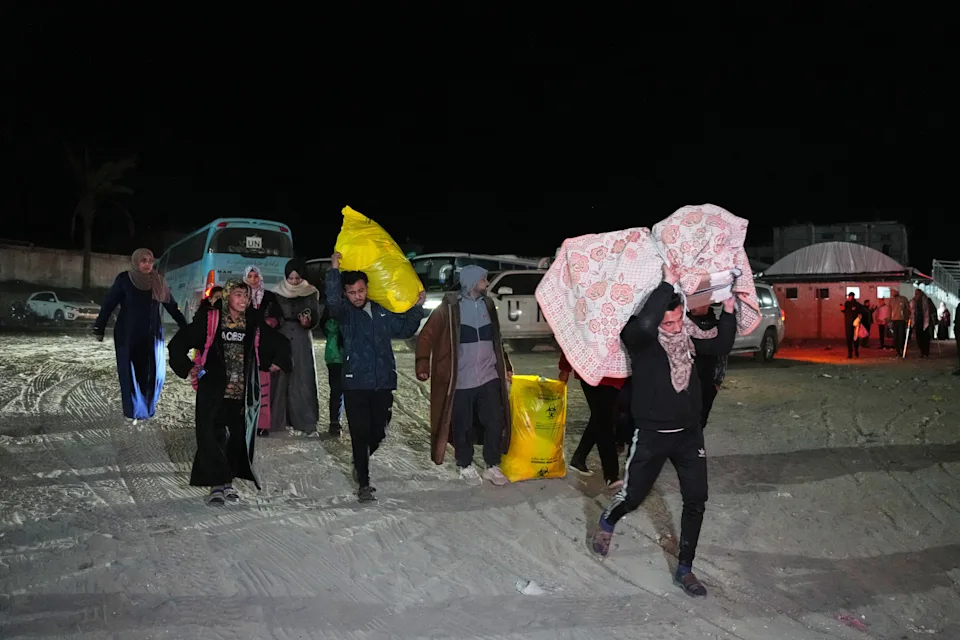
The process remained slow, with buses carrying returnees often arriving after midnight.
Daljoog News Analysis
The Rafah crossing’s reopening illustrates the delicate balance between providing humanitarian access and maintaining security controls in a conflict zone. While the border represents hope for Palestinians separated from families and medical care, procedural restrictions and security measures have slowed the relief effort.
The delays highlight broader structural challenges in Gaza, where health services and essential infrastructure remain devastated. Even as some travelers expressed relief and gratitude, the limited capacity underscores ongoing humanitarian needs.
Personal Stories
Some Palestinians, like Siham Omran, returned after nearly two years away from their families. She shared a tent with 15 relatives, using her blouse as a pillow, and described the journey as one of suffering but also of relief at finally returning home.
“The devastation is shocking, but we are home,” Omran said, reflecting the bittersweet reality for many Palestinians after the crossing’s reopening.