



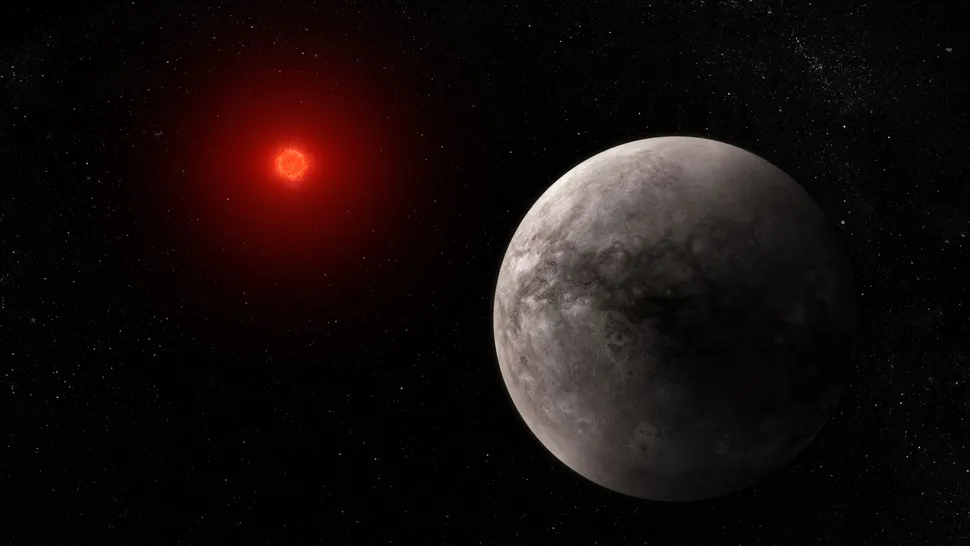
NASA’s Kepler telescope has revealed a candidate exoplanet that could resemble Earth in size and orbit, located a mere 150 light-years from our solar system. The planet, HD 137010 b, orbits a sun-like star in a nearly 355-day cycle.
According to Daljoog News analysis, while the discovery excites astronomers, it also underscores the fine line between potentially habitable worlds and icy, uninhabitable realms. The planet’s star is slightly smaller and cooler than our Sun, which could make HD 137010 b far colder than Earth.
The finding adds to a growing list of nearby exoplanets with Earth-like characteristics, offering new opportunities to study planetary formation, atmospheric conditions, and habitability beyond our solar system.
What Happened?
Researchers identified HD 137010 b while analyzing Kepler data from 2017, capturing a single transit where the planet briefly blocked some of its star’s light. The transit provided enough information to estimate the planet’s size and orbital period, revealing a nearly Earth-sized world in an orbit remarkably similar to ours.
HD 137010 b orbits a K-type orange dwarf, smaller and cooler than the Sun. Early temperature estimates suggest the planet could experience surface conditions below minus 90 degrees Fahrenheit—colder than Mars, which averages around minus 85 degrees Fahrenheit.
The discovery stands out because the star is bright and nearby, making it far easier to study than other known Earth-sized exoplanets, which are typically fainter and much farther away.
Why This Matters
The potential for HD 137010 b to host life hinges on its atmosphere and composition. A carbon-dioxide-rich atmosphere could trap enough heat to create temperate conditions, despite the star’s lower output. This makes the planet an intriguing laboratory for understanding how planets orbiting cooler stars could retain warmth and, potentially, water.
Astronomers debate whether small stars like orange and red dwarfs are ideal hosts for habitable planets, noting that proximity to the star could lead to tidal locking, where one side of the planet faces the star permanently. Such conditions complicate assessments of habitability but also create unique opportunities to study atmospheric and climate dynamics in alien worlds.
What Analysts or Officials Are Saying
Chelsea Huang, a coauthor of the study from the University of Southern Queensland, emphasized the significance of HD 137010 b’s proximity and brightness, calling it a “textbook example” of a planetary transit. Sara Webb, an astrophysicist at Swinburne University, cautioned that multiple transits are generally needed to confirm habitability and planetary characteristics, but she described the initial detection as “exciting.”
The discovery, published in The Astrophysical Journal Letters, positions HD 137010 b as a prime candidate for follow-up observations with future telescopes capable of probing its atmosphere and surface conditions.
Daljoog News Analysis
Daljoog News analysis finds that HD 137010 b exemplifies the ongoing revolution in exoplanet research. Nearby planets with Earth-like orbits are rare, and even icy worlds can provide insights into planetary formation, climate regulation, and the potential for life under different stellar conditions.
This discovery also highlights the critical role of telescope technology in detecting subtle planetary signals. The combination of proximity, brightness, and a favourable orbital transit allowed astronomers to make significant inferences from a single observation—a reminder of how much remains to be learned about nearby planetary systems.
What Happens Next
Follow-up observations with next-generation telescopes, such as the James Webb Space Telescope, will aim to confirm the planet’s size, orbital dynamics, and atmospheric composition. Determining whether HD 137010 b retains a thick, CO2-rich atmosphere could be key to assessing its potential habitability.
As researchers continue to catalogue nearby exoplanets, HD 137010 b is expected to become a focal point for studies on the diversity of Earth-sized planets and the conditions that might support life beyond our solar system.