


Denmark and Greenland say discussions with the United States have moved forward, but officials stress there is still no agreement on Washington’s long-standing interest in Greenland’s future. The talks come amid renewed attention from the Trump administration, which has framed the Arctic island as a national security priority.
According to Daljoog News analysis, the latest diplomatic signals suggest de-escalation rather than resolution. While military options appear off the table for now, the core issue of sovereignty remains unresolved and politically sensitive for both Copenhagen and Nuuk.
The timing matters. Arctic security has risen on NATO’s agenda, US–Russia tensions remain high, and Greenlanders themselves are pushing back against any suggestion of foreign control, adding pressure to already delicate negotiations.
What Happened?
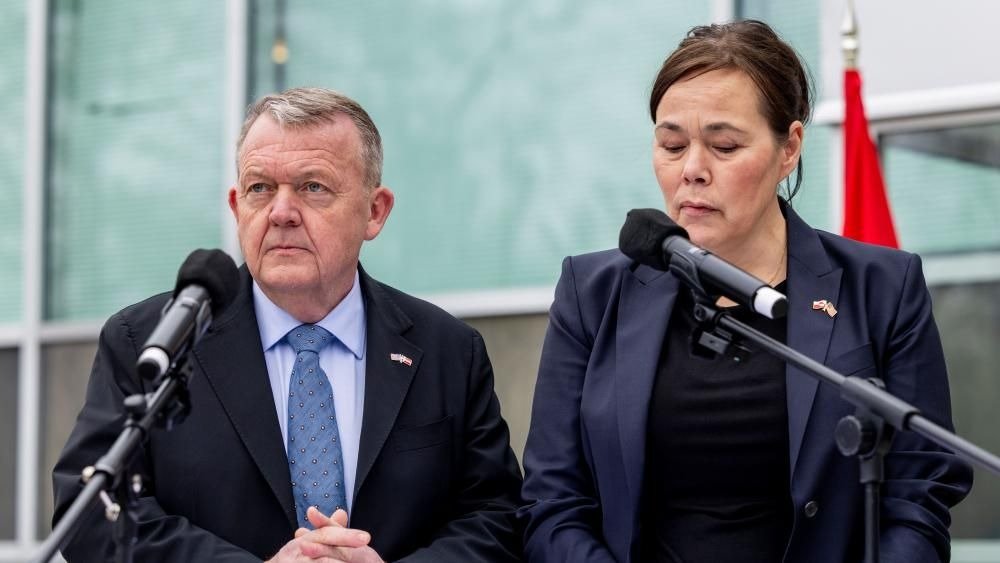
Danish Foreign Affairs Minister Lars Løkke Rasmussen said on Saturday that talks involving Denmark, Greenland, and the United States have made progress but have not produced an outcome. Speaking after recent diplomatic engagements, Rasmussen acknowledged that the situation remains unsettled.
He said Denmark does not consider the matter closed and that discussions are continuing without a clear endpoint. His comments followed weeks of behind-the-scenes meetings involving senior US, Danish, and Greenlandic officials.
Greenland’s Foreign Affairs Minister Vivian Motzfeldt echoed that assessment, saying discussions are ongoing and that it is too early to say where negotiations will ultimately lead. Her remarks underlined that Greenland sees the process as long-term rather than a quick diplomatic fix.
The renewed talks trace back to earlier statements by former US President Donald Trump, who had publicly floated the idea of acquiring Greenland. While those remarks initially caused alarm in Copenhagen and Nuuk, the tone has shifted in recent weeks following Trump’s meeting with NATO Secretary General Mark Rutte at the World Economic Forum in Davos.
US officials have since ruled out military intervention. However, Washington continues to argue that Greenland’s strategic location is vital for American and allied security interests in the Arctic.
Why This Matters
Greenland sits at the center of emerging Arctic competition, where melting ice is opening new shipping routes and access to resources. For the United States, the island’s geography offers strategic value for missile defense, early warning systems, and broader NATO operations.
For Denmark and Greenland, the issue cuts much deeper. Greenland is an autonomous territory within the Kingdom of Denmark, and any suggestion of external control touches directly on self-determination and national identity. Danish officials have repeatedly said Greenland’s sovereignty is a non-negotiable red line.
Public opinion in Greenland reinforces that position. Recent polling shows a strong majority of Greenlanders oppose becoming part of the United States, reflecting concern over increased foreign military presence and loss of political control.
The situation also tests alliance diplomacy. Denmark is a close US ally and NATO member, yet it must balance strategic cooperation with protecting Greenland’s rights. How this balance is managed will shape trust within the alliance at a time of heightened global security tension.
What Analysts or Officials Are Saying
Danish officials have emphasized that dialogue, not confrontation, remains the preferred path. Rasmussen’s remarks suggest Denmark is willing to engage but will not compromise on sovereignty. He has framed the talks as part of normal alliance discussions rather than a negotiation over ownership.
Greenlandic leaders have taken a cautious tone. Motzfeldt has stressed that Greenland expects to be treated as an equal party, not as an object of negotiation between larger powers. Her comments reflect long-standing frustration in Nuuk over decisions made without sufficient local input.
US officials, meanwhile, continue to frame their interest in security terms. While Washington has softened its rhetoric, it maintains that the Arctic is becoming a key strategic theater, requiring a stronger and more coordinated presence.
Political analysts note that the cooling of rhetoric after Trump’s Davos meeting signals a recognition of diplomatic limits. However, they also warn that strategic pressure is unlikely to disappear, especially as Arctic competition intensifies.
Daljoog News Analysis
The current phase of talks appears designed to lower tensions rather than produce a decisive breakthrough. By ruling out military options, Washington has reduced immediate friction, but it has not abandoned its underlying strategic goals.
From Denmark’s perspective, the challenge is managing a powerful ally without setting a precedent that weakens sovereignty. Copenhagen’s insistence on clear red lines suggests it views firmness as essential to preventing future pressure.
For Greenland, the stakes are existential. Increased foreign attention brings potential economic and security benefits, but also risks turning the island into a bargaining chip in great-power politics. Greenlandic leaders seem determined to avoid that outcome, even if it means slower progress.
Daljoog News analysis indicates that this issue is likely to resurface repeatedly rather than be resolved cleanly. As Arctic security grows in importance, Greenland will remain a focal point, regardless of who occupies the White House.
The lack of a “solution yet” may actually reflect a more realistic diplomatic approach. In this case, stability may depend less on grand agreements and more on clear boundaries, transparency, and respect for local consent.
What Happens Next
Further diplomatic engagement is expected in the coming months, likely through NATO channels and bilateral meetings. Any formal agreements are expected to focus on cooperation rather than control.
Greenland’s government is likely to continue consulting its population, especially as public opposition to US integration remains strong. Domestic political pressure in Nuuk will limit how far leaders can go in accommodating Washington’s interests.
Denmark, meanwhile, will seek to keep discussions framed within alliance cooperation while reinforcing its legal authority over foreign policy and defense. That balancing act will remain delicate.