

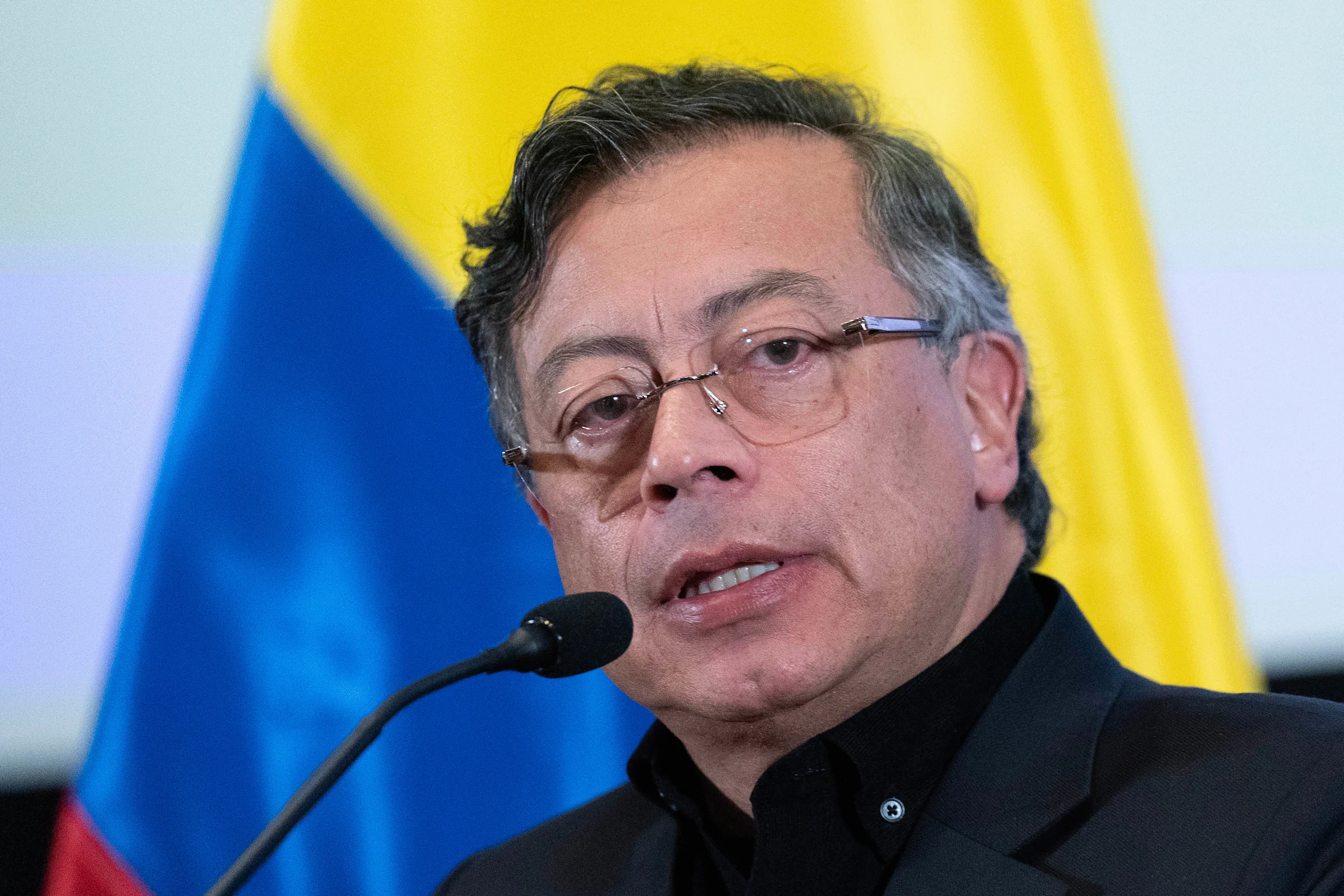
Colombian President Gustavo Petro said he narrowly avoided an assassination attempt after security warnings forced his helicopter to change course while traveling with his daughters along the Caribbean coast.
According to Daljoog News analysis, the reported threat underscores mounting security concerns in Colombia as political tensions and armed violence intensify ahead of national elections.
Petro has repeatedly claimed that criminal networks have targeted him since he took office in August 2022. This latest episode adds to a pattern of public warnings from the president about alleged plots against his life.
What Happened?
Petro stated that his helicopter was unable to land at a planned destination in northern Colombia after receiving intelligence that armed individuals intended to fire at the aircraft.
He said landing lights were not activated at the designated site, heightening fears of an ambush. As a result, the helicopter diverted toward open sea for several hours before reaching an alternative landing point with support from the Colombian navy.
The president addressed the incident during a Council of Ministers meeting in Córdoba Department, where heavy rains and flooding have created a humanitarian emergency.
Petro said security information prevented him from landing both the previous evening and again the following morning. He described himself as operating under constant threat conditions.
Public broadcaster Radio Nacional de Colombia carried the president’s remarks, noting that he linked the episode to a series of alleged threats dating back to October last year.
Authorities have not publicly identified suspects connected to the reported plot.
Why This Matters
Colombia faces a complex security landscape marked by drug trafficking networks, dissident rebel factions, and organized crime groups.
Petro, the country’s first leftist president, has pursued a “total peace” strategy aimed at negotiating with armed actors while also confronting drug cartels. His approach has drawn both domestic support and fierce criticism.
An attempted attack on a sitting president would signal a dangerous escalation. Even unverified threats can destabilize political confidence and heighten public anxiety.
The episode unfolds months before the presidential elections, in which Petro cannot seek another term due to constitutional limits. Campaign dynamics are already tense, with candidates positioning themselves around security and governance issues.
The reported helicopter threat also coincided with the kidnapping of Senator Aida Quilcué in Cauca, a conflict-heavy region known for coca cultivation and armed group activity.
What Analysts or Officials Are Saying
Petro has long asserted that drug trafficking organizations seek to eliminate him. He previously reported another alleged assassination attempt in 2024.
Security analysts note that Colombia’s history includes targeted violence against political leaders, judges, and journalists. Although security protocols have improved significantly since the height of cartel violence in the 1980s and 1990s, threats remain credible in regions with strong criminal presence.
Defense Minister Pedro Sanchez confirmed that Senator Quilcué, who was abducted earlier Tuesday while traveling with bodyguards, was later freed along with her security team. The senator’s vehicle had been found abandoned before authorities secured her release.
Petro publicly warned kidnappers that holding the senator would cross a “red line,” signaling a firm response from the state.
Images circulated on official military channels showed Quilcué safe following her release.
Daljoog News Analysis
Whether the helicopter threat was imminent or precautionary, its political impact is immediate.
Petro’s repeated references to assassination plots reinforce his narrative that entrenched criminal interests oppose his reform agenda. Supporters may view the warnings as evidence of the risks he faces in confronting illicit networks.
Critics, however, may question the lack of detailed public evidence surrounding the alleged threat. In a polarized political environment, transparency around security incidents becomes critical.
Colombia’s security institutions walk a delicate line. Overstating threats risks public panic. Understating them risks complacency.
The simultaneous kidnapping of a senator highlights the fragile balance between state authority and armed group influence in parts of the country. Cauca remains a flashpoint, with dissident factions of the former FARC guerrilla movement maintaining territorial control in certain areas.
What Happens Next
Authorities are expected to review intelligence assessments surrounding the helicopter threat. Further details may emerge if investigations identify suspects or corroborate the warning.
Security around the president will likely intensify, particularly during travel to regions affected by organized crime or armed dissidents.
Political campaigns may increasingly focus on law enforcement, counter-narcotics strategy, and rural security in the months leading up to elections.
Colombia’s leadership now faces dual pressures: maintaining public confidence while confronting persistent violence. How effectively the government addresses both will shape the country’s political climate in the year ahead.