

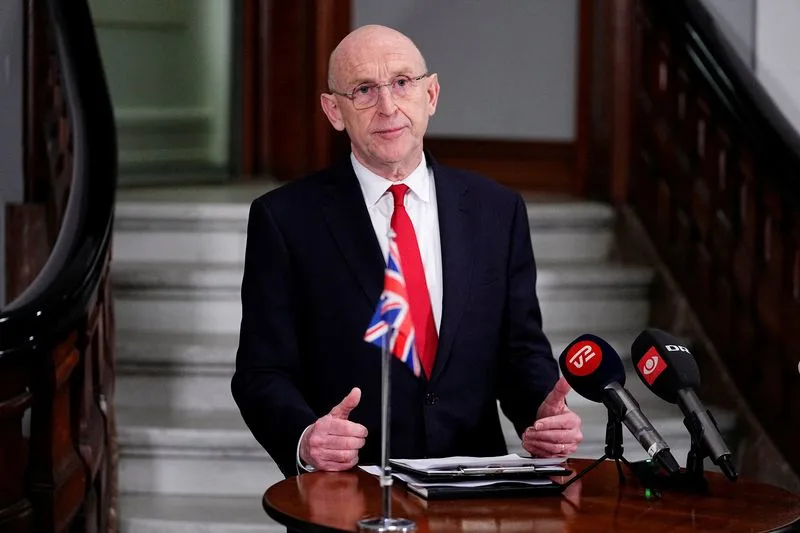
Britain will expand its military footprint in the Arctic as part of NATO’s Arctic Sentry mission, with Defence Secretary John Healey pledging to double the number of UK troops deployed to Norway over the next three years.
According to Daljoog News analysis, the announcement reflects growing concern among Western allies about Russia’s military activity in the High North and rising geopolitical tension surrounding Greenland.
Healey is expected to outline Britain’s role during a visit to Norway before heading to NATO headquarters in Brussels for further talks with alliance counterparts.
What Happened?
The UK government confirmed that British armed forces will play a vital role in NATO’s Arctic Sentry initiative, as Healey described.
Under the plan, the number of UK personnel stationed in Norway will increase to 2,000 over three years. The move forms part of a broader effort to reinforce security across the Arctic region.
The Arctic Sentry mission aims to strengthen deterrence and coordination among NATO members operating in northern territories, including areas near Greenland, an autonomous territory within the Kingdom of Denmark and a NATO member state.
Healey cited growing defence demands and described Russia as the most significant threat to the stability of the Arctic and High North since the Cold War. He pointed to Moscow’s renewed military investment in the region, including the reopening of former Soviet-era bases.
The announcement comes as the UK-led Joint Expeditionary Force prepares for major military exercises in the High North. Hundreds of personnel are expected to deploy across Iceland, the Danish Straits, and Norway during drills scheduled for September.
Why This Matters
The Arctic has become a strategic frontier as climate change opens new shipping routes and expands access to untapped natural resources.
Russia has significantly increased its Arctic capabilities over the past decade. It has modernised airfields, upgraded naval infrastructure, and expanded surveillance systems along its northern coastline.
NATO members now view the High North as a critical zone for deterrence and early warning. Increased activity in the region carries implications for transatlantic security, maritime routes, and energy infrastructure.
Tensions have also intensified following repeated remarks by U.S. President Donald Trump expressing interest in acquiring Greenland. His comments have unsettled European allies and added strain to internal NATO dynamics.
Britain’s troop expansion signals both solidarity with Nordic allies and a broader European response to pressure from Washington to shoulder more defence responsibility.
What Analysts or Officials Are Saying
British officials frame the move as part of the largest sustained increase in defence spending since the end of the Cold War.
Healey is expected to discuss operational details and coordination measures at NATO meetings in Brussels. The alliance continues to adapt its northern posture following Finland and Sweden’s accession, which significantly expanded NATO’s Arctic footprint.
Security analysts note that Norway plays a pivotal role in monitoring Russian naval activity in the Barents Sea and North Atlantic. Expanded UK deployments will likely focus on cold-weather warfare training, rapid response capability, and intelligence cooperation.
Some observers also view the announcement as a political signal. It reinforces Britain’s commitment to NATO at a time when alliance unity faces rhetorical strain.
Daljoog News Analysis
The Arctic is no longer a peripheral theatre. It is becoming central to strategic planning among NATO members.
By doubling its troop presence in Norway, the UK is positioning itself as a leading European actor in northern defence. The move complements broader British ambitions to remain a top-tier military contributor despite budget pressures.
Russia’s expanding footprint in the High North has shifted the balance of attention. While the war in Ukraine dominates headlines, Arctic militarisation continues steadily in the background.
The political dimension cannot be ignored. Trump’s remarks about Greenland have complicated alliance messaging. European governments are responding by emphasising sovereignty, deterrence, and collective security.
Britain’s announcement may help reassure Nordic allies that NATO’s northern flank will not be neglected. It also underscores the UK’s effort to demonstrate leadership within European defence frameworks.
What Happens Next
Healey’s meetings in Brussels are expected to clarify operational timelines and command structures for Arctic Sentry.
NATO allies will likely expand joint exercises and surveillance coordination throughout the year. The September drills under the Joint Expeditionary Force will serve as a visible test of readiness.
Further announcements on defence investment and Arctic infrastructure may follow as governments adjust to the region’s evolving strategic importance.
The High North is entering a new era of competition. Britain’s expanded role suggests that NATO intends to meet that challenge with sustained presence and coordination.