


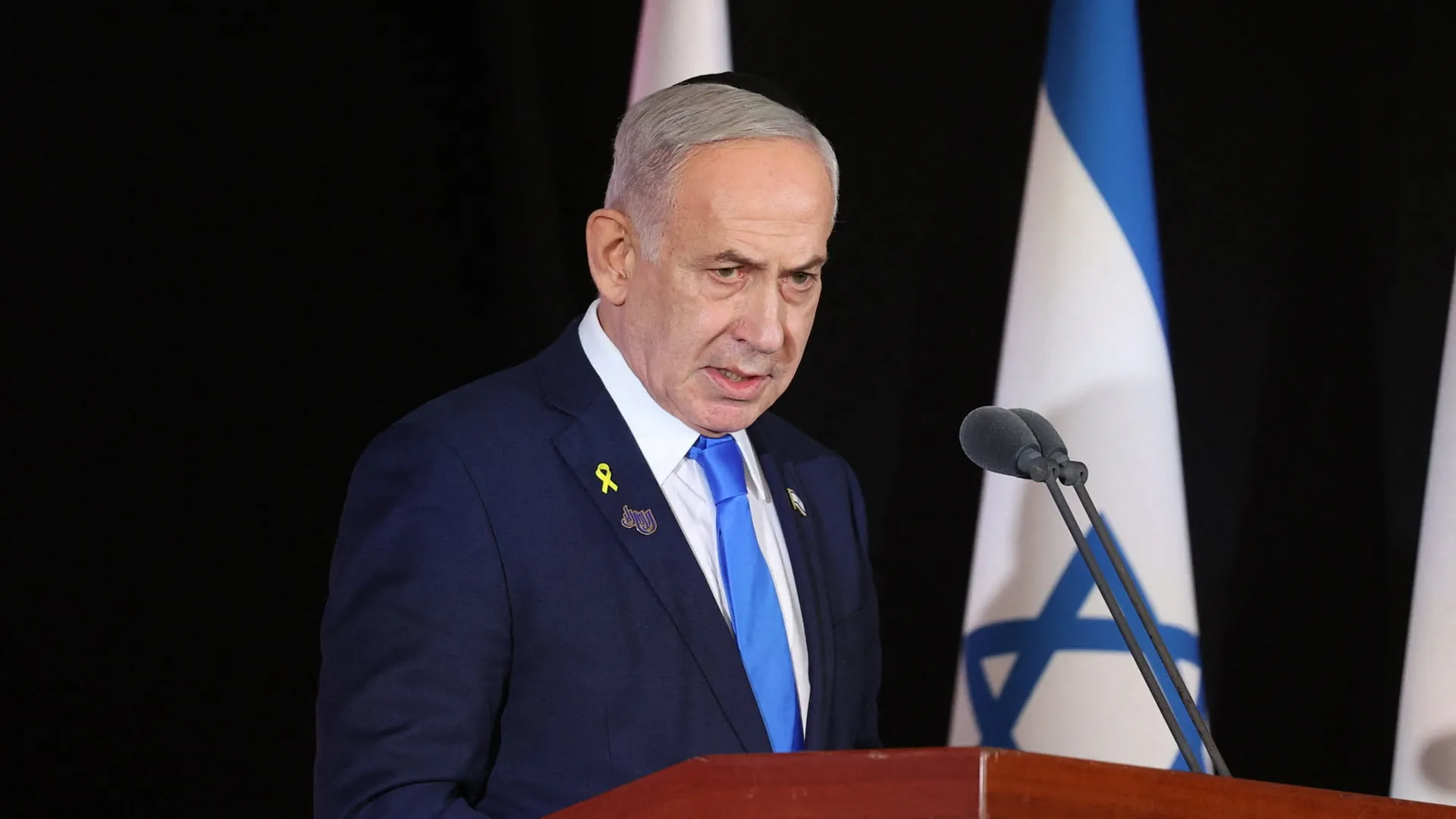
Israeli Prime Minister Benjamin Netanyahu is visiting Washington for the sixth time since Donald Trump took office, aiming to present Israel’s position on Iran ahead of upcoming nuclear negotiations.
According to Daljoog News analysis, Netanyahu’s visit signals Israel’s intent to directly influence U.S. policy on Iran’s nuclear program and regional influence, reinforcing Jerusalem’s broader security priorities.
The visit comes amid heightened tensions in the Middle East, with Iran-U.S. nuclear diplomacy ongoing and regional powers closely monitoring the discussions.
What Happened?
Before departing for Washington, Netanyahu told reporters at the airport that he would discuss Israel’s policy framework with the U.S. president. He emphasized that Israel seeks complete denuclearization of Iran and measures to curb Tehran’s regional influence.
Netanyahu framed his strategy as one that ensures not only Israel’s security but also broader regional stability. The visit is largely centered on aligning Washington’s approach to Iran with Israeli priorities, particularly as nuclear talks continue behind the scenes.
Simultaneously, Iranian officials are issuing warnings ahead of the U.S.-Israel engagement. Ali Larijani, Secretary of Iran’s Supreme National Security Council, cautioned that Israel should not expect Washington to succumb to pressure and urged U.S. officials to act prudently.
Why This Matters
Netanyahu’s Washington visit comes at a pivotal moment for Iran-U.S. nuclear diplomacy. Israel has long expressed concern that negotiations may not fully restrict Iran’s nuclear capabilities, and this trip allows Netanyahu to shape American policy in advance.
Larijani’s warnings highlight Tehran’s sensitivity to U.S.-Israeli coordination on Iran. The contrasting positions reflect broader regional dynamics, where each side seeks to protect strategic interests and influence diplomatic outcomes.
What Analysts or Officials Are Saying
Middle East analysts view Netanyahu’s visit as both symbolic and strategic. By directly briefing the U.S. president, Israel can press for stricter terms on Iran while reinforcing its regional security posture.
Iranian officials, meanwhile, emphasize caution and stress that external influence should not compromise Tehran’s negotiating position. Larijani’s meetings in Oman with Foreign Minister Badr Al Busaidi and Sultan Haitham bin Tariq Al Said underscore Tehran’s efforts to balance regional diplomacy alongside the nuclear talks.
Daljoog News Analysis
Netanyahu’s trip underscores Israel’s proactive approach in shaping U.S. policy. His emphasis on complete denuclearization reflects long-standing Israeli concerns that insufficient restrictions on Iran could destabilize the region.
Meanwhile, Iran’s engagement with Oman signals a parallel diplomatic track, aiming to maintain influence and coordinate with regional mediators. The interplay of Israeli lobbying and Iranian counter-diplomacy highlights the delicate balance shaping Middle East security.
This visit also illustrates how bilateral diplomacy between the U.S. and Israel continues to impact broader negotiations on Iran, where every meeting can influence both policy outcomes and regional perception.
What Happens Next
Netanyahu is expected to meet with senior U.S. officials to discuss Israel’s Iran strategy in detail. The outcomes may shape Washington’s approach to upcoming nuclear talks and influence potential sanctions or security measures in the region.
In parallel, Iran will continue its diplomatic engagement via Oman, maintaining dialogue with regional partners to protect its negotiating leverage.
Observers will be watching both tracks closely, as the alignment—or divergence—of U.S., Israeli, and Iranian positions could have significant implications for the Middle East’s security landscape.