

Iran’s stockpile of highly enriched uranium may still be located inside facilities damaged by recent military strikes, according to the head of the UN nuclear watchdog. The remarks have intensified debate over Tehran’s nuclear program and inspection access.
According to Daljoog News analysis, the statement introduces fresh uncertainty into an already fragile security environment. While affirming Iran’s legal right to enrich uranium under international law, the watchdog chief also signaled concern about where sensitive nuclear material is currently stored.
The comments arrive amid heightened regional tension following reported strikes on Iranian nuclear-related sites. The situation now blends legal arguments, military risk, and diplomatic maneuvering into one volatile equation.
What Happened?
Rafael Grossi, Director General of the International Atomic Energy Agency, said in a recent interview that Iran retains the right to enrich uranium for peaceful purposes under the Treaty on the Non-Proliferation of Nuclear Weapons.
Grossi clarified that membership in the NPT grants signatories the ability to pursue civilian nuclear energy, provided activities remain under safeguards and inspections. Iran is a signatory to the treaty.
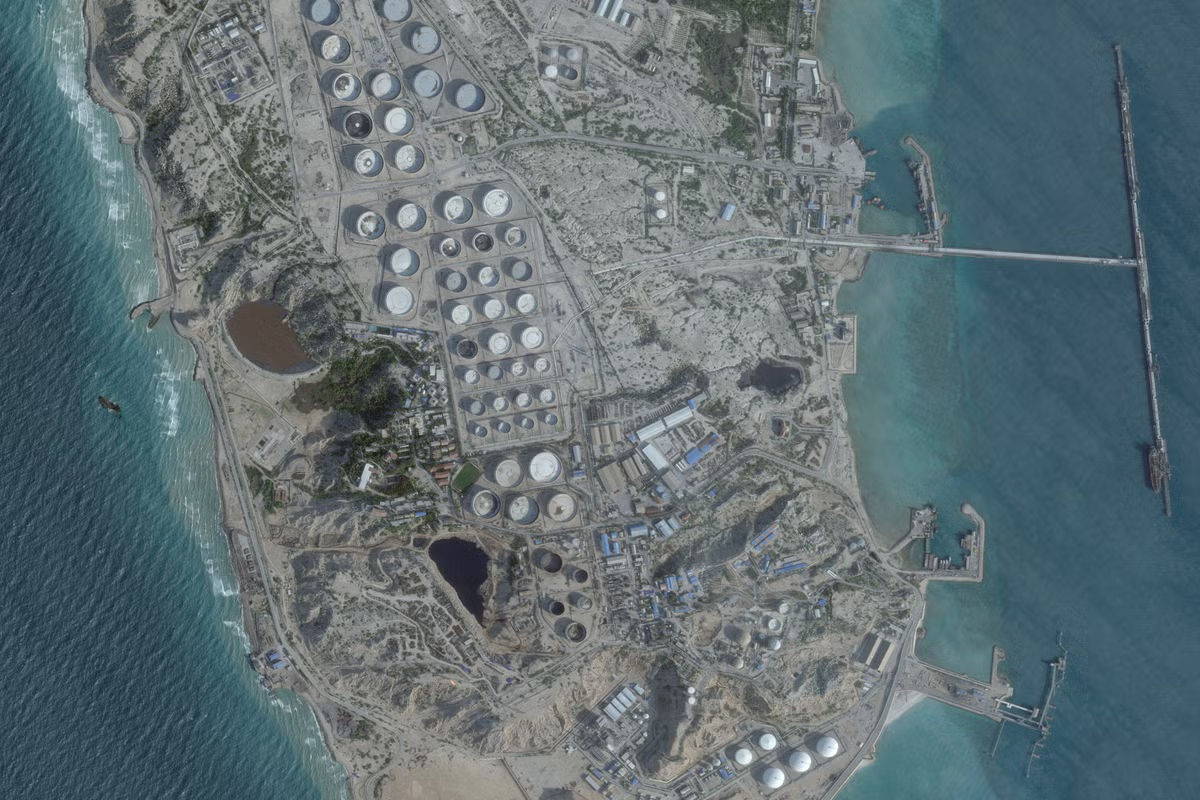
At the same time, he raised concerns that highly enriched uranium could still be present in facilities damaged during recent strikes. Iranian officials claim that three installations under IAEA oversight were targeted.
The agency has reportedly been waiting for months to regain full inspection access to three major enrichment sites. Tehran has allowed visits to facilities that were not damaged, but it has insisted that inspections at affected locations must first align with revised legal and procedural frameworks.
Iranian authorities argue that the security situation has changed following the attacks. Lawmakers in Tehran passed legislation placing ultimate oversight of cooperation with the IAEA under the country’s Supreme National Security Council.
Foreign Ministry spokesperson Esmail Baghaei has stated that Iran remains committed to the NPT and safeguard agreements. However, he emphasized that cooperation will proceed strictly within the bounds of domestic law.
Why This Matters
The central concern is not only enrichment itself but also transparency. Uranium enriched to higher levels shortens the technical distance to weapons-grade material, even if a state insists its program remains peaceful.
When inspectors lack full access, uncertainty grows. That uncertainty feeds geopolitical tension and raises the risk of miscalculation.
If highly enriched uranium remains inside damaged facilities, questions arise about monitoring integrity and material security. Physical damage to infrastructure can complicate verification and containment processes.
The situation also reshapes diplomatic leverage. Iran’s assertion of legal rights under the NPT strengthens its political argument. Yet limited inspection access weakens international confidence.
What Analysts or Officials Are Saying
Grossi has consistently maintained that the IAEA’s role is technical, not political. He stresses verification over confrontation. His recent comments reflect that balance—recognizing Iran’s legal rights while highlighting practical inspection challenges.
Western officials continue to argue that transparency is essential to prevent escalation. They point to enrichment levels that exceed what is typically required for civilian power generation.
Iranian officials reject accusations of pursuing nuclear weapons. They insist their program is defensive and energy-focused. Tehran also frames recent strikes as violations of sovereignty that justify tighter control over inspection protocols.
Regional actors, particularly Israel, view Iran’s nuclear advances as an existential threat. While not formally acknowledging military operations, Israeli leaders have repeatedly warned they will not tolerate a nuclear-armed Iran.
The United States has called for de-escalation but continues to support monitoring efforts through international frameworks.
Daljoog News Analysis
Grossi’s dual message carries strategic weight. By affirming Iran’s enrichment rights, he reinforces the credibility of the NPT framework. That stance prevents the watchdog from appearing politically aligned with Western pressure campaigns.
However, his warning about the possible location of highly enriched uranium introduces a layer of risk. It implies that monitoring gaps may now intersect with physical damage from military strikes.
This creates a dangerous triangle: military action, restricted inspections, and sensitive material. Each factor magnifies the others.
Iran’s legal positioning reflects a broader shift. Tehran increasingly ties international cooperation to domestic legislation and national security bodies. That structure centralizes decision-making and reduces flexibility in negotiations.
At the same time, repeated strikes on nuclear infrastructure may unintentionally strengthen hardline arguments within Iran. Leaders can frame tighter inspection controls as necessary for sovereignty and security.
The result is a narrowing diplomatic corridor. Both sides claim legal justification. Yet the technical uncertainty over uranium stockpiles keeps tensions elevated.
What Happens Next
The immediate focus will be on inspection access. The IAEA is likely to continue pressing for entry into damaged facilities to verify the status and quantity of enriched uranium.
Diplomatic channels may intensify as global powers seek to prevent further escalation. Any breakdown in verification could prompt additional sanctions or political pressure.
Iran, meanwhile, appears determined to frame the debate around treaty rights and national law. That posture suggests negotiations, if they resume, will revolve around inspection modalities rather than enrichment suspension.
The broader risk lies in prolonged ambiguity. As long as the exact location and monitoring status of highly enriched uranium remain uncertain, the issue will dominate regional security discussions.