

Close Menu
Daljoog News
    What's Hot
    Minneapolis Faces Decisions on Memorials for Residents Killed by Federal Agents

    Minneapolis Faces Decisions on Memorials for Residents Killed by Federal Agents

    February 14, 2026
    Five Months Later, RFK Jr. Has Yet to Testify Before Cassidy’s Panel

    Five Months Later, RFK Jr. Has Yet to Testify Before Cassidy’s Panel

    February 14, 2026
    DHS Shutdown Halts Funding, Disrupts Key Services

    DHS Shutdown Halts Funding, Disrupts Key Services

    February 14, 2026
    Facebook X (Twitter) Instagram
    Saturday, February 14
    Daljoog News
    Facebook X (Twitter) YouTube Instagram
    • Home
    • General
    • World
    • Business
    • Technology
    • Politics
    • Finance
    • Health
    • Lifestyle
    • Sports
    • Travel
    Daljoog News
    Home»Security»US Strike on Suspected Drug Boat Kills 3
    Security

    US Strike on Suspected Drug Boat Kills 3

    Andrew RogersBy Andrew RogersFebruary 14, 2026No Comments4 Mins Read
    Facebook Twitter Pinterest LinkedIn Tumblr Email
    Follow Us
    Google News
    US Strike on Suspected Drug Boat Kills 3
    US Strike on Suspected Drug Boat Kills 3
    Share
    Facebook Twitter LinkedIn Pinterest Email

    The U.S. military has launched another strike on a vessel accused of drug trafficking in the Caribbean Sea, killing three people. The operation marks the latest escalation in Washington’s campaign against suspected cartel-linked maritime routes.

    According to Daljoog News analysis, the strike signals a sustained shift toward direct military force in counter-narcotics efforts. The rising death toll from recent operations is drawing scrutiny over transparency, legal authority, and regional stability.

    The incident unfolds as President Donald Trump frames cartel activity as an “armed conflict,” a characterization that broadens the justification for kinetic action beyond traditional law enforcement.

    What Happened?

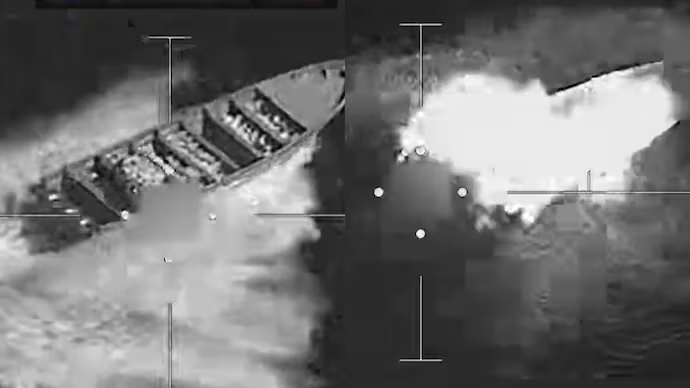
    U.S. Southern Command confirmed Friday that it targeted a boat allegedly involved in narcotics trafficking along known smuggling corridors in the Caribbean Sea.

    The command stated the vessel was operating on routes frequently used for drug transport. A video shared online shows a small boat moving across open water before erupting in flames after impact.

    Three individuals aboard were killed in the strike. Officials did not disclose their identities or nationalities.

    This operation adds to a broader series of attacks launched since early September across the Caribbean Sea and eastern Pacific Ocean. According to official tallies, at least 38 similar strikes have occurred during that period. The cumulative death toll now stands at 133.

    The campaign falls under expanded counter-drug directives authorized during the administration of Donald Trump.

    Why This Matters

    The use of military force against suspected drug boats represents a significant departure from previous counter-narcotics models, which relied heavily on interdiction and arrest rather than lethal strikes.

    By framing cartel activity as armed conflict, the administration has widened the operational space for military engagement. That shift alters legal interpretations and diplomatic relationships with regional governments.

    The Caribbean remains a major transit corridor for cocaine and other narcotics moving toward the United States. Trafficking organizations often use high-speed boats and semi-submersible vessels to evade detection.

    However, critics argue that the lack of publicly released intelligence supporting each strike raises accountability concerns. Without independent verification, questions persist about target identification and proportional response.

    What Analysts or Officials Are Saying

    Pete Hegseth, the U.S. Defense Secretary, said recently that some senior cartel figures have halted narcotics operations indefinitely due to what he described as effective strikes in the Caribbean. He did not provide supporting data for that claim.

    Military officials maintain that the operations target confirmed trafficking vessels operating along established smuggling routes. They argue that disrupting supply chains at sea reduces drug flow before shipments reach Central America or U.S. shores.

    Skeptics in policy circles question whether lethal strikes alone can dismantle cartel infrastructure. Analysts note that trafficking networks often adapt quickly, shifting routes or deploying smaller vessels to reduce exposure.

    Human rights advocates also stress the need for clarity about the identities of those killed and the evidentiary threshold used before strikes are authorized.

    Daljoog News Analysis

    The expanding strike campaign suggests Washington is testing a more aggressive deterrence model. Instead of intercepting shipments and prosecuting suspects, the strategy focuses on eliminating vessels before they reach transfer points.

    This approach carries both tactical advantages and strategic risks. It may temporarily disrupt supply chains, but it also risks diplomatic friction if operations occur near territorial waters or involve nationals from neighboring states.

    Moreover, the narrative of “armed conflict” reshapes public perception. When drug trafficking is framed as warfare, it justifies military tools rather than judicial processes. That shift could influence future security doctrine beyond the Caribbean.

    The lack of detailed evidence accompanying official claims remains a vulnerability. In high-stakes security operations, transparency can bolster legitimacy. Without it, critics gain ground.

    What Happens Next

    U.S. Southern Command is expected to continue maritime surveillance and strike operations along established trafficking corridors. Intelligence-sharing with regional partners may expand as the campaign intensifies.

    Congressional oversight could increase if casualty numbers continue to rise. Lawmakers may seek briefings on legal justifications, target verification procedures, and long-term strategy.

    Cartel networks are also likely to adjust. They may shift to smaller shipments, deploy decoy vessels, or redirect routes toward less-patrolled waters.
    Share. Facebook Twitter Pinterest LinkedIn Tumblr Email
    Andrew Rogers
    Andrew Rogers
    • Website
    • Facebook

    Andrew Rogers is a seasoned journalist and news analyst specializing in global affairs, politics, and finance. With a passion for investigative reporting, he delivers accurate, insightful stories that inform and engage readers worldwide.

    Related Posts

    Russia Hints at Su-57 Deal, Iran Seen as Buyer

    Russia Hints at Su-57 Deal, Iran Seen as Buyer

    February 14, 2026
    Iran Missile Power Raises Regional Alarm

    Iran Missile Power Raises Regional Alarm

    February 14, 2026
    US Sends Second Carrier Near Iran, Trump Warns

    US Sends Second Carrier Near Iran, Trump Warns

    February 14, 2026

    Comments are closed.

    Our Picks
    Minneapolis Faces Decisions on Memorials for Residents Killed by Federal Agents

    Minneapolis Faces Decisions on Memorials for Residents Killed by Federal Agents

    February 14, 2026
    NYC Expands Emergency Shelters as Temperatures Drop Near Zero

    NYC Expands Emergency Shelters as Temperatures Drop Near Zero

    February 8, 2026
    Seclusion and Spotlight Complicate Search for Nancy Guthrie

    Seclusion and Spotlight Complicate Search for Nancy Guthrie

    February 5, 2026
    'Epstein Island' was like hell in the guise of heaven

    ‘Epstein Island’ was like hell in the guise of heaven

    February 4, 2026
    Stay In Touch
    • Facebook
    • Twitter
    • Instagram
    • YouTube
    Don't Miss
    EU Bans Suriname, Tanzania Airlines over Safety Issues

    EU Bans Suriname, Tanzania Airlines over Safety Issues

    Politics June 4, 2025

    The European Union has banned all airlines certified in Suriname and Tanzania from flying in…

    Syria Attack Strains SDF-Government Peace Deal

    Syria Attack Strains SDF-Government Peace Deal

    August 3, 2025
    Chinese Singles Seek Love Through Live Video Chats

    Chinese Singles Seek Love Through Live Video Chats

    April 30, 2025
    IND vs AUS Champions Trophy 2025 Semifinal: What Happens If Rain Washes It Out?

    IND vs AUS Champions Trophy 2025 Semifinal: What Happens If Rain Washes It Out?

    March 4, 2025
    About Us

    Daljoog News is a trusted news platform that brings you the latest global and local updates with accuracy and fairness. We are committed to clear and unbiased reporting, covering topics like politics, business, technology, science, and culture and more. Using the latest technology and expert journalism, we provide reliable coverage of important stories. Stay informed, inspired, and empowered with Daljoog News—your source for breaking news, the latest updates, and videos that matter.

    Email Us: info@daljoognews.com

    Our Picks
    Why can't the US dollar's depreciation be stopped?

    Why can’t the US dollar’s depreciation be stopped?

    February 1, 2026
    UN Warns of Potential Bankruptcy Amid Delayed Member Payments

    UN Warns of Potential Bankruptcy Amid Delayed Member Payments

    February 1, 2026
    Fed Set to Hold Rates Amid Global Market Tensions

    Fed Set to Hold Rates Amid Global Market Tensions

    January 25, 2026
    Latest News
    Minneapolis Faces Decisions on Memorials for Residents Killed by Federal Agents

    Minneapolis Faces Decisions on Memorials for Residents Killed by Federal Agents

    February 14, 2026
    Five Months Later, RFK Jr. Has Yet to Testify Before Cassidy’s Panel

    Five Months Later, RFK Jr. Has Yet to Testify Before Cassidy’s Panel

    February 14, 2026
    DHS Shutdown Halts Funding, Disrupts Key Services

    DHS Shutdown Halts Funding, Disrupts Key Services

    February 14, 2026
    Facebook X (Twitter) RSS YouTube Instagram
    • Home
    • About Us
    • Contact Us
    • Our Authors
    • Privacy Policy
    • Terms & Conditions
    • Sitemap
    © 2026 DaljoogNews.com

    Type above and press Enter to search. Press Esc to cancel.