


Washington is reinforcing its military presence in the Middle East by deploying a second aircraft carrier as pressure mounts on Tehran over its nuclear and missile programs. President Donald Trump confirmed the move while warning that failure in ongoing talks could bring severe consequences for Iran.
According to Daljoog News analysis, the decision to send another carrier strike group signals both deterrence and leverage. The move strengthens the U.S. military posture while keeping diplomatic channels formally open.
The announcement comes at a time of heightened regional anxiety, with Arab governments cautioning that confrontation with Iran could ignite a broader conflict across the Middle East.
What Happened?
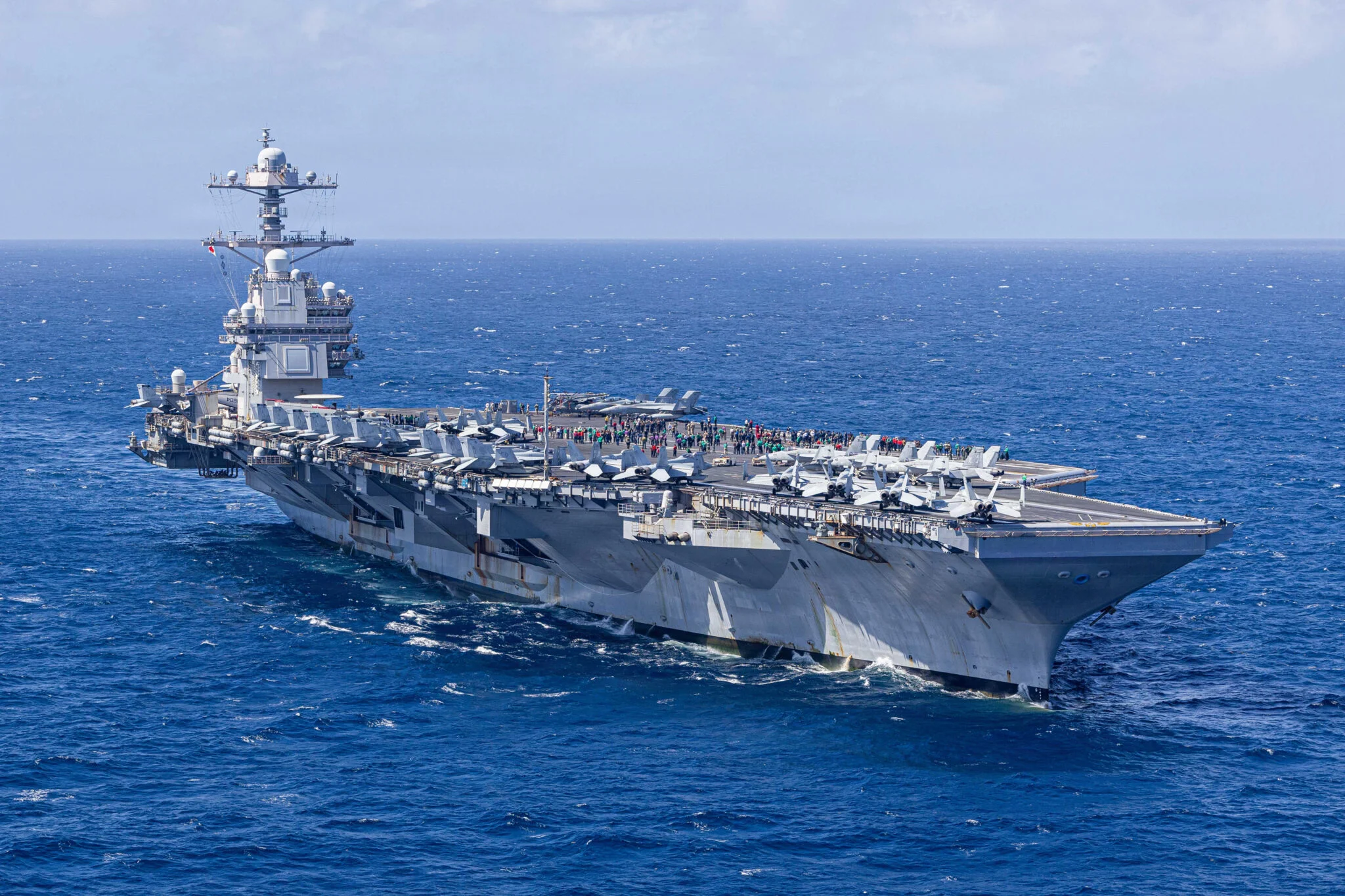
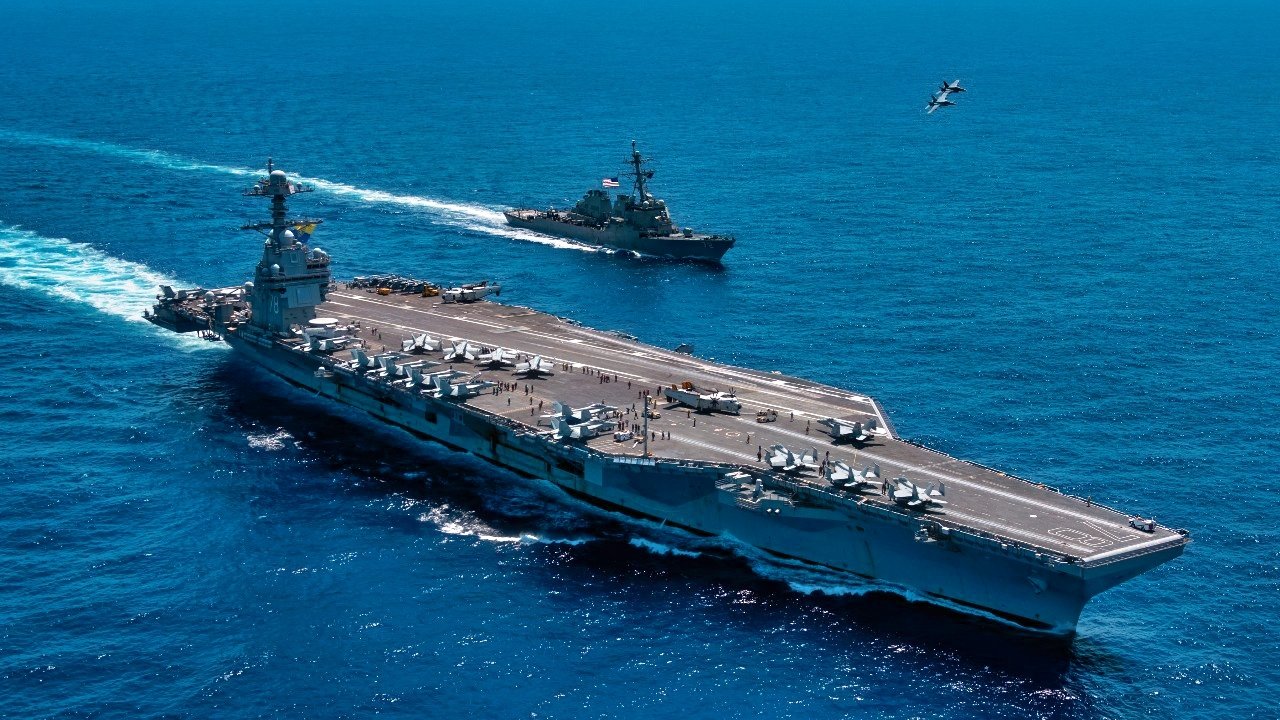
President Donald Trump said the United States will deploy the USS Gerald R. Ford to the Middle East. The carrier, one of the most advanced in the U.S. Navy fleet, is powered by nuclear reactors and can carry more than 75 aircraft.
The deployment adds to existing American forces in the region, including the USS Abraham Lincoln carrier strike group. Multiple guided-missile destroyers, fighter jets, and surveillance aircraft are already operating in nearby waters and airspace.
Trump said the U.S. possesses overwhelming force and stands ready to use it if negotiations fail. He also suggested that a change in Iran’s governing system could ultimately benefit the Iranian people.
At the same time, the president expressed hope that diplomatic engagement with Tehran would succeed. He argued that Iran had missed earlier opportunities to reach an agreement with Washington.
Why This Matters
Aircraft carrier deployments serve as powerful signals in global security politics. They project air power, deterrence capability, and rapid-response readiness without immediately crossing into open warfare.
By sending a second carrier, the U.S. increases operational flexibility. It can conduct sustained air missions, expand surveillance, and strengthen missile defense coverage across the region.
However, the move also raises the stakes. Iran views large-scale U.S. military deployments near its borders as provocative. Regional actors worry that miscalculation or a limited strike could escalate quickly.
The Middle East already faces multiple flashpoints, including tensions in the Gulf, Syria, and the Red Sea. An additional carrier group introduces both reassurance for U.S. allies and heightened alert for adversaries.
What Analysts or Officials Are Saying
U.S. defense officials describe the deployment as part of a broader effort to deter Iranian aggression and protect American interests. They argue that visible force reduces the likelihood of miscalculation by signaling readiness.
Arab governments, however, have warned that a direct military confrontation could destabilize energy markets and disrupt shipping lanes. Several regional diplomats emphasize the importance of keeping negotiations alive to avoid another major conflict.
Iranian officials have not formally responded to the carrier deployment but have repeatedly stated that their missile and nuclear programs are defensive. Tehran often frames U.S. military buildups as intimidation tactics.
Security analysts note that dual messaging—military reinforcement alongside diplomatic outreach—reflects a strategy of coercive diplomacy. The aim is to extract concessions without firing the first shot.
Daljoog News Analysis
The decision to deploy the USS Gerald R. Ford reveals a calibrated but risky approach. Washington seeks to pressure Tehran while maintaining the narrative that diplomacy remains possible.
Carriers are not symbolic assets. They represent floating airbases capable of sustained strike operations. Their presence changes calculations across the region.
Trump’s remarks about regime change add another layer of tension. Even if framed rhetorically, such statements fuel suspicion in Tehran and complicate negotiations.
Historically, heavy military posturing can either compel talks or entrench resistance. Much depends on whether both sides view the buildup as leverage or as preparation for confrontation.
For U.S. allies, the move may reassure them of continued American commitment. For Iran, it may reinforce arguments for accelerating defensive capabilities.
What Happens Next
Attention now turns to diplomatic channels. If negotiations progress, the carrier deployment could remain a deterrent backdrop rather than a trigger.
If talks stall, further sanctions or limited military actions could follow. Any direct strike would likely prompt retaliation, potentially drawing in regional actors.
Naval movements will also be closely monitored. Carrier groups often conduct joint exercises with allies, which could signal either reassurance or preparation.