


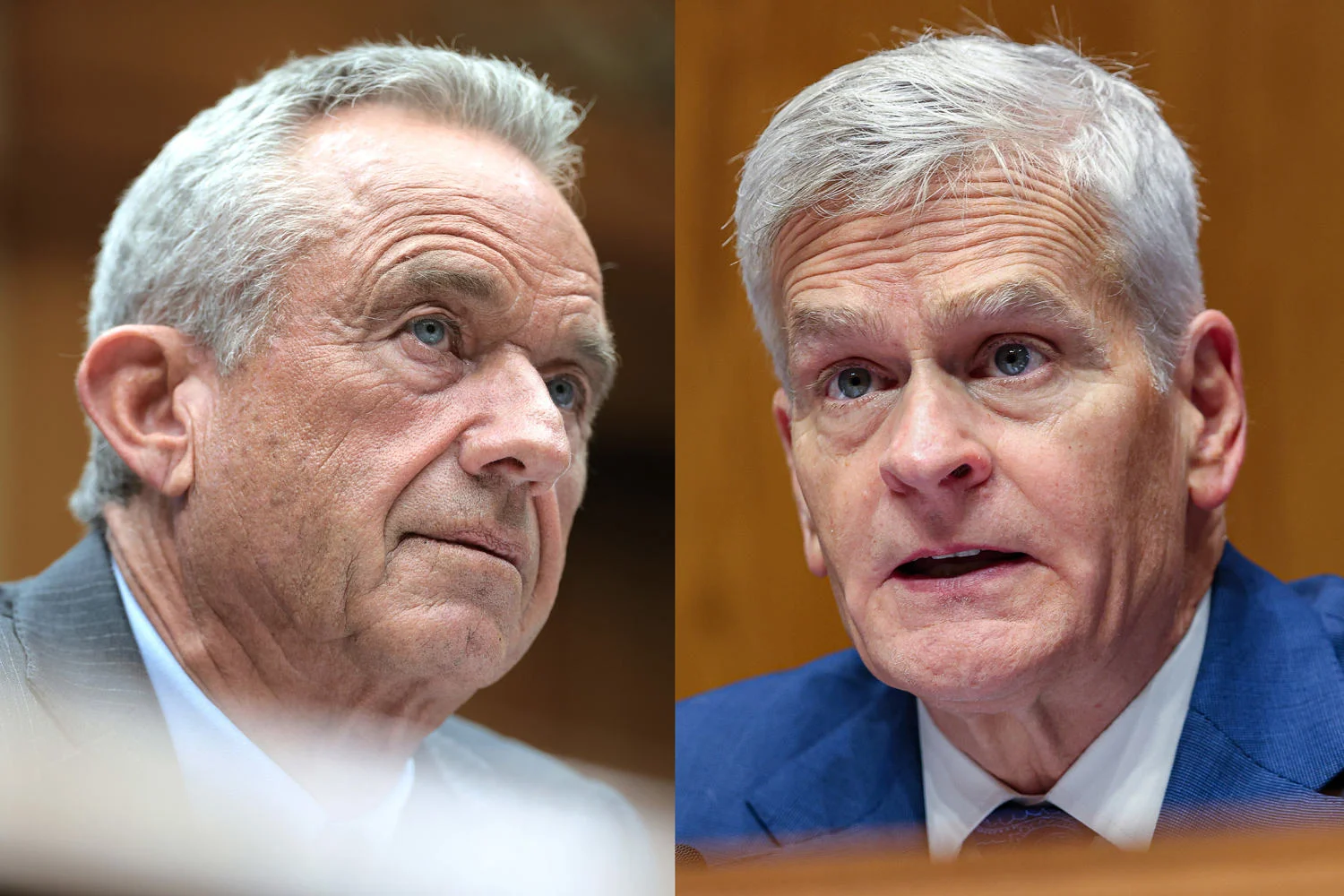
Five months after Republican Sen. Bill Cassidy formally invited Health and Human Services Secretary Robert F. Kennedy Jr. to testify, the hearing has yet to take place. Cassidy, who chairs the Senate Health Committee, says no date has been set.
According to Daljoog News analysis, the delay underscores the complex intersection of public health oversight, partisan politics, and Kennedy’s controversial vaccine positions, all of which are shaping Cassidy’s re-election campaign in Louisiana.
The invitation originally followed the abrupt ouster of Centers for Disease Control and Prevention Director Susan Monarez, a move that fueled debate over the administration’s approach to science and oversight. Cassidy positioned the hearing as a transparency measure for the American public.
What Happened?
Sen. Cassidy invited Kennedy to appear before his committee on Sept. 18, shortly after Monarez’s dismissal. Cassidy framed the hearing as an opportunity for Kennedy to “share his side of the story” regarding agency departures and policy decisions. Monarez’s attorneys had claimed her firing was linked to her refusal to “rubber-stamp unscientific, reckless directives.”
Kennedy, a longtime vaccine skeptic, had made multiple commitments to Cassidy before his confirmation as HHS secretary. These included quarterly meetings with the senator and appearances before his committee. Cassidy publicly acknowledged he had struggled with the decision to support Kennedy’s nomination but ultimately endorsed him.
Despite repeated assurances, Cassidy reports that the hearing date is still “being worked out.” While other Cabinet members have already testified before oversight panels this year, Kennedy has not returned to Cassidy’s Health Committee since a May hearing last year.
Why This Matters
The delay carries implications for both public health oversight and Louisiana politics. Cassidy has faced criticism from Democrats for failing to conduct timely oversight of Kennedy’s controversial actions, including the removal of all 17 members of the CDC’s Advisory Committee on Immunization Practices (ACIP) and the revision of CDC vaccine messaging.
These actions drew sharp scrutiny, particularly when Kennedy’s revisions to the CDC website suggested, without evidence, that authorities may have “ignored” potential links between vaccines and autism. Cassidy’s agreements with Kennedy reportedly preserved some language, but the changes still sparked controversy.
Politically, Cassidy’s handling of Kennedy’s nomination and oversight has become a focal point of his re-election campaign. Trump-endorsed challenger Rep. Julia Letlow is capitalizing on discontent among pro-MAGA voters, with Kennedy ally Tony Lyons pledging $1 million through the “Make America Healthy Again PAC” to support Letlow.
What Analysts or Officials Are Saying
Cassidy maintains that Kennedy continues to engage with him and his staff on a “regular and frequent basis.” A spokesperson for Kennedy emphasized ongoing communications and the fulfillment of prior commitments, including key staffing decisions and ACIP recommendations.
Democrats, however, have argued that delaying the hearing is a failure of congressional oversight. In December, Senate Health Committee Democrats wrote that failing to hold a hearing would be “an abdication of our responsibility” in terms of public health policy.
Political analysts also point to the broader strategy at play. Cassidy has held 18 other committee hearings since inviting Kennedy, often focusing on issues aligned with Trump’s agenda. These hearings highlight how oversight can intersect with partisan signaling and electoral considerations.
Daljoog News Analysis
The delay in Kennedy’s testimony illustrates the tension between institutional oversight and political calculus. Cassidy’s original intent was to conduct transparent oversight, yet partisan considerations and intra-party dynamics appear to be shaping the timetable.
Kennedy’s controversial policy moves, particularly regarding vaccines and the ACIP, have placed Cassidy in a delicate position: balancing accountability with prior commitments made to secure Kennedy’s confirmation. The situation highlights how Cabinet confirmations, oversight obligations, and election politics are increasingly intertwined.
Moreover, Kennedy’s continued influence on policy and communications—despite the absence of a hearing—demonstrates how political oversight can be constrained by personal and partisan agreements. For Cassidy, the optics of delay risk erode both credibility on health issues and voter trust.
What Happens Next
The timing of Kennedy’s hearing remains uncertain. Cassidy and committee staff have not provided a firm date, though the senator insists the process is underway.
If held, the hearing could examine vaccine policy, ACIP changes, CDC communications, and Kennedy’s management of high-profile agency departures. Republicans and Democrats alike will likely scrutinize both substance and optics.
Meanwhile, Cassidy’s re-election campaign is poised to make Kennedy’s oversight—or the lack thereof—a central issue. With Trump-endorsed challenger Julia Letlow gaining early financial support and political momentum, the hearing’s timing could carry strategic implications.