

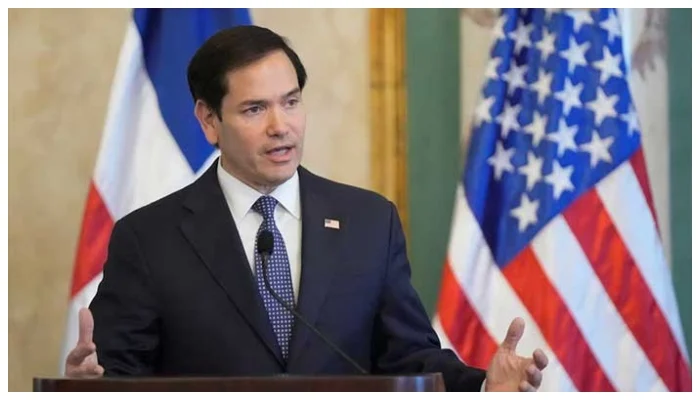
The United States has signaled renewed openness to direct negotiations with Iran, with Secretary of State Marco Rubio indicating that President Donald Trump would be willing to meet Iran’s Supreme Leader Ali Khamenei if the opportunity arose.
According to Daljoog News analysis, the remarks mark a notable shift in tone. Washington appears to be emphasizing dialogue over confrontation at a moment when regional tensions remain fragile.
The message comes as Iran, Russia, and China continue diplomatic coordination over Tehran’s nuclear program. With past agreements stalled and trust deeply eroded, even a symbolic gesture toward talks carries weight.
What Happened?
In an interview with Bloomberg, Rubio stated that President Trump supports engagement if it serves American interests. He suggested that direct dialogue between leaders can sometimes break diplomatic deadlock more effectively than indirect channels.
Rubio explained that the current administration believes negotiations remain essential for resolving global disputes. He added that if Iran’s leadership expressed willingness to engage, Washington would consider the proposal seriously.
While acknowledging policy differences between the two governments, Rubio emphasized that dialogue does not imply concession. Instead, he framed talks as a pragmatic tool of statecraft.
Beyond Iran, Rubio also addressed transatlantic relations. He stressed that the United States seeks a prosperous and secure Europe, noting that economic and security ties bind both sides closely. At the same time, he urged European governments to take greater responsibility for their own defense and uphold shared values.
Why This Matters
Direct talks between Washington and Tehran would represent a significant diplomatic development. Relations have been strained for years, particularly after the United States withdrew from the 2015 nuclear agreement.
The original deal, formally known as the Joint Comprehensive Plan of Action, aimed to limit Iran’s nuclear activities in exchange for sanctions relief. After Washington’s withdrawal, tensions escalated and Iran gradually reduced its compliance with certain commitments.
Efforts to revive the agreement in 2021 failed amid disagreements over sanctions relief and verification measures. Since then, negotiations have remained intermittent and inconclusive.
A willingness by President Trump to meet Iran’s top leader could alter diplomatic calculations. Even if talks do not immediately produce a breakthrough, they could reduce miscalculation risks in a volatile region.
For global markets and regional security, renewed engagement could lower the probability of sudden escalation.
What Analysts or Officials Are Saying
Diplomatic observers interpret Rubio’s remarks as a calibrated signal rather than a policy overhaul. They suggest Washington wants to keep channels open while maintaining leverage through sanctions.
Iran, for its part, continues to insist that its nuclear program is peaceful and subject to oversight by the International Atomic Energy Agency. Iranian officials argue that Western pressure undermined the original agreement’s balance.
Meanwhile, representatives of Iran, Russia, and China have reportedly held further trilateral consultations on nuclear-related issues. Russian envoy Mikhail Ulyanov confirmed continued coordination among the three countries.
European policymakers are watching closely. They remain stakeholders in the 2015 agreement and face economic and security implications tied to any renewed confrontation.
Daljoog News Analysis
Rubio’s statement reflects a strategic recalibration rather than a dramatic reversal. Washington appears to recognize that sustained pressure alone has not delivered lasting results.
By signaling openness to leader-level talks, the United States may be testing Tehran’s readiness for serious negotiation. Such messaging can also reassure allies that diplomacy remains on the table.
However, deep mistrust persists on both sides. Domestic political constraints in Washington and Tehran complicate bold diplomatic moves.
The broader geopolitical context further complicates matters. Iran’s closer coordination with Russia and China creates additional layers in any negotiation framework. Any agreement would likely require alignment among multiple power centers.
Daljoog News assesses that while dialogue remains uncertain, the rhetorical shift lowers the immediate temperature. The real test will be whether both sides can translate signals into structured negotiations.
What Happens Next
The immediate question is whether Iran responds positively to the prospect of direct engagement. A formal diplomatic proposal could set the stage for exploratory talks.
Attention will also focus on the sanctions policy. Any negotiation would likely hinge on phased relief measures tied to verifiable commitments.
Regional actors, including Israel and Gulf states, will evaluate how renewed US-Iran dialogue affects their security posture.