


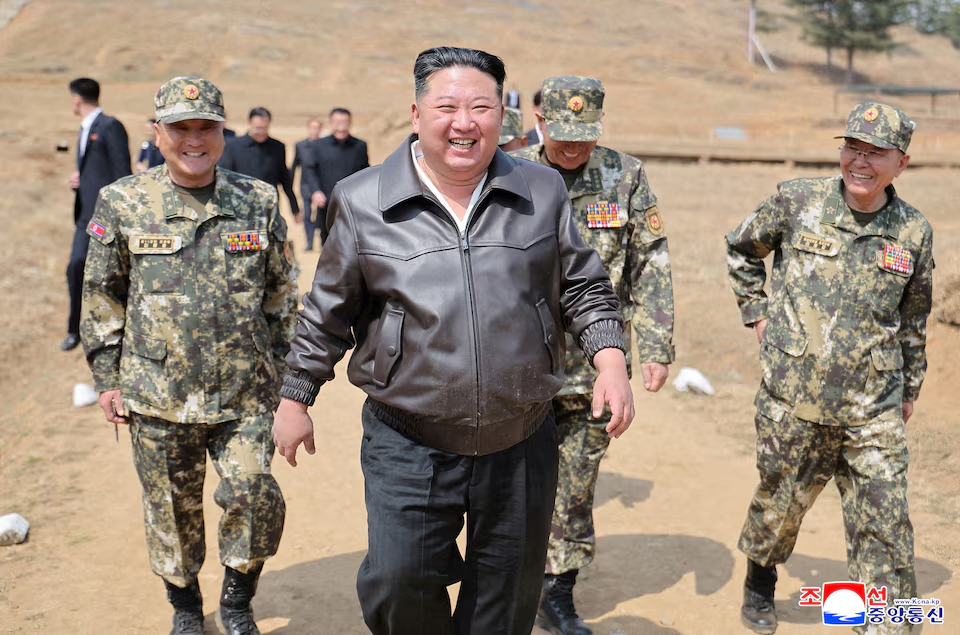
North Korean leader Kim Jong Un unveiled a newly constructed street of flats for families of soldiers killed while supporting Russia’s war in Ukraine, according to state media reports Monday. Photos show him touring the homes accompanied by his daughter, Ju Ae, widely seen as his designated heir.
According to Daljoog News analysis, the housing project is both a domestic morale booster and a signal of Pyongyang’s continued military alignment with Moscow. The initiative underscores the regime’s efforts to reward loyalty and legitimize its overseas troop deployments ahead of a major political event.
The rollout comes just weeks ahead of North Korea’s scheduled party congress, drawing attention to what domestic and foreign policy directions Kim will announce and whether his daughter will receive official party roles.
What Happened?
State media, the Korean Central News Agency, reported that the new street of flats—located on Saeppyol Street—was constructed for the families of soldiers killed during deployments in Ukraine.
Kim’s speech, released by KCNA, emphasized the state’s commitment to ensuring that the families of “excellent sons, who defended the most sacred things by sacrificing their most valuable things, will live forever.” The report did not explicitly mention Russia, though Kim last week pledged “unconditional support” for Vladimir Putin’s policies.
Images released show Kim speaking with families on sofas, while Ju Ae stands nearby, and other photos depict families inspecting utilities in their new apartments.
South Korean and Western intelligence sources estimate that North Korea has deployed thousands of troops to Ukraine, with around 2,000 reportedly killed. Analysts link this support to reciprocal aid from Russia, including financial assistance, military technology, and essential supplies.
Why This Matters
The construction of new homes serves multiple strategic purposes. Domestically, it boosts morale among the population and reinforces the image of the state as a provider for its citizens, particularly those affected by military deployments abroad.
Internationally, it signals Pyongyang’s ongoing support for Moscow, solidifying the North Korea-Russia military relationship while highlighting the regime’s willingness to commit personnel to foreign conflicts.
The timing—just before the party congress—also positions the move as a calculated political message, demonstrating tangible rewards for military service and preparing public perception for any announcements regarding the country’s strategic priorities.
What Analysts or Officials Are Saying
Hong Min of the Korea Institute for National Unification described the inauguration as a “highly calculated political move to justify its soldier deployment” ahead of the congress. He noted that the project “visualizes the state providing concrete compensation to the families of fallen soldiers… as a symbolic showcase.”
Observers also point out that Ju Ae’s presence underscores her emerging role as successor. South Korea’s intelligence agency recently confirmed her clear designation as heir apparent, citing her participation in high-profile public events with Kim.
Daljoog News Analysis
The new housing project reflects Pyongyang’s dual approach of domestic consolidation and international signaling. By publicly honoring fallen soldiers, the regime strengthens internal loyalty while reinforcing its alignment with Russia.
It also demonstrates the careful choreography of messaging ahead of major political events. Housing projects, public appearances, and family recognition combine to convey both compassion and power, reinforcing Kim’s authority domestically and projecting commitment abroad.
Daljoog News notes that this initiative is more than ceremonial. It is a reminder that North Korea is willing to sustain human and material investment for overseas military engagements, signaling to allies and adversaries alike that the regime prioritizes both loyalty and strategic partnerships.
What Happens Next
Attention will focus on announcements during the party congress, including potential policy directions regarding military deployment, foreign alliances, and domestic reward systems.
Analysts will also monitor whether Ju Ae receives formal party titles, cementing her succession and signaling continuity in leadership.
International observers will likely track the human and military costs of North Korea’s support for Russia, while the new housing initiative may serve as a template for future state-led compensation programs for military families.