


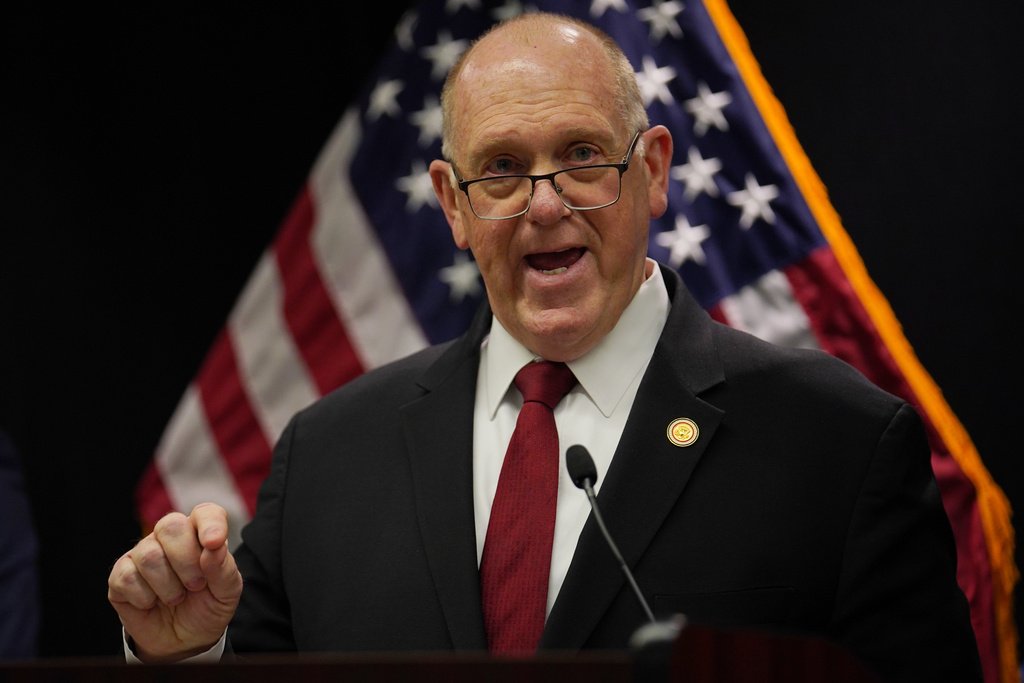
The dispute over funding for the U.S. Department of Homeland Security (DHS) reached new heights Sunday as Republican Markwayne Mullin described the partial funding lapse as “political theater.” The comments came amid a broader standoff in Congress tied to proposed reforms of federal immigration enforcement.
According to Daljoog News analysis, the Republican critique reflects deep partisan divisions over how DHS and its agencies, including Immigration and Customs Enforcement and the Transportation Security Administration, should operate — especially in the aftermath of controversial shooting incidents in Minnesota that have galvanized opposition to current tactics.
The partial shutdown began early Saturday after talks failed to produce a consensus on Homeland Security funding through September — the first such lapse affecting major components of DHS in months. Lawmakers remain sharply divided over immigration oversight and accountability measures proposed by Democrats, while Republicans accuse their rivals of playing politics ahead of the State of the Union address.
What Happened?
Sen. Mullin, speaking on CNN’s “State of the Union” with anchor Jake Tapper, criticized Democrats for linking DHS funding to policy changes he described as unworkable. He argued that agencies like Border Patrol and ICE are continuing their duties despite the funding quarrel.
“Democrats are shutting down DHS over reforms that would not stop ICE or Border Patrol from doing their jobs,” Mullin said, calling the strategy a tactic aimed at scoring political points rather than addressing practical governance issues.
The refusal to advance the DHS funding bill follows mounting frustrations among Democratic lawmakers and activists over federal immigration enforcement tactics — in particular the fallout from federal operations in Minneapolis that led to the deaths of two people during a controversial enforcement surge. Those incidents helped turn the political spotlight on ICE practices and fuel lawmakers’ demands for accountability measures.
Why This Matters
The partial DHS shutdown affects thousands of federal workers, including employees of agencies such as FEMA, TSA and the Coast Guard — many of whom continue to work without pay while negotiations remain deadlocked. It does not halt operations of ICE or Customs and Border Protection, due to separate funding allocations passed previously.
Democrats have pressed for specific reforms, such as unmasking requirements, mandatory identification, and body cameras for federal immigration agents. These demands gained momentum following national outrage over the Minneapolis shootings earlier this year, which fueled calls for structural reform of enforcement practices.
Republicans, including Mullin and other leaders, contend that these demands are excessive and politically motivated — arguing that tying reform conditions to essential security funding risks undermining national preparedness while gaining little substantive change.
What Analysts or Officials Are Saying
Senate Minority Leader Chuck Schumer has stated that the Democratic approach reflects “common sense” checks on federal immigration agencies, emphasizing visibility and accountability for officers involved in public enforcement actions.
Meanwhile, Republicans argue that reforms should be negotiated but not held as preconditions for keeping DHS funded.
The political rhetoric underscores a broader divide: Democrats pushing for enforcement oversight reform tied to broader human rights concerns, and Republicans framing the dispute as a refusal to fund essential government functions for political gain.
Daljoog News Analysis
Daljoog News assesses that the DHS shutdown is more than a procedural dispute — it reflects deeper ideological friction over immigration law enforcement, government accountability, and constitutional priorities.
The Minnesota killings of two civilians during a federal immigration operation intensified these divisions, elevating grassroots and political pressure on lawmakers to take definitive stances. The Democrats’ insistence on reforms tied to funding speaks to a post-shooting climate of distrust toward federal policing tactics, while Republicans seek to maintain operational continuity without expanding oversight mandates.
At its core, the standoff illustrates a Washington dynamic where high-profile incidents rapidly reshape legislative priorities, sometimes at the expense of bipartisan compromise.
What Happens Next
Negotiations are likely to continue as lawmakers return to session later this week. Both sides will try to bridge differences on immigration oversight and funding levels, but the risk of prolonging a partial shutdown remains real.
If Democrats maintain their insistence on reform-linked funding and Republicans resist any conditions, Congress may face another impasse — with real implications for federal workers and government operations.