



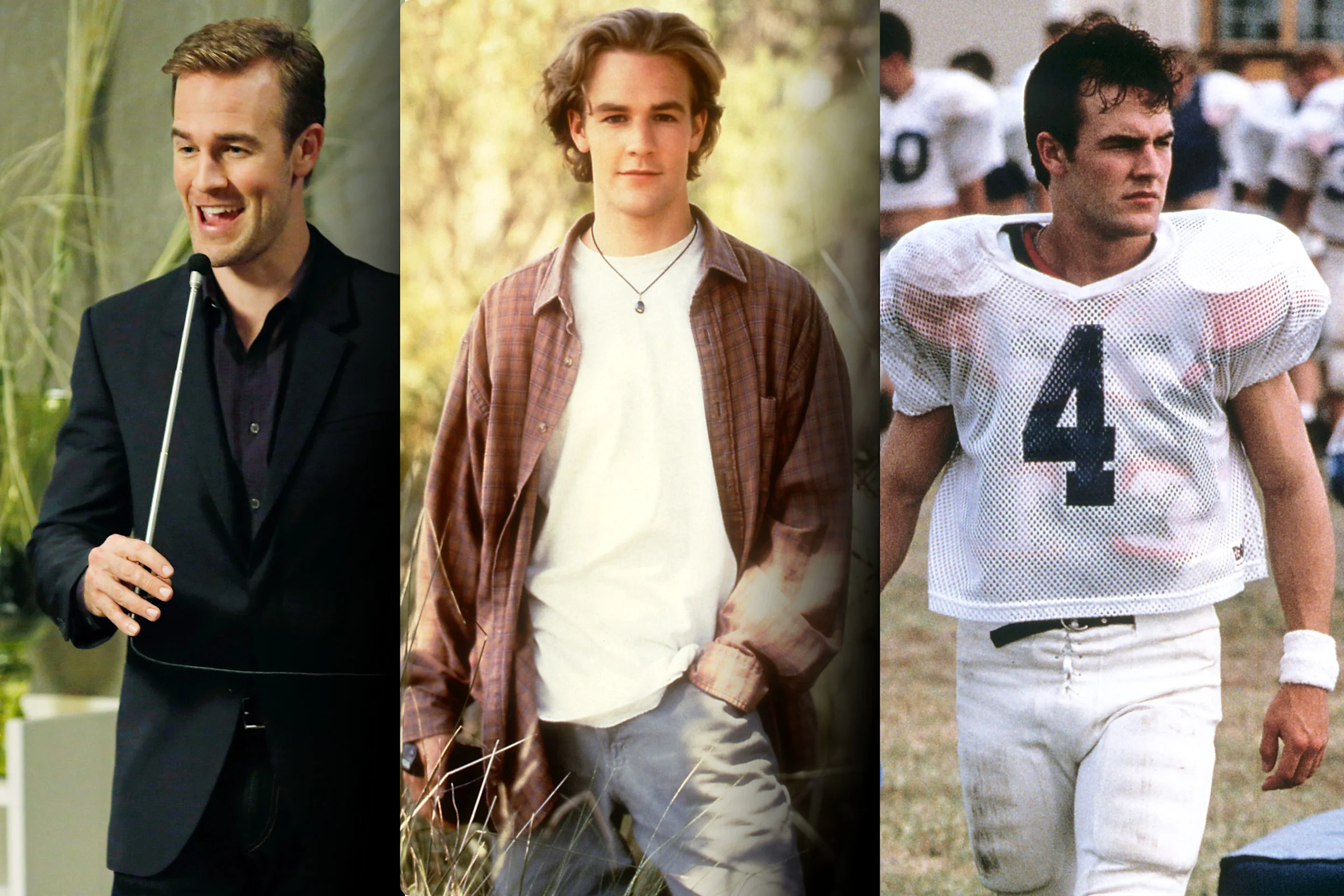
James Van Der Beek, who died on February 11 at the age of 48 from colorectal cancer, became a defining face of late-’90s teen television. He rose to fame as Dawson Leery on the beloved series Dawson’s Creek, where his portrayal of a small-town aspiring filmmaker captured the trials of adolescence and young love.
According to Daljoog News analysis, Van Der Beek’s career illustrates a rare trajectory in Hollywood: he transformed from teen idol to a performer unafraid to poke fun at his own fame. His work spanned heartfelt drama, ensemble films, and self-parody, leaving audiences both nostalgic and entertained.
Beyond Dawson’s Creek, Van Der Beek’s choices highlighted his range. From sports films like Varsity Blues to comedic ventures in Don’t Trust the Bitch in Apartment 23 and music videos, he proved himself capable of shifting seamlessly between sincerity and satire. His passing marks the end of a career that both defined a generation and continually reinvented itself.
What Happened?
Van Der Beek first captured public attention in 1998 as the sensitive, ambitious Dawson Leery in Dawson’s Creek, starring alongside Katie Holmes, Joshua Jackson, and Michelle Williams. The series ran until 2003, chronicling the complicated friendships and romances of teenagers in the fictional town of Capeside.
He also made a notable impact in the 1999 coming-of-age sports film Varsity Blues, playing backup quarterback Jonathan “Mox” Moxon. The film’s mix of teen rebellion and high school football drama became emblematic of late-’90s teen cinema.
Over the years, Van Der Beek took on roles that both acknowledged and lampooned his teen heartthrob status. In Don’t Trust the Bitch in Apartment 23 (2012-2014), he played a heightened, fictional version of himself, displaying comedic timing and self-awareness rarely seen among actors defined by early fame. He also appeared in One Tree Hill (2008-2009) as Adam Reese, a film director—a subtle nod to his Dawson’s Creek persona and continued connection to the teen drama genre.
In addition to television and film, Van Der Beek embraced unconventional projects. He appeared in Kesha’s 2011 music video for “Blow,” fully leaning into an exaggerated, self-mocking version of his past fame. He also starred in The Rules of Attraction (2002), a darkly comedic college drama adaptation of Bret Easton Ellis’s novel, further demonstrating his versatility.
Why This Matters
Van Der Beek’s career reflects the shifting landscape of celebrity and television in the late ’90s and early 2000s. Dawson’s Creek helped define a generation of teen dramas, shaping how audiences understood friendship, romance, and coming-of-age narratives.
His willingness to revisit his teen idol image—sometimes to comic effect—challenged the industry norm that actors must shed early fame to succeed. By embracing parody and self-reflection, he broadened perceptions of what a post-heartthrob career could look like.
Culturally, his roles in films like Varsity Blues and appearances in music videos reinforced his visibility across media platforms, keeping him relevant to both longtime fans and new audiences. His work serves as a bridge between the teen drama of the ’90s and modern self-aware pop culture.
What Analysts or Officials Are Saying
Entertainment analysts note Van Der Beek’s unique ability to navigate typecasting. While many actors struggle to escape early career labels, he leaned into them, creating moments of satire that resonated with audiences and critics alike.
His Dawson’s Creek co-stars frequently highlighted his professionalism and charm, describing him as a collaborative force on set. The recent cast reunion, held to raise funds for cancer awareness, underscored both the deep bonds formed during the series and the enduring impact of his role.
Industry observers also point out that Van Der Beek’s comedic performances in Apartment 23 and music videos reveal a strategic reinvention. By playing a self-parody, he maintained visibility while diversifying his career portfolio—an approach less common among actors from iconic teen shows.
Daljoog News Analysis
Van Der Beek’s trajectory offers a case study in career longevity after early fame. Many actors defined by teenage roles struggle to remain relevant; he instead used those early experiences as creative material.
His performances suggest an understanding of audience expectations. He knew how to elicit nostalgia while simultaneously challenging fans’ perceptions, blending vulnerability, humor, and irony. This balance made his work memorable and culturally resonant.
Moreover, his projects often intersected with broader pop culture moments—from teen sports films to satirical sitcoms—cementing his presence in multiple entertainment niches. His approach demonstrates that reinvention need not erase the past; it can amplify it.
What Happens Next
Though Van Der Beek has passed, his legacy will continue through both his iconic roles and posthumous releases. He was set to appear in Prime Video’s Legally Blonde prequel, Elle, and it will be one of the final opportunities for audiences to witness his craft.
Future retrospectives, cast reunions, and streaming releases of his earlier works are likely to introduce new generations to his performances. Meanwhile, his willingness to embrace self-parody may inspire other actors navigating fame transitions.
Fans can reflect on his contributions through tributes, streaming platforms, and social media, ensuring his roles—from earnest Dawson Leery to comedic self-versions—remain part of cultural memory.