



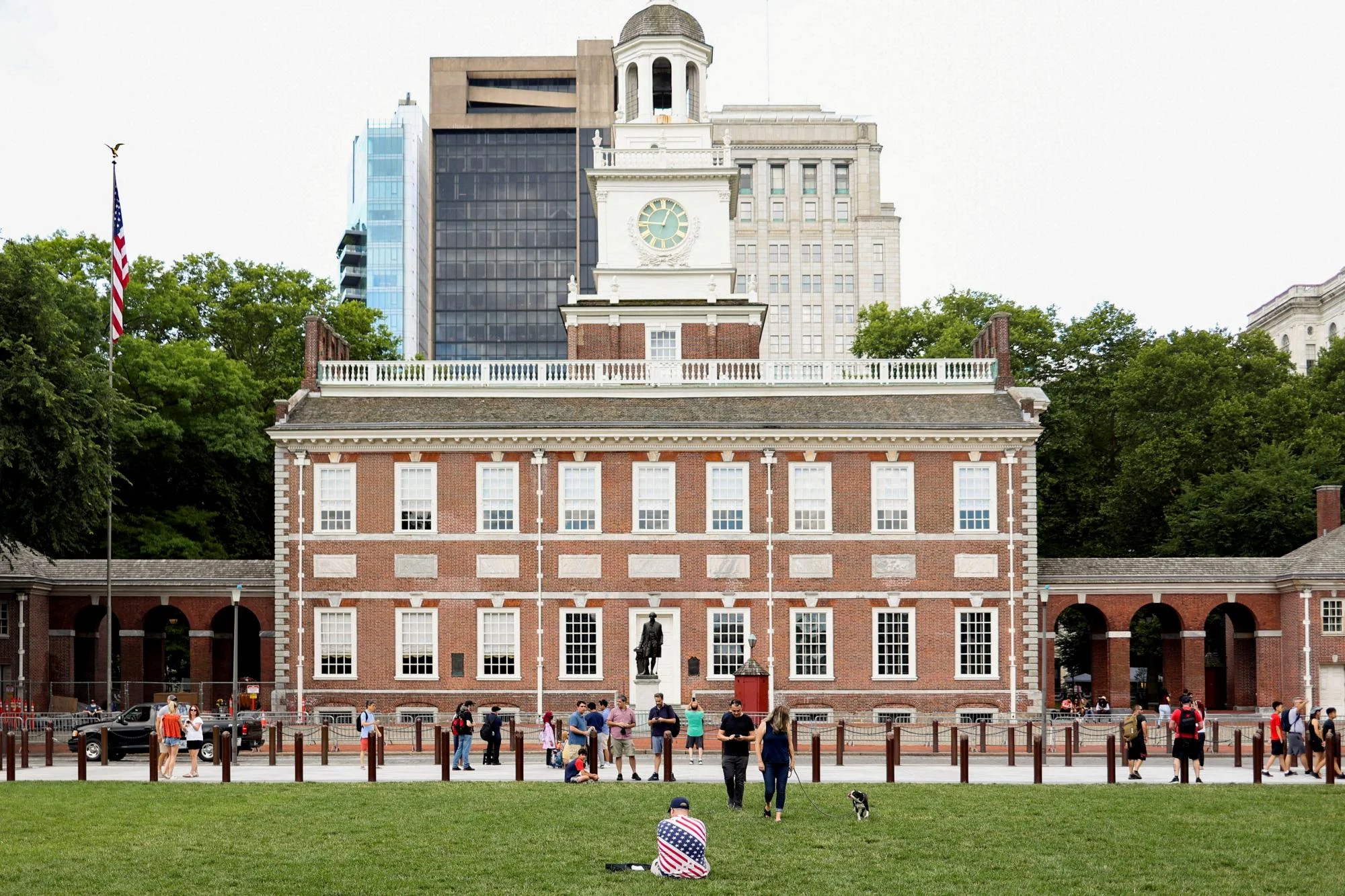
The Trump administration must restore a slavery exhibit at a major historic site in Philadelphia after a federal judge ruled that its removal likely exceeded executive authority.
According to Daljoog News analysis, the decision marks a significant judicial check on presidential power over historical interpretation at federally managed sites, especially those tied to America’s founding era.
The dispute centers on how slavery is presented at one of the nation’s most symbolic landmarks, reigniting a broader national debate over public memory, historical accountability, and political influence over cultural institutions.
What Happened?
On Monday, U.S. District Judge Cynthia Rufe ordered the National Park Service to reinstall a long-standing slavery exhibit at Independence National Historical Park.
The exhibit, located at the President’s House site, detailed the lives of nine enslaved Africans held by George Washington during his presidency in Philadelphia.
The administration dismantled and removed the installation last month. Officials justified the move by citing concerns about what President Donald Trump described as “anti-American ideology” in cultural and historical institutions.
The City of Philadelphia responded by filing suit against the Department of the Interior, which oversees the Park Service. City officials argued the removal violated federal law governing preservation and interpretation of historic resources.
Judge Rufe granted the city’s request for a temporary injunction. She ordered the federal government to restore the President’s House site to its physical condition as of January 21, 2026 — the day before the exhibit was removed — while the case proceeds.
In her written opinion, Rufe invoked imagery from 1984, drawing parallels between the fictional “Ministry of Truth” and attempts to reshape historical narratives through government action.
She rejected the argument that a president can unilaterally alter interpretive materials at national parks without legal constraints, calling such a claim deeply troubling during earlier hearings.
Why This Matters
The ruling extends beyond a single exhibit.
Independence National Historical Park stands at the heart of American civic identity. It includes landmarks associated with the founding of the United States and attracts millions of visitors annually.
The President’s House site gained prominence after historians identified it as the residence where Washington and John Adams lived while Philadelphia served as the nation’s capital in the 1790s.
Research conducted in the early 2000s revealed that Washington enslaved nine individuals at that residence. The exhibit documented their lives and explained how Washington rotated enslaved workers in and out of Pennsylvania to avoid the state’s gradual abolition law, which could have allowed them to petition for freedom after six months.
The legal dispute now raises fundamental questions about who controls historical interpretation in federally managed spaces. It also touches on a wider cultural conflict over how America confronts its legacy of slavery.
Civil rights advocates argue that removing such exhibits distorts history and erases the experiences of enslaved people. Supporters of the administration’s approach contend that national sites should emphasize unity and patriotism.
The court’s intervention signals that federal agencies cannot alter historically grounded exhibits without legal scrutiny.
What Analysts or Officials Are Saying
Legal experts view the ruling as an early test of the limits of executive authority over cultural institutions.
Scholars of administrative law note that national parks operate under statutory mandates that protect historical integrity. Courts often examine whether agency actions align with those mandates rather than political preferences.
Historians have also weighed in. Many argue that the exhibit did not reinterpret history but rather incorporated well-documented scholarship into public presentation.
City officials framed their lawsuit as a defense of historical truth and local heritage. They maintained that the exhibit reflects peer-reviewed research and community engagement conducted over the years.
Federal officials have not yet issued a detailed public response to the injunction.
Daljoog News Analysis
This case underscores a deeper tension in American governance: the balance between political leadership and institutional continuity.
Presidents can set policy priorities. They can appoint agency heads and influence cultural direction. But the judiciary has consistently drawn boundaries when executive action conflicts with statutory obligations or constitutional principles.
Judge Rufe’s opinion suggests the court sees historical interpretation, when grounded in documented fact, as falling within protected institutional responsibility rather than partisan discretion.
The symbolic weight of Philadelphia adds further significance. This city occupies a central place in the nation’s founding story. Altering interpretive content there carries heightened political resonance.
The administration’s framing of the exhibit as “anti-American” reflects a broader political strategy that seeks to redefine patriotism through selective historical emphasis. Critics argue that confronting slavery strengthens democratic understanding rather than weakens it.
The ruling does not settle the larger cultural debate. It does, however, reinforce the principle that historical erasure cannot occur through executive order alone.
What Happens Next
The injunction is temporary.
The underlying lawsuit will proceed through federal court, where both sides will argue the legality of the exhibit’s removal. The Department of the Interior may appeal the injunction to a higher court.
If the case advances, appellate judges could clarify how much discretion federal agencies have in modifying interpretive content at national parks.
In the meantime, the exhibit must be restored.
The decision may also influence other disputes involving national monuments and federal historical sites. Advocacy groups across the political spectrum will watch closely, as the outcome could set a precedent for how future administrations handle controversial aspects of American history.