



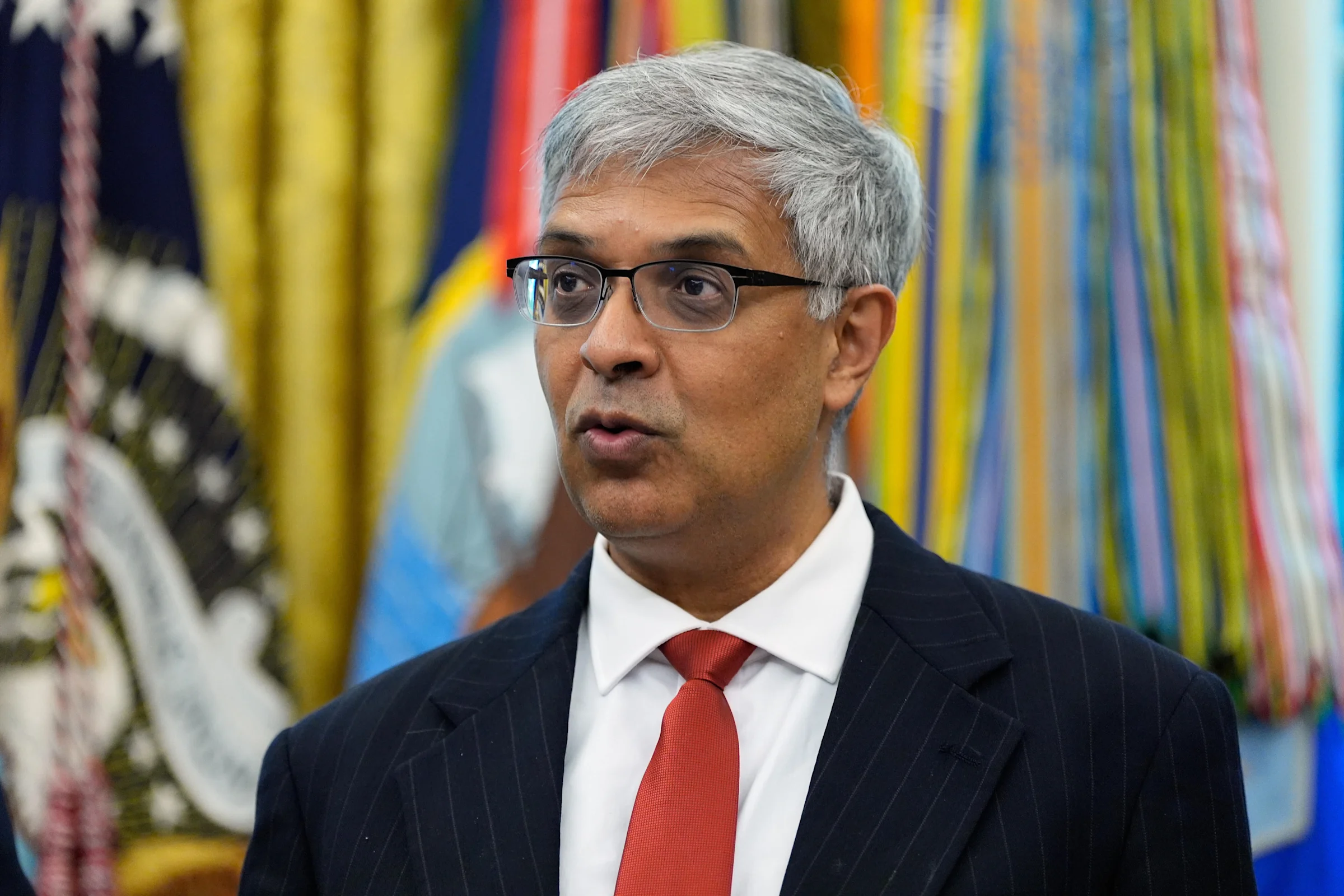
The Trump administration has appointed National Institutes of Health Director Jay Bhattacharya to serve temporarily as head of the Centers for Disease Control and Prevention. He will hold both roles until a permanent CDC director is nominated and confirmed.
According to Daljoog News analysis, the decision underscores ongoing instability within federal health leadership and places a high-profile COVID-era critic at the helm of the nation’s top public health agency.
The appointment follows months of turnover at the CDC, raising fresh questions about policy direction at a time of renewed debate over vaccines and disease prevention.
What Happened?
Jay Bhattacharya, who currently leads the National Institutes of Health, will now also serve as acting director of the Centers for Disease Control and Prevention.
Two administration officials confirmed the move. Bhattacharya will remain in his NIH role while overseeing the CDC on an interim basis.
The CDC had already been operating under temporary leadership. Acting Director Jim O’Neill assumed the role in August after Senate-confirmed director Susan Monarez was removed less than a month into her tenure.
The White House has not announced when a permanent CDC nominee will be selected.
Bhattacharya rose to national prominence during the COVID-19 pandemic. As a professor at Stanford Medical School, he criticized lockdown policies and questioned aspects of the federal government’s pandemic response, particularly guidance on masking.
Why This Matters
The CDC plays a central role in shaping national public health policy. Its recommendations influence vaccination schedules, disease response strategies and state-level health planning.
Bhattacharya’s dual appointment comes amid controversy. Last month, the CDC reduced the number of recommended childhood vaccines, prompting concern from pediatricians and public health organizations.
Critics worry that altering long-standing vaccination guidance could undermine decades of progress in controlling preventable diseases.
At the same time, the United States is experiencing its largest measles outbreak in decades. Public health officials emphasize that vaccination remains the primary defense against the disease.
Bhattacharya has publicly supported measles vaccination. During recent congressional testimony, he said he has not seen evidence that any single vaccine causes autism, directly addressing a claim that has resurfaced in political discourse.
His position places him between competing political and scientific pressures as he oversees both federal biomedical research and disease control operations.
What Analysts or Officials Are Saying
Administration officials describe the appointment as a continuity measure while the president searches for a permanent CDC leader.
Supporters argue that Bhattacharya brings academic credibility and a willingness to challenge institutional consensus. They say his experience at NIH positions him to coordinate research and public health implementation more closely.
Public health advocates remain cautious. They note that leadership instability at the CDC can complicate emergency preparedness and long-term planning.
Lawmakers have also signaled they will scrutinize the agency’s next steps, particularly on vaccination policy and outbreak management.
Bhattacharya’s prior criticism of federal pandemic policies continues to shape perceptions of his leadership approach. However, his recent Senate testimony in favor of measles vaccination suggests a more conventional stance on core immunization issues.
Daljoog News Analysis
This appointment reflects a broader reshuffling of federal health leadership under President Donald Trump.
The CDC’s credibility depends heavily on consistency and scientific clarity. Rapid leadership turnover risks eroding institutional stability, especially during active public health challenges.
Bhattacharya’s track record signals both potential and tension. His skepticism toward lockdowns resonated with many Americans who questioned the social and economic costs of pandemic restrictions. Yet the CDC’s mission extends beyond emergency policy debates. It requires sustained trust in evidence-based guidance.
Balancing those roles will test his leadership.
Daljoog News assesses that the dual assignment also concentrates influence within a single figure overseeing both research funding and disease prevention strategy. That alignment could streamline policy coordination, but it also places significant responsibility on one individual during a politically charged moment.
The immediate challenge will be maintaining scientific credibility while navigating an administration that has revisited vaccine policy and public health messaging.
What Happens Next
The White House is expected to begin the search for a permanent CDC director. Any nominee will require Senate confirmation.
In the interim, Bhattacharya must oversee ongoing outbreak response efforts, implement recent policy adjustments, and manage internal morale at the agency.
Congressional hearings may follow, particularly as lawmakers examine changes to vaccine recommendations and outbreak preparedness.
Public health experts will closely watch whether CDC guidance shifts further under Bhattacharya’s temporary leadership or remains aligned with long-standing scientific standards.
Until a permanent appointment is made, the direction of the nation’s leading public health agency will rest in the hands of a figure who once stood outside its consensus — and now leads it.